A booking enquiry rarely arrives neatly packaged. A client might ask for the earliest Saturday slot, mention a nervous rescue dog halfway through the conversation, then change the request from a bath to a full groom. An AI assistant can reduce the repeated messages involved in straightforward questions, but it needs clear boundaries around what it can promise.
For an independent groomer, the most useful assistant is not the one that sounds most intelligent. It is the one that accurately captures the request, checks real availability where a reliable calendar connection exists and makes the next step unmistakable.
What a booking assistant actually receives
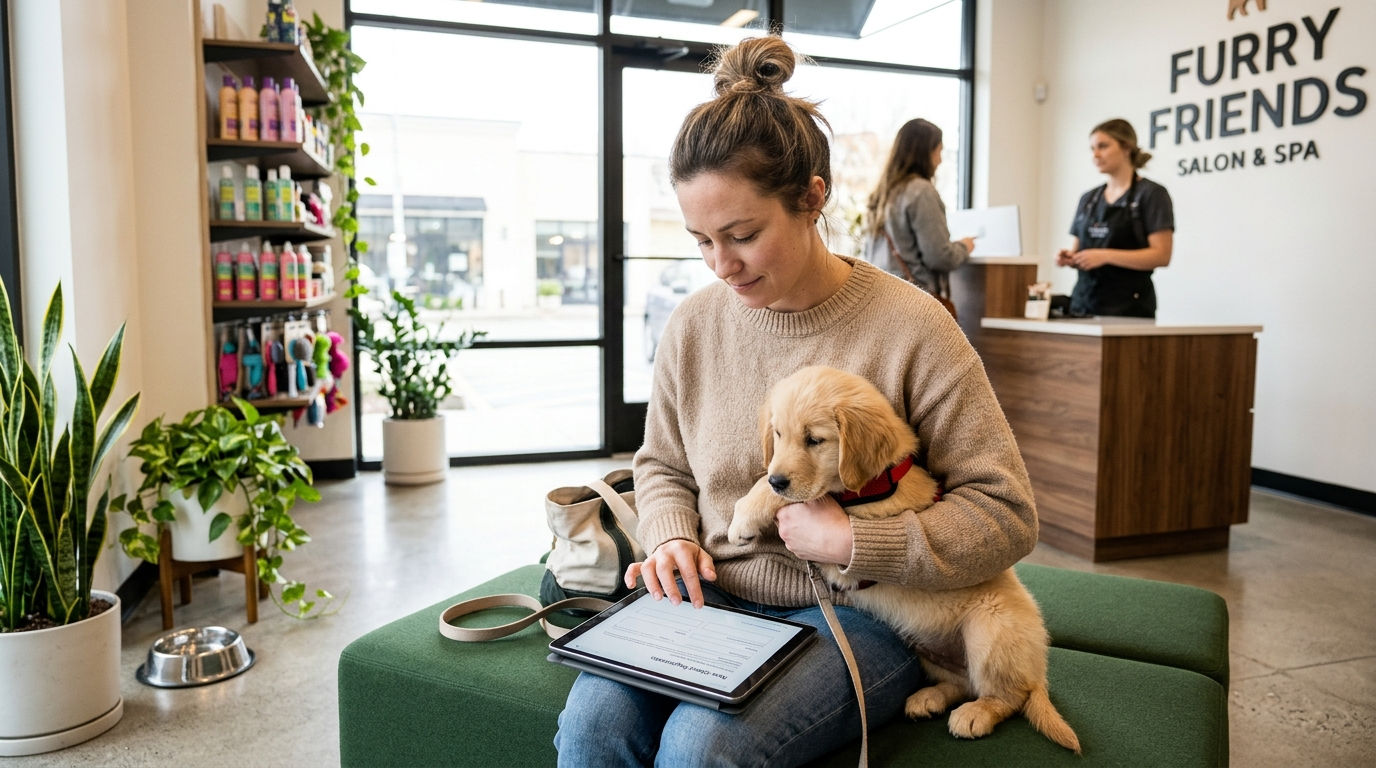
An enquiry may arrive through web chat, text or a connected phone channel, and the assistant has only the information supplied through that channel and its approved business knowledge. A client writes “Could you fit Bella in next week?” without giving a breed, service or contact preference; that message is an opening, not a bookable appointment.
Configure the first response to collect the dog's name, requested service, timing preferences and a safe way to reply; avoid a long interrogation. Unstructured chat history is not a dependable customer record until the required details have been checked and saved in an appropriate place.
Distinguishing an answer from an action
A bot might know that the salon usually opens on Tuesday but cannot infer that a groomer has a two-hour opening this Tuesday. Answering opening hours or explaining a typical service is different from reserving time in a live calendar. The distinction should remain visible to the client.
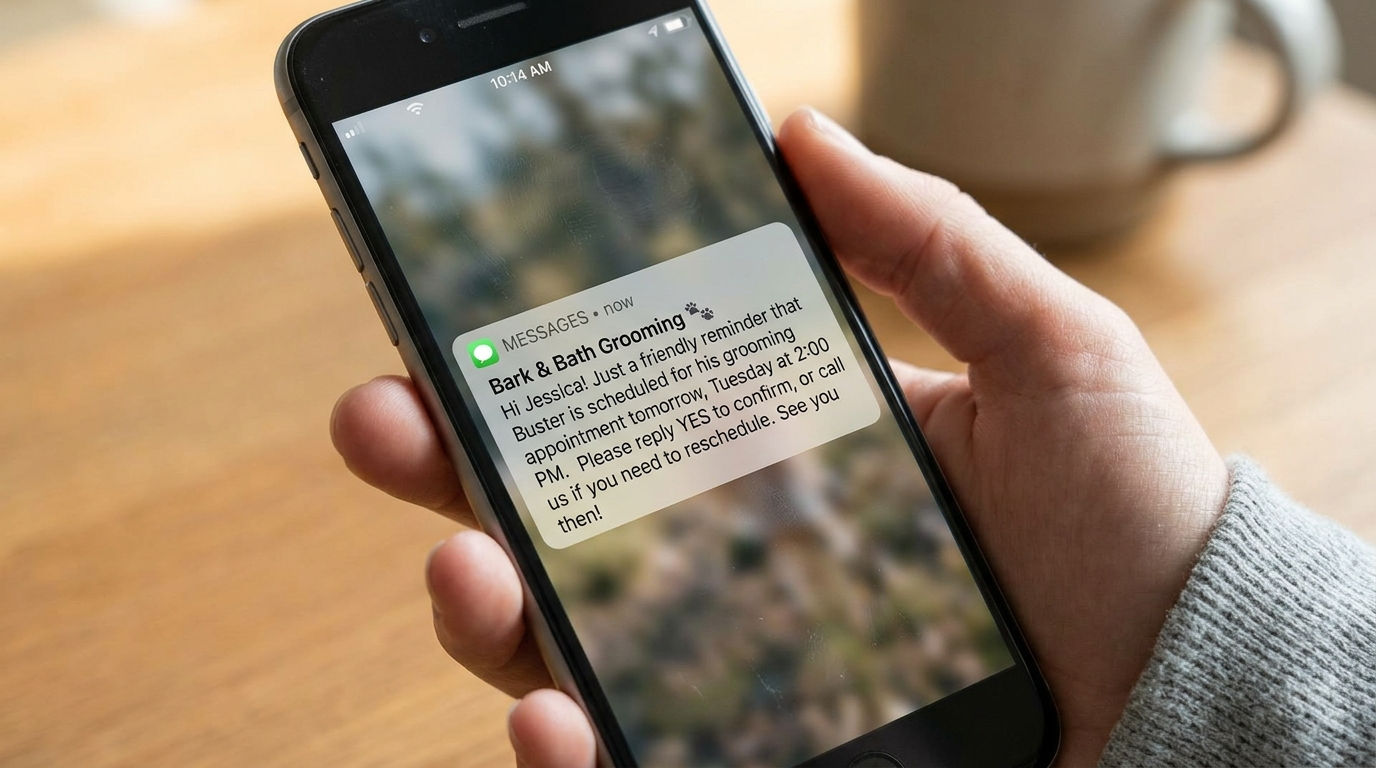
A friendly confident sentence can create a real dispute when it promises availability that nobody has checked. Label results as information, a provisional request or a confirmed appointment; only use “booked” after the scheduling system reports success.
If you are turning these rules into a website conversation, the practical setup decisions are covered in our AI chatbot setup guide.
Following a sensible question sequence
Ask service and dog size early, then request health, behaviour and coat details relevant to whether a normal appointment length is suitable. Good questions narrow uncertainty without asking the customer to repeat information or type a miniature biography. Short, progressive enquiries are easier to complete.
A repeat customer with an established coat history should not need to re-enter every detail, but should be invited to flag changes. The assistant must not interpret silence about a skin concern as evidence that no concern exists.
Handling prices without making promises
Pricing is often contingent on coat condition, dog behaviour, timing and the work actually needed. An assistant can explain a transparent pricing approach. Present only verified starting prices or estimates, state what can change them and leave final assessment with the grooming professional.
Do not let a model invent a fixed quote, discount or policy to satisfy an impatient question. A long-coated dog described as “a bit fluffy” may need extra dematting time that cannot be judged reliably from a short text.
What happens when the calendar is connected
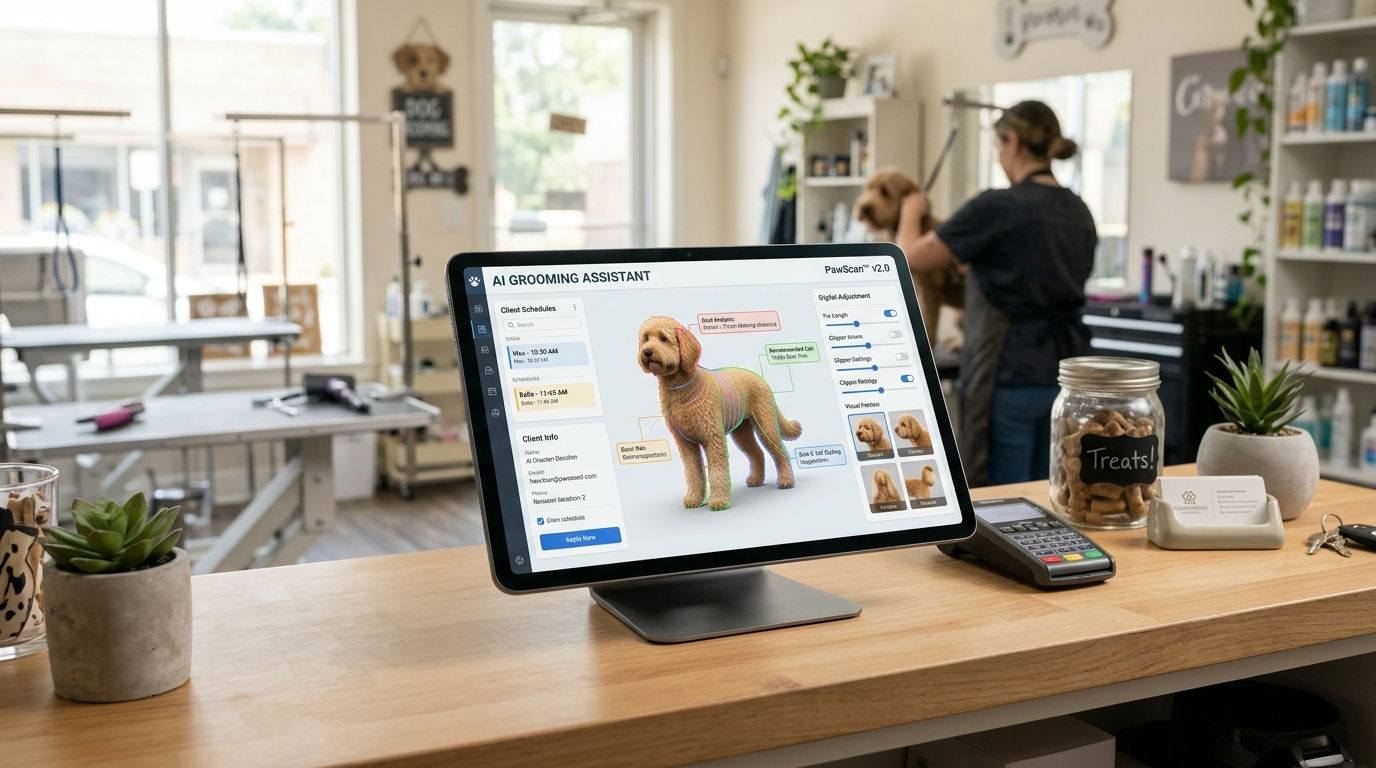
A trustworthy integration checks current capacity, applies service-duration rules and writes the reservation once, rather than merely suggesting available times from memory. If the calendar is temporarily unavailable, collect a request and promise a human confirmation rather than claiming the slot is secured.
If two people request the last afternoon slot within seconds, one booking must succeed and the other must receive a fresh alternative. Test read-and-write permissions, time zones, buffers, resource conflicts and cancellation behaviour with sample appointments before allowing autonomous booking.
Detecting when a groomer must respond
Automation helps most when it identifies requests that need judgement and routes them cleanly; it is not a replacement for professional handling decisions. A dog with severe matting, a bite history or a recent operation needs an individual discussion rather than an algorithmic booking guarantee.
Create explicit handoff triggers for unusual coats, behaviour concerns, medical disclosures, complaints, uncertain pricing and conflicting requests. The client should know when to expect a human reply, and the groomer should receive a concise conversation summary instead of a messy transcript.
Measuring the right outcome
Review a sample of conversations each week for wrong service selection, guessed prices, repeated questions and failed handoffs. Count successful, accurate bookings rather than only the number of messages an assistant sends. A high response volume can hide poor decisions.
If clients spend longer untangling an automated reply, the assistant has moved work instead of saving it. Track completed enquiries, corrected bookings, minutes of follow-up and client confusion; compare with your previous process over a realistic period.
Introducing it without losing your style
Publish clear operating rules, review common misunderstood questions and give clients an obvious way to speak with the groomer. Start with one narrow task, such as answering routine questions outside opening hours, before granting calendar-editing permissions. Keep wording easy to recognise.
A solo groomer could pilot after-hours FAQs for two weeks while continuing to book complex first visits by phone. Broad “handle everything” instructions create a poor first experience because they conceal the decisions that truly need a person.
Walk through a genuine enquiry from start to finish
Imagine a message arriving while a groomer is halfway through drying a spaniel: “Could you do Archie on Friday?” The first answer should not be a list of imaginary openings. It should establish whether Archie is an existing client, which service is wanted, and whether Friday means any time or a particular part of the day. An assistant with permission to read the live calendar can then check the duration required for that service. An assistant without that permission can only pass on the request. The wording of the next message must reflect the difference. “I’ve sent your Friday request to the salon” and “Your appointment is confirmed for Friday at 2 pm” are not interchangeable outcomes.
Suppose the owner replies that Archie is a rescue dog who struggles with dryers. That information changes the conversation even if the software has already identified a possible slot. It might affect the handling plan and appointment duration, so the assistant should stop short of making an automatic commitment. The groomer needs to review the note and decide whether the slot is suitable. Ideally the client sees a clear message about the review, while the groomer receives one concise task rather than separate alerts for every sentence. A good system prevents the availability check from being mistaken for approval of the handling plan.
Write down the states your system can honestly show
There is a useful distinction between an enquiry, a proposed appointment, a reserved slot and a completed confirmation. List the actual states supported by your booking software and decide the client-facing phrase for each one. If a deposit is required, include a separate payment-pending state rather than assuming that selecting a time finishes the booking. If the appointment has been cancelled, the message must make clear whether the diary has released the time. These decisions belong in the workflow specification before anyone starts polishing the chatbot's personality. Attractive language cannot compensate for an inaccurate appointment state.
A short audit can expose weak points. Ask a test client to request a time that is already occupied, change the required service after a slot appears, and submit an enquiry with no contact details. Then disconnect the calendar and see whether the assistant still sounds confident. These are not unusual edge cases in a grooming salon; they are normal consequences of changing plans. The acceptable answer during a connection failure is a provisional request with a route to a human response, not an invented alternative or a silent booking attempt that may later create duplicates.
Build the information a groomer actually needs
A concise handoff could contain the dog's name, the owner's preferred contact method, the service requested, any time preferences, relevant coat or behaviour notes, and the exact decision that remains open. The groomer should be able to see what the bot has already promised, including whether a provisional hold exists. Unrelated chat history and guessed descriptions of the dog's temperament are not helpful. Nor should the bot automatically classify a health concern: it can record the owner's statement and ask the professional to review it without interpreting symptoms.
When the client returns a month later, the assistant should reuse only information that is still appropriate. A saved address or dog's name may be stable; coat condition, medication and behaviour can change. One carefully chosen confirmation question can be kinder and safer than a sprawling form. The assistant should distinguish known information from a fresh client statement, and let the groomer correct records if a previously entered detail was wrong. That is more valuable than a perfectly fluent exchange based on stale information.
Decide what a successful pilot looks like
A sensible pilot starts with FAQ replies and gathering booking details, not automatically editing the entire diary on day one. During the trial, look beyond how many enquiries the assistant answered. Check whether each response used the current service list, whether someone could identify provisional versus confirmed slots, and how much correction was required. Invite a few regular clients to describe what they thought would happen next. If they understood an enquiry as a confirmed appointment, change the wording even if the software behaved exactly as configured. The point is a process that both groomer and client can trust when the salon is busy.
Test an enquiry before enabling booking
- Ask for a slot for a nervous dog without giving its size or coat condition; the assistant should seek missing facts rather than promise a time.
- Switch to a second dog halfway through the exchange and verify that pet details are not merged.
- Escalate a request involving severe matting and check whether the groomer receives the exact unresolved question.
Official background reading for How AI Booking Assistants Handle Grooming Enquiries
A useful assistant knows when to stop
The best first version is deliberately limited: it understands common enquiries, gathers genuinely useful context and knows what it cannot decide. Once the replies are accurate, booking confirmation and calendar write access can be tested separately. For a small salon, reliability and a clear human handoff are more valuable than a conversation that merely sounds effortless.