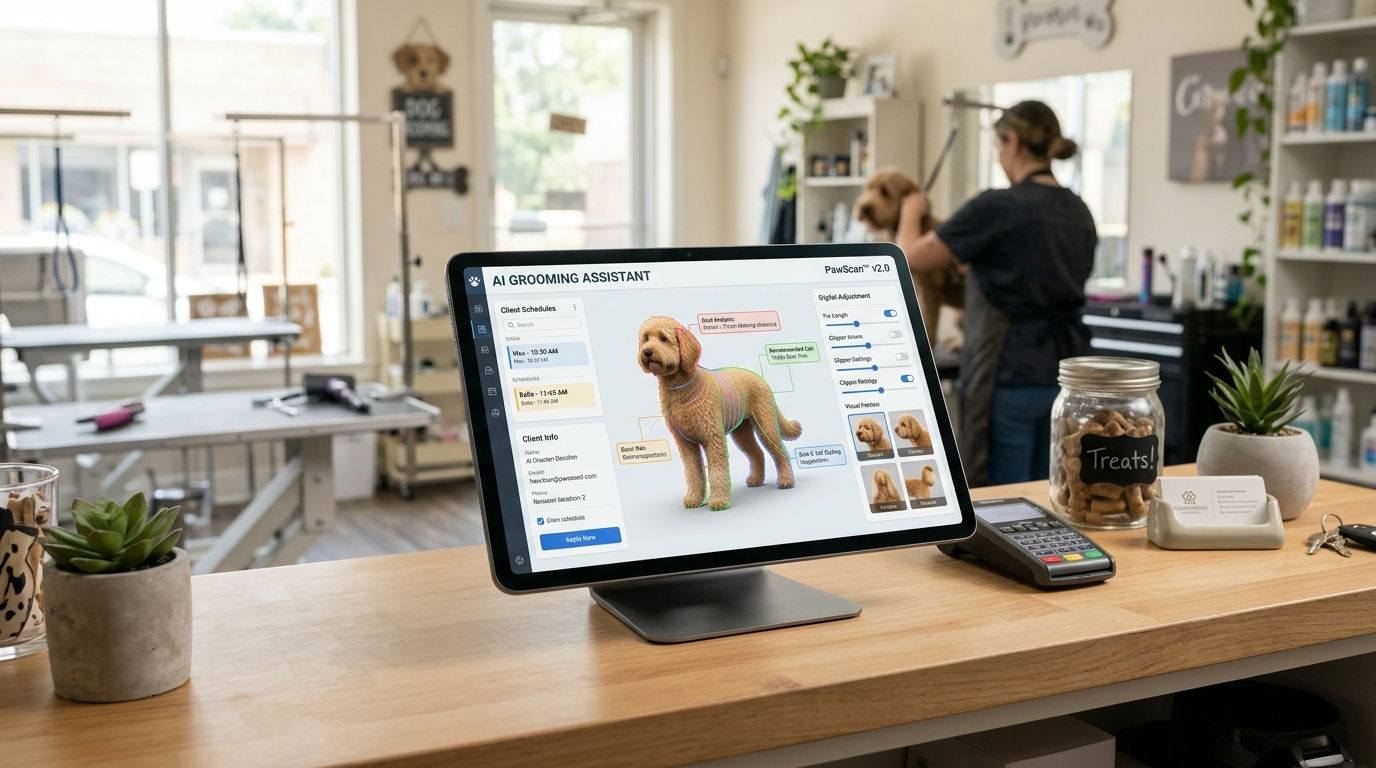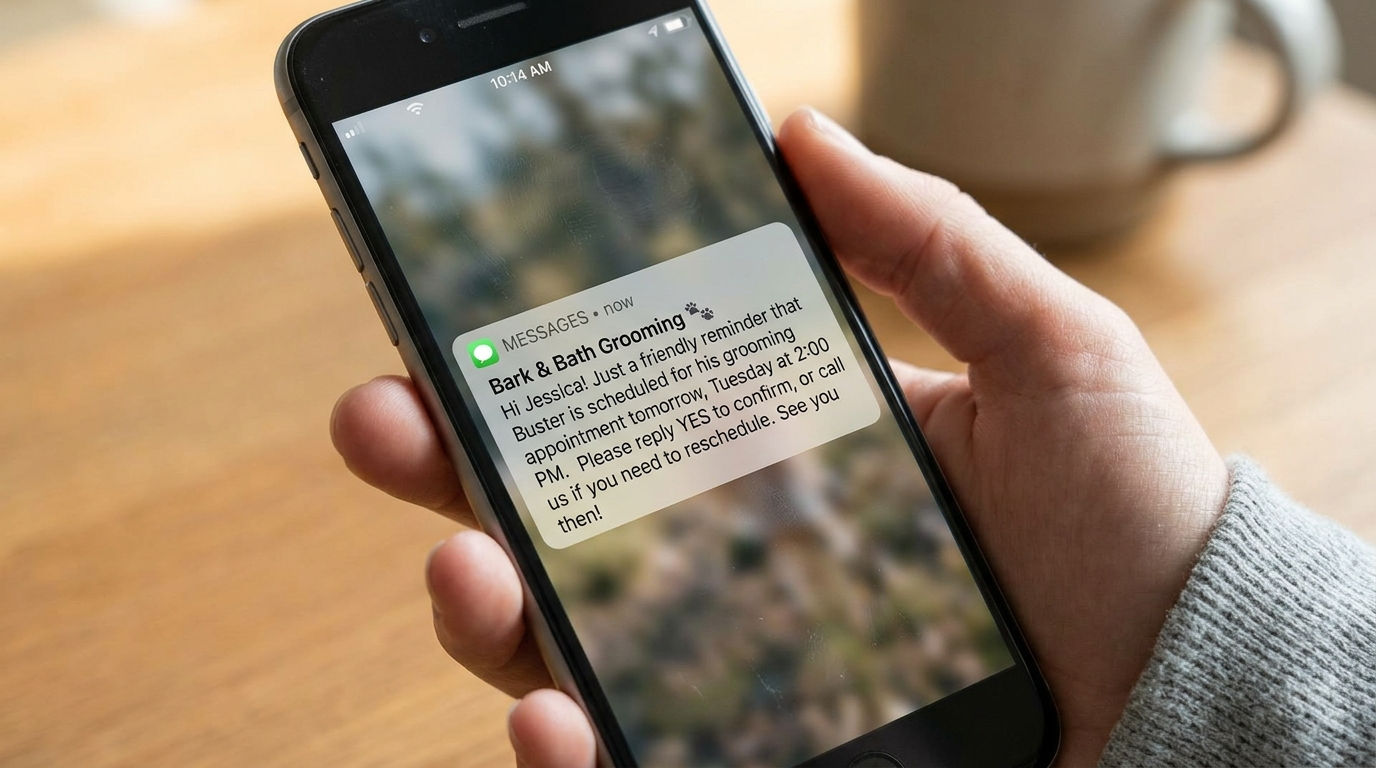
Text is familiar, fast and convenient for clients who cannot speak during work. AI can interpret a message and propose the next step, but the word “booking” covers several separate actions: understanding intent, matching a service, finding space and writing a reliable appointment record.
The safe answer is yes, an AI-assisted text workflow can book grooming appointments when the right integrations and controls exist. Without those controls, it can gather requests but must not claim to have booked anything.
Recognising a booking request in ordinary language
Match messages to the correct customer and pet, confirm any ambiguity and distinguish an enquiry from an instruction to reschedule. Clients use informal shorthand, emojis and partial information; a text assistant should establish what the person actually wants before changing a calendar.
“Same trim as last time, next Thu?” may refer to a previous dog, a previous stylist or an appointment length the current system cannot verify. If a shared family number is associated with multiple dogs, assumptions about identity can produce a wrong appointment.
The calendar must be the source of truth
A successful SMS reservation depends on a connected scheduling service that can check and commit time atomically. Suggesting a time is not reserving it. Use short-lived offers or recheck before writing the appointment, then send a confirmation only when the write succeeds.
Never treat a copied spreadsheet, an old calendar screenshot or a language-model memory as live availability. Two clients may reply “yes” to the same proposed slot while the groomer is bathing another dog.
Verify the dog and service before holding time
An existing client might need a full groom, hand strip or wash-only appointment; these services are not interchangeable in duration. Avoid asking for more personal information than a booking requires, especially over a message channel shared with others.
A short-coat bath request cannot safely be converted into a full haircut just because the assistant predicts what the client usually purchases. Confirm the dog, requested service, location if mobile, preferred time and any change affecting duration or handling.
Before accepting a text-booked slot, check the information requirements in what AI must know before booking a grooming visit.
Design a confirmation that leaves no doubt
The final text should contain dog name, appointment date, start time, location, service and any essential arrival instructions. Include a route to correct an error. “Great, see you Tuesday” fails when the customer has discussed two Tuesdays and three possible services.
State that the appointment is confirmed only after the calendar acknowledges it; use a separate wording for requests awaiting approval. A transport or delivery status in the messaging platform is not evidence that the person read or agreed to the details.
Understand delivery delays and opt-outs
A client sends STOP after a promotional sequence but still expects a response about an existing booking request. SMS delivery is not guaranteed at an exact second, and automated replies can arrive after a person has already contacted the salon by phone.
Do not assume a message is delivered or consented to simply because the software marks it as sent. Separate operational booking communication from marketing, handle preferences accurately and provide another channel for urgent changes.
Escalate anything that changes safety or price
Give the client a clear message that the groomer will assess the issue, and pass the relevant context rather than an unexplained red flag. Text is useful for routine logistics but may conceal coat matting, behaviour uncertainty or medical disclosures that require discussion.
“He has a sore patch but needs shaving today” should trigger a review rather than an optimistic booking confirmation. An automated text should never diagnose a condition or guarantee a grooming outcome based solely on a short description.
Budget for the real cost of SMS
Costs can include the booking tool, SMS provider, message volume, number rental and setup time, alongside staff review. Measure total exchanges per completed booking and the number of interventions rather than price per text alone.
If clients routinely switch to calling after a confusing bot response, apparent SMS savings are misleading. A conversation needing eight back-and-forth texts costs more than a simple confirmation and may be a worse experience for a complex case.
Pilot with a narrow set of customers
Start with repeat bookings for known pets or a controlled set of simple services and check every completed booking against the calendar. A pilot is a chance to find incorrect assumptions, not just to show that the assistant can send fluent messages.
Trial the system during quiet periods and deliberately include a client who changes their mind after accepting an offered appointment. Review confirmations, duplicate prevention, message tone and opt-out handling before adding first-time clients or complex services.
What a text-message booking actually requires
A text assistant can receive “Can Daisy come in next Thursday?” and reply within seconds, but the message itself is not a reservation. To confirm a booking, the software needs a service selection, enough information to assign a realistic duration, permission to consult the correct diary and a reliable way to write the appointment. If any of those parts are missing, the safe output is a request awaiting review. Many ordinary SMS integrations are message-delivery tools, not complete scheduling systems. Buyers should ask vendors to demonstrate the calendar write and cancellation flow, rather than accepting a generic claim that the assistant “books by text.”
SMS is especially convenient for clients who already know the salon. A returning owner might ask for a similar appointment, confirm that the dog's coat and health information have not changed, and receive an offered slot. First-time clients often need a different journey: breed or approximate size, coat condition, service, age and behaviour concerns may affect whether a standard duration is appropriate. A useful assistant does not force both people through the same long questionnaire. It collects just enough to make the next decision, then escalates anything it cannot evaluate.
Keep the text thread easy to understand
Short messages are a strength, but brevity should not remove essential meaning. A customer needs to know whether the time is offered, held or booked. Avoid sending five separate messages with conflicting statuses. One final confirmation can include the dog's name, date, local time, service, salon location and any deposit condition. The message should not expose sensitive pet notes or extensive personal details that could appear on a locked-screen notification. If a long explanation is essential, use a secure page or ask the groomer to contact the owner.
Two-way messages also require state management. If a client replies “yes” two days after a slot was offered, the system must check that it is still available. If they text “please cancel” after receiving a reminder, the action should follow the published cancellation procedure and the calendar must record the result. Free-text messages like “actually make it later” can mean a request for an alternative, not authorisation to delete the existing appointment. The assistant should confirm what is being changed before taking irreversible action.
Choose when automation should stop
Some messages contain a problem that cannot be solved through a scheduling rule. A client describing a painful skin condition, a recent operation or a dog that bites when handled needs a human discussion. Likewise, a dispute about a deposit or a request for an unusual service should not trigger an invented exception. The assistant can acknowledge the information, record the necessary facts and explain when the groomer will respond. Offering a simple “reply HUMAN” option can be a useful backstop, provided someone genuinely monitors the queue and the response expectations are realistic.
Decide what the tool does when a text is delivered but the calendar is offline. The correct behaviour is to record an unconfirmed enquiry and tell the client that confirmation will follow. If the assistant instead issues a firm time from a cached schedule, the salon may inherit an overlapping appointment. Test the same failure with two clients seeking the final Saturday slot. The booking system, not the wording model, should be the final authority on availability.
Account for message cost and consent
SMS providers usually charge for sending messages, and longer or international messages can change the economics. Consider the cost of confirmations, reminders, replies and failed delivery, not only the monthly chatbot subscription. Review the lawful basis and preferences for operational texts separately from marketing messages. A necessary appointment reminder is not permission to send promotions indefinitely. Keep a clear opt-out route where required and avoid building a process that depends on a client receiving every single text. A groomer still needs a way to check the diary when a number is wrong or a message cannot be delivered.
A simple test of the promise
Before buying a text-booking service, ask the provider to show a complete real-time transaction: an available time is checked, two simultaneous requests are handled, the winning appointment appears in the groomer's diary, and both customers receive accurate messages. Then ask what happens if the calendar connection fails. The answer will reveal whether the product truly books or merely collects enquiries.
Run a three-message SMS trial
- Send a request that changes from a bath to a full groom and confirm that the previous service is not accidentally reserved.
- Send an ambiguous Friday request and ensure the assistant asks for a date rather than silently choosing one.
- Confirm that the final message contains the dog, service, date, time and an unmistakable booking status.
Official background reading for Can AI Book Dog Grooming Appointments by Text Message?
Convenient does not mean unattended
Text booking works when a conversation, a real scheduling system and a clear confirmation are joined together. The channel is convenient, but reliability still comes from accurate service rules, explicit approval and a fallback when a question is too complex for automation.