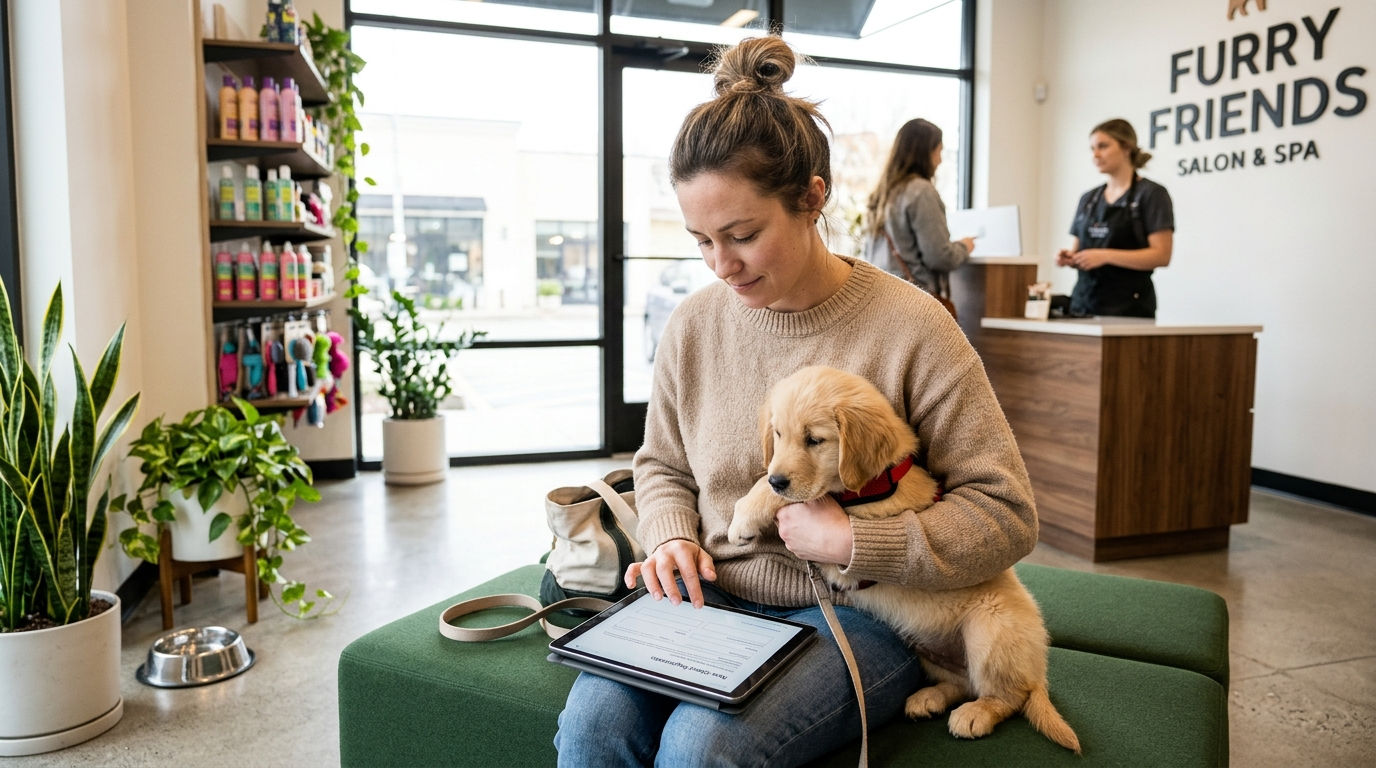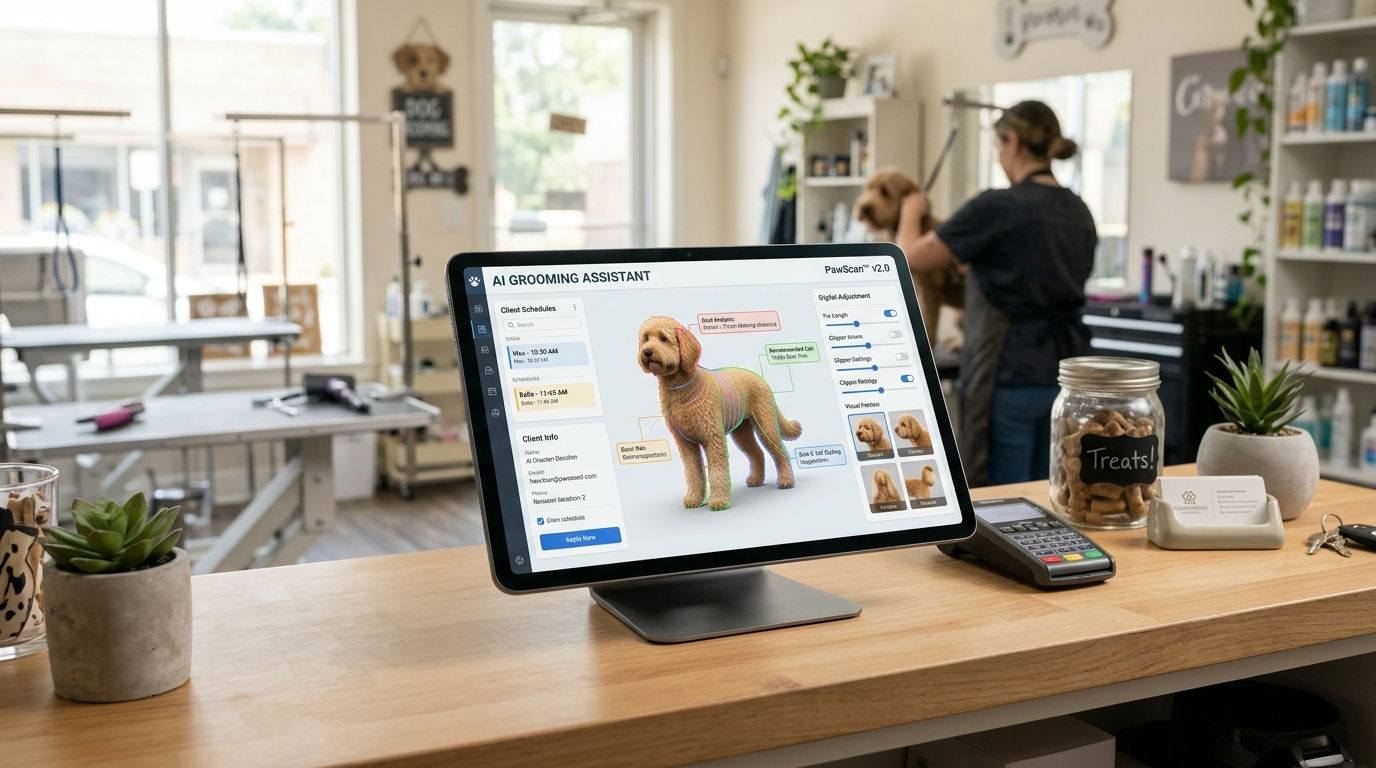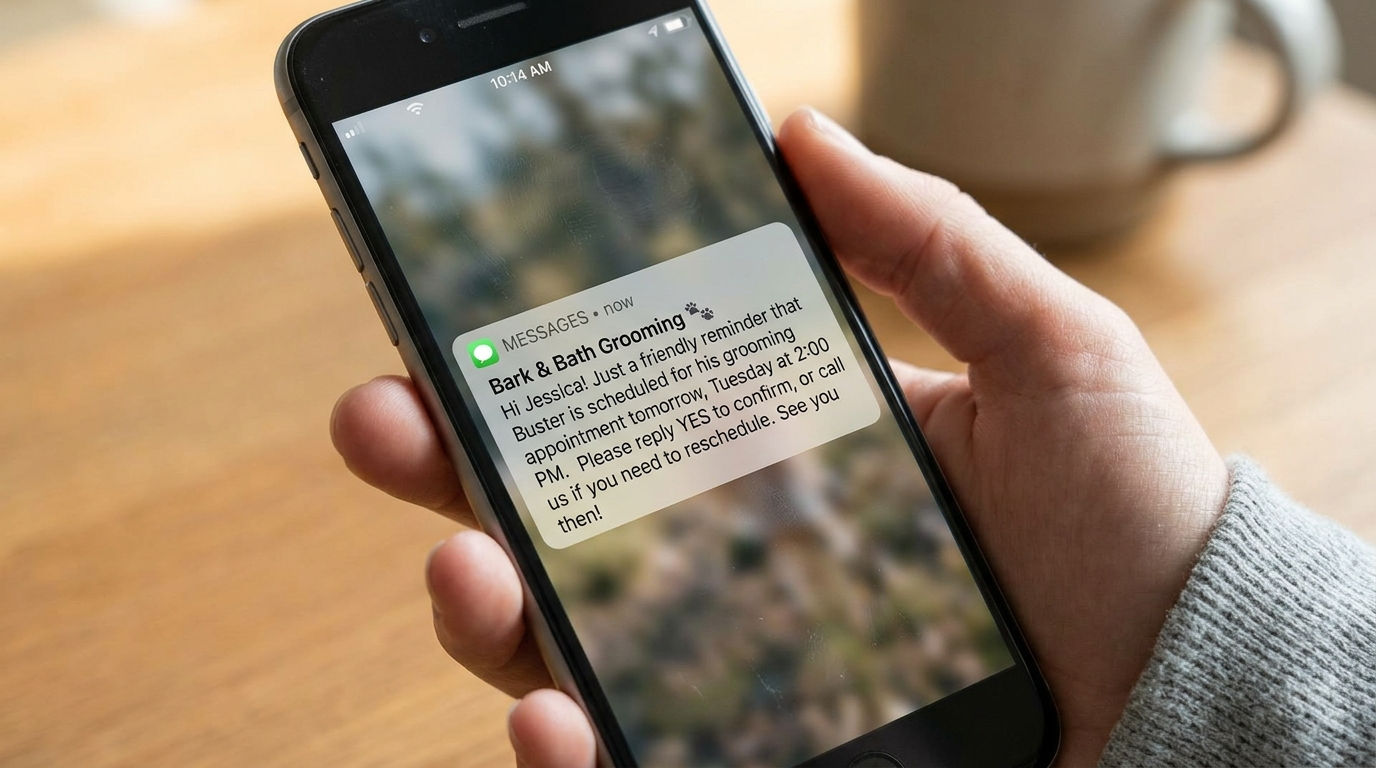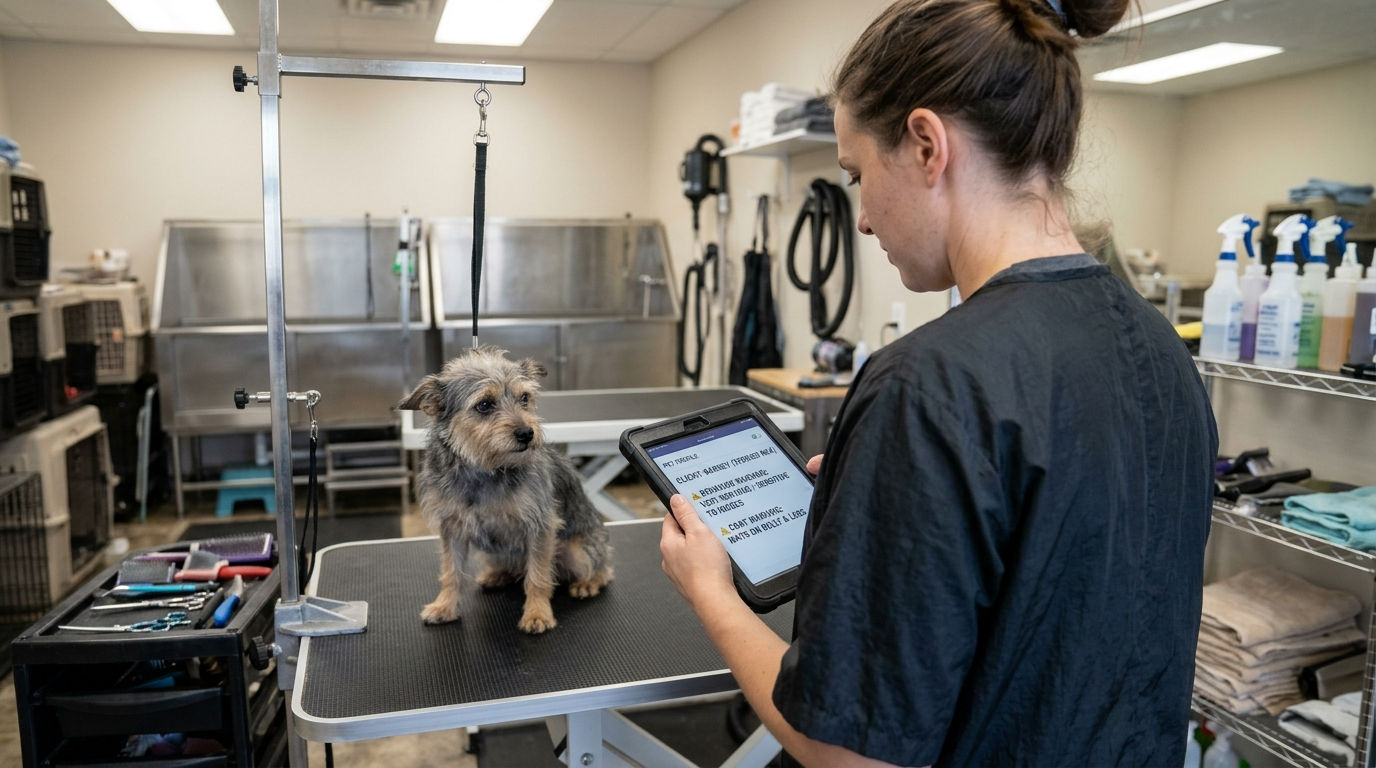
An empty calendar slot is not necessarily a suitable grooming appointment. The right time depends on the dog, the requested service, the groomer's equipment and capacity, and occasionally a conversation that cannot be reduced to a checkbox.
Before authorising AI to book, decide what information is essential, what can safely wait until arrival and what requires a human assessment. These distinctions make the difference between helpful automation and an expensive scheduling mistake.
Identify the dog accurately
The system should match the correct pet profile, not merely the person who owns the telephone number or the first dog found in a customer record. Breed labels alone are imperfect predictors of coat type, temperament or time, so allow room for the groomer's assessment.
A family books both a small terrier and a large doodle, and the longer appointment is accidentally assigned to the terrier. Confirm name, approximate size or breed, age where relevant and whether it is a first visit or an established client.
Specify the service rather than guessing it
A wash, tidy, full groom, hand strip or nail appointment can require different labour, tools and preparation. A client calls a bath-and-brush “the usual haircut” even though their last visit was a short wash-only service.
Show plain-language service descriptions and ask the person to confirm the choice before the calendar duration is calculated. Do not allow a chatbot to add chargeable extras on the basis of inferred preferences.
Understand coat condition and maintenance history
A long gap since the last groom can turn a standard one-hour booking into a job requiring a different plan. Matting, compacted undercoat and heavily grown-out coats may change service time and welfare considerations. These details cannot always be judged remotely.
A photograph can be useful context, but it is not a substitute for examining the coat and dog in person. Ask about the previous appointment, visible matting, home brushing and whether any sections are uncomfortable; route uncertainty to the groomer.
Capture behaviour and handling concerns respectfully
Invite clear, neutral descriptions of previous grooming experiences and what helps the dog feel safe, rather than forcing labels such as “aggressive.” An anxious, reactive, elderly or mobility-limited dog may need quieter conditions, a different arrival plan or a specific groomer.
A new dog that struggles with dryers should not be booked into the busiest salon hour without discussing alternatives. The assistant must not imply that an automated questionnaire can establish whether a difficult groom is safe.
Account for health disclosures appropriately
Health questions can inform scheduling but should not encourage the bot to practise veterinary medicine or promise a clinical outcome. Ask the groomer to review potentially relevant concerns and encourage veterinary guidance where appropriate, without collecting detailed records unnecessarily.
Never override a groomer's welfare policy simply because a client presses for the next available time. An owner mentions a recent procedure or an inflamed patch while selecting a clipping service.
Check resources beyond a free time slot
A salon diary may have one groomer, a shared bathing station and a drying area; a mobile groomer has travel and parking constraints. A scheduling system that only counts empty blocks can hide workload conflicts that a human would spot immediately.
Two dogs might fit on paper but require the same bathing station at the same time, creating a physical bottleneck. Match service length and buffers to available staff, equipment, location and any known sequencing rules before committing the appointment.
The approval route should also follow the safeguards described in when an AI booking bot needs a human.
Explain deposits and booking conditions before consent
A booking flow should reveal any applicable deposit, cancellation notice, arrival requirement or rescheduling condition at the point the person decides. A client accepts a Saturday appointment without realising that the salon requires a deposit to secure weekend slots.
Show the exact applicable terms, provide a clear chance to review them and keep payment separate from unverified conversational promises. A bot must not make up exceptions, refunds or legal terms; disputed cases belong with the business owner.
Decide what confirmation actually means
A first-time matted dog sends all its details, but the groomer has not assessed whether the requested slot is suitable. There may be several stages: enquiry received, information complete, groomer approval required, deposit pending and appointment confirmed.
Treating every completed form as a firm booking creates false expectations and leaves the groomer to repair them. Give each state a distinct message and update the client when the actual calendar or approval status changes.
Separate essential booking facts from professional assessment
The dog's name and the owner's contact details identify the request, but they do not tell the salon how long a groom will take. A first-time enquiry may need breed or approximate size, the service requested, coat length and condition, grooming history, behaviour concerns and any information relevant to safe handling. This is not an invitation to collect every personal detail imaginable. Each question should have a clear reason: does the answer change the appointment length, the equipment needed, the groomer's preparation or whether a conversation is necessary before booking?
A useful intake form makes uncertainty visible. “Not sure” can be an honest answer when an owner does not know whether a knot is a mat or cannot describe a coat type. The assistant should not guess the missing value from a breed label or treat a blank field as proof that there is no concern. It can flag the uncertainty and request a photograph or human review if that is part of the salon's normal process. Photographs help provide context but do not replace a hands-on coat assessment.
Decide which answers may change the calendar
A booking assistant must understand the difference between a routine repeat appointment and an unassessed complex visit. A familiar short-coated dog receiving the same service may fit an established duration, subject to the groomer's policy. A new dog with a heavily matted coat, unusual anxiety or mobility limitations may need more time or an initial consultation. In that case the system should offer an enquiry or assessment appointment instead of asserting a standard slot is sufficient. It should be able to explain that this protects time for the dog's needs without making the owner feel blamed.
If your business handles multi-dog bookings, information belongs to each animal rather than only to the household. Two dogs from one address may have very different coat conditions and handling requirements. The assistant should establish whether the groomer intends to work on them simultaneously or sequentially, and whether the diary can represent the required resources. A single household request must not quietly become one ordinary appointment with two animals attached.
Capture client expectations as well as logistics
Ask what the owner is hoping to achieve, especially where appearance and maintenance are likely to affect the agreed service. An owner might request a long fluffy finish but report considerable matting. The bot can explain that the groomer will assess what is comfortable and practical; it must not guarantee a style, a coat-saving outcome or a final price. If the client has already been quoted an estimate, ensure the system knows whether that amount is fixed or subject to assessment. Consistency here prevents a pleasant booking conversation from becoming a dispute at collection.
The same clarity applies to deposits, arrival instructions and cancellation conditions. If payment secures the appointment, the assistant can present the actual policy and direct the owner to a secure checkout. Until payment success and calendar confirmation are both recorded, the booking status must remain accurate. Do not tell someone “all sorted” when the tool has only taken details or sent a payment link.
Review the record immediately before confirmation
A concise final review could show dog, service, preferred appointment, arrival location, contact route and any note needing the groomer's approval. The owner should have a chance to correct a misspelt name or wrong date; the groomer should be able to amend the appointment without losing the original request. For returning pets, ask whether there have been important changes since the last visit instead of blindly reusing old behaviour or health notes. The point is not more form fields. It is better decisions from a small amount of current, relevant information.
Keep questions proportionate to the next decision
If the owner simply wants to know whether the salon grooms large dogs, the assistant does not need an address, a complete medical history or a photograph. If they are requesting a firm appointment, more detail may be relevant. This distinction reduces unnecessary data collection and makes the conversation feel natural. Review the intake questions periodically and remove any field that does not influence scheduling, preparation, communication or a legitimate record-keeping need. The smallest useful set of current information is usually easier for both owner and groomer to trust.
Define a minimum safe booking record
- Identify which dog and owner details are essential for the chosen service and which can wait until arrival.
- Add a review flag for recent medical events, severe matting or behaviour concerns without asking the bot to diagnose them.
- Check that the assistant cannot invent vaccine, coat or handling information when an intake field is blank.
Official background reading for What AI Must Know Before Booking a Dog Grooming Visit
Know enough to book—or know to ask
The minimum information is not a universal form. It is the smallest set of reliable facts needed to choose an appropriate next action. Let AI help organise those facts, but keep complex welfare, coat and pricing decisions with the professional who will perform the groom.