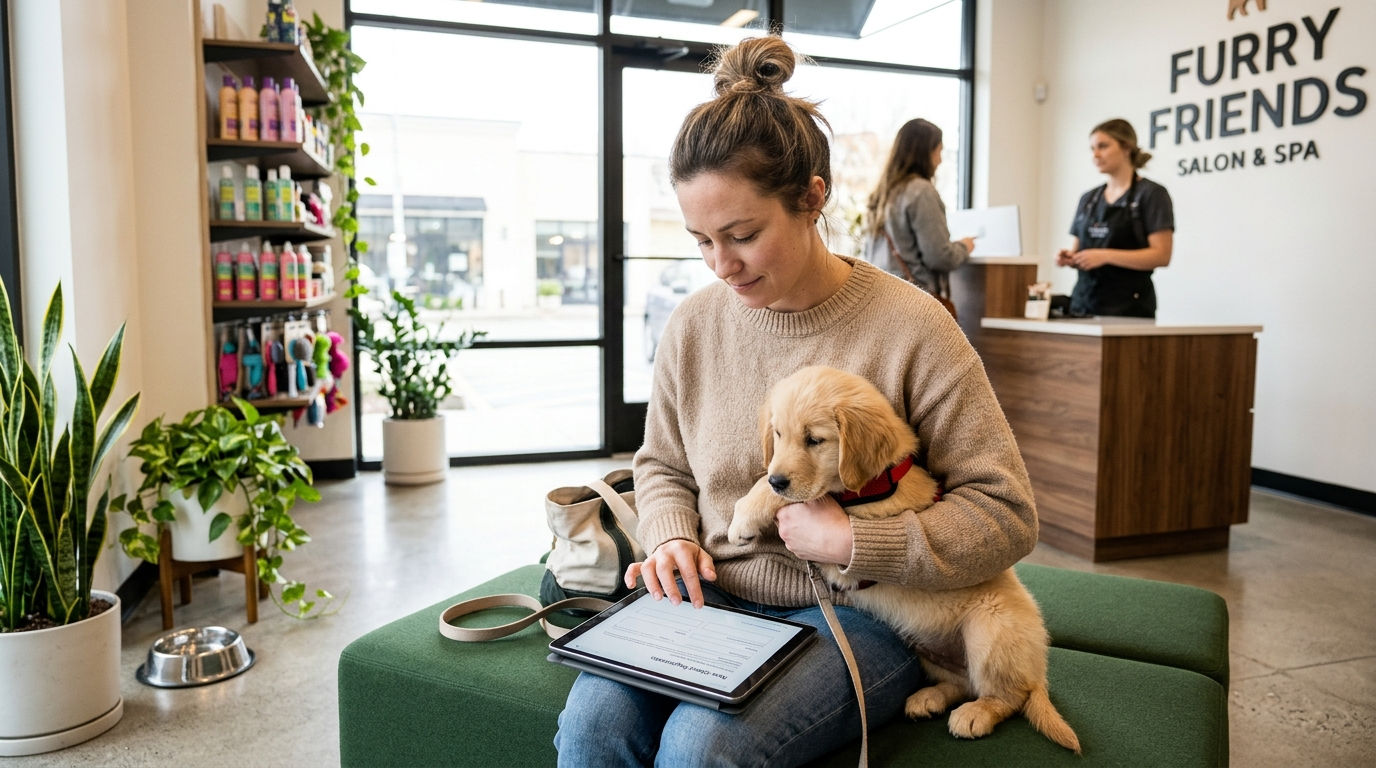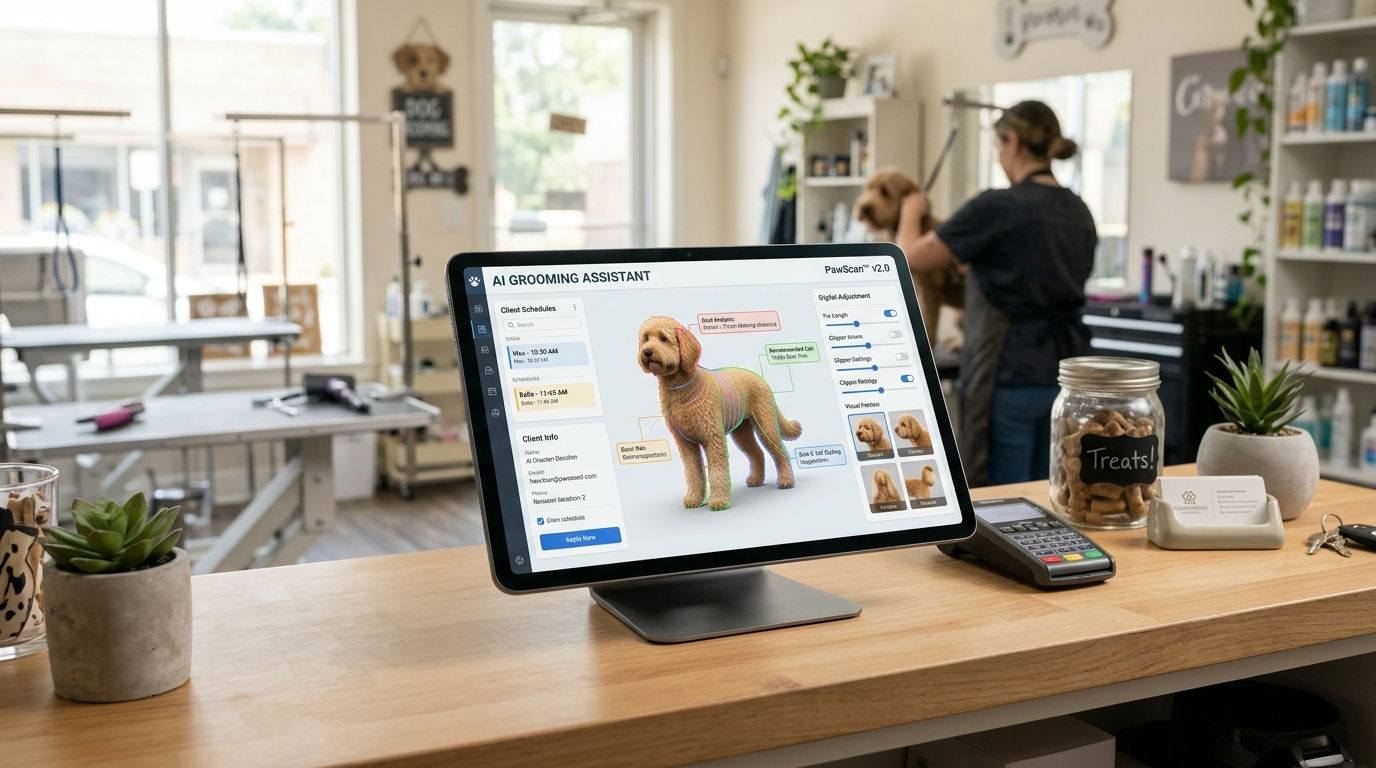
Two salons may offer similar grooming services but talk to customers differently. One is chatty and informal; another is calm and concise. Automated replies should fit the business without sacrificing clarity about booking status, price or the moments that require a real person.
A tone guide works best when it sets practical boundaries rather than asking a model to “sound friendly.” The goal is language that a client recognises and can act on.
Start with messages you already send well
A groomer who normally says “Thanks, I'll check the diary after this appointment” should not suddenly send ornate corporate-sounding paragraphs. Your real booking confirmations, answers to common questions and polite boundary-setting replies reveal the business's style better than a list of flattering adjectives.
Copying an old message without checking its policies can spread obsolete prices or cancellation terms. Choose a small set of effective existing messages, remove personal information and describe their shared features: length, greeting, warmth and directness.
For implementation details beyond message tone, see setting up an AI chatbot for grooming bookings.
Put the useful answer first
Write short replies with one main question at a time, and make booking status visible before adding optional friendliness. The customer usually wants an action: a possible slot, a price explanation, a request for more detail or a clear next step.
“We are absolutely delighted to assist with your fluffy friend's transformation” is less helpful than “I can check Tuesday; what service does Milo need?” A warm personality cannot rescue a message that hides the actual decision under a long paragraph.
Pick a small vocabulary and keep it consistent
Decide what the salon calls its services, appointments and customers; consistent terms help clients recognise what they are booking. Maintain a short glossary with approved service names, common abbreviations and terms the business never uses.
Avoid slang that can confuse owners whose first language is not English or sound dismissive in a sensitive situation. If the website offers a “bath and brush” but the bot calls it a “deluxe pamper package,” clients may think it is a different service.
Handle uncertainty in a human way
It is normal to need to check a calendar, a coat condition or a pricing exception. The reply should say so without presenting uncertainty as incompetence. Overconfident statements about price, time or safety damage trust faster than a short honest pause.
An owner asks for a firm price for a heavily matted dog based on two sentences and no assessment. Use wording such as “I can give a guide, but the groomer will confirm after assessing the coat,” and offer the next step.
Respect boundaries around jokes and emojis
A smiley face might suit routine messages; a playful comment about a sick or frightened dog almost never does. Tone should shift with the subject. A humorous booking reminder sent after a client reports bereavement or a medical concern feels careless.
Use a modest emoji policy if it matches the brand, and exclude jokes and upbeat sales language from complaints, welfare issues and fees. Automatic sentiment classification may miss context, so include explicit rules for sensitive topics and handoff.
Design confirmations for scanning
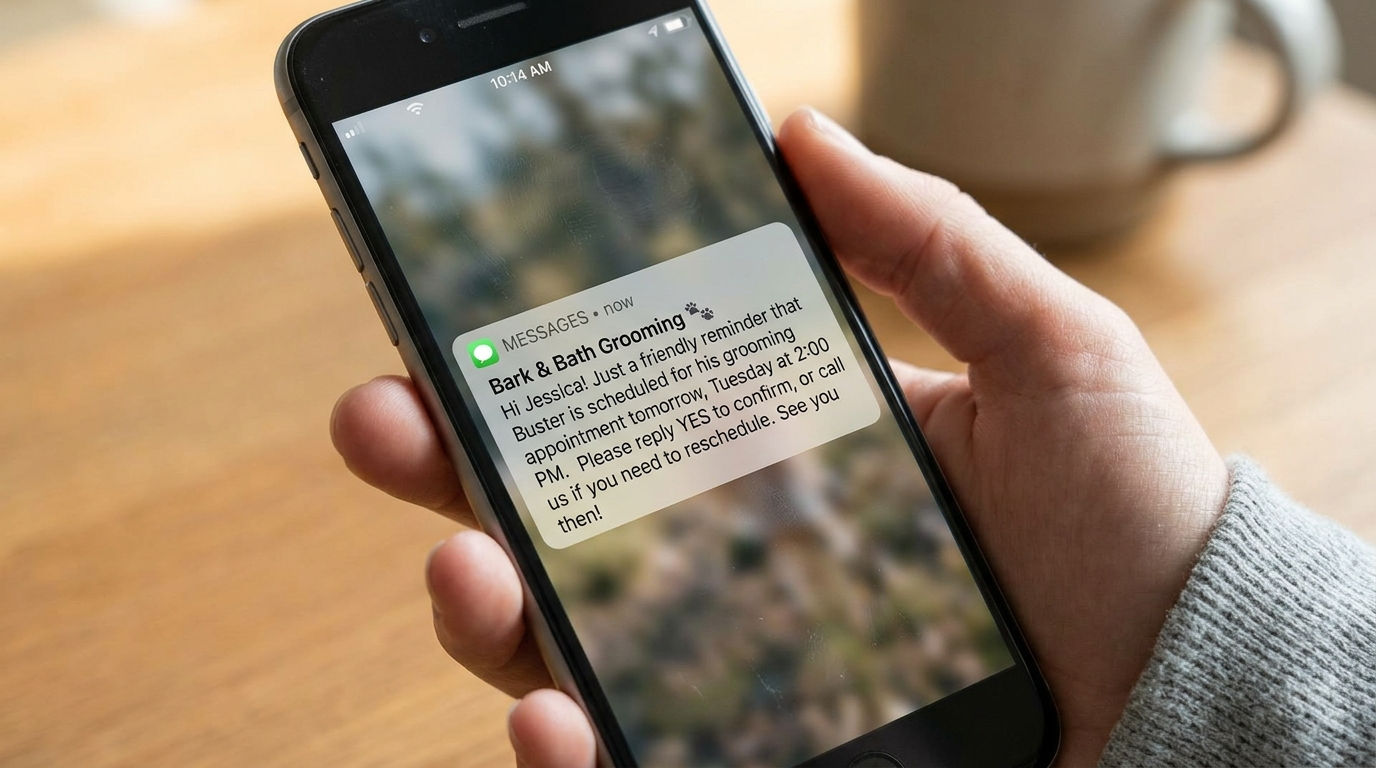
A long paragraph places the appointment time between comments about shampoo and parking, making an easily avoidable late arrival more likely. Clients often read messages quickly on a phone. Familiar structure reduces the chance of missing the date or location.
Decorative language should never replace the facts required to find or change the appointment. Put date, time, service and location on separate short lines when the channel allows, followed by one concise instruction.
Test messages aloud and in real channels
Preview messages on mobile, read voice scripts aloud and ask someone unfamiliar with the salon what they think the next action is. What reads naturally in a document can sound strange when an automated voice says it or when SMS splits it into several messages.
A phrase with three clauses and a formal sign-off may work in email but feel clumsy as a text reply to “Can I come Friday?” Do not judge tone only by whether the owner likes a message; clarity for a first-time client matters too.
Keep ownership of every update
Tone rules need to change when services or business policies change, and someone should know who approves the wording. Store approved examples and policy facts separately, then retest replies after any business change that affects booking promises.
A constantly improvising voice is not a brand voice if clients receive incompatible answers on different days. A new deposit rule applies next month, but the bot still sends the older friendlier confirmation without mentioning payment.
Build a voice guide from actual booking conversations
Start by choosing a handful of messages that customers already understand: a welcome note, an answer about opening hours, a request for coat information, a cancellation response and a booking confirmation. Remove names and other identifying details, then look for patterns. Does the salon use the dog's name? Are messages one or two sentences long? Does the groomer say “appointment” rather than “slot”? Which phrases feel reassuring without becoming sugary? These practical choices are a better writing guide than telling an AI assistant to be “super friendly and professional.”
Turn those observations into a compact set of rules. For routine enquiries, the reply might begin with the useful answer, then ask one question. For complex cases, it should acknowledge the concern and make human review clear. For confirmed bookings, it must always state the verified date, time, service and any condition still outstanding. Voice is not an excuse to remove vital details. A warm “you're booked!” sent before the calendar has confirmed anything would be an operational mistake regardless of how authentic it sounds.
Choose different tones for different moments
An enquiry from a regular customer can be relaxed without being vague. “I can check for Milo next Thursday—would you like the usual bath and tidy?” sounds approachable and makes a specific request. A first-time owner dealing with severe matting needs more care: explain that the groomer will assess the coat and discuss a comfortable plan before quoting a final service. A disappointed customer querying a cancellation fee needs a respectful explanation and a direct contact route. A single upbeat script should not be used for all three situations.
Pay attention to what the assistant does when it does not know. “I don't have a confirmed time for that yet” is clearer than implying the salon is very busy or that a place will probably open. Replace invented confidence with accurate next steps: collecting an enquiry, asking for a photo when appropriate, checking the diary or requesting a callback. These sentences are still part of the brand voice. In fact, a straightforward admission of uncertainty often sounds more like an experienced groomer than an exaggerated promise.
Edit the messages that carry risk first
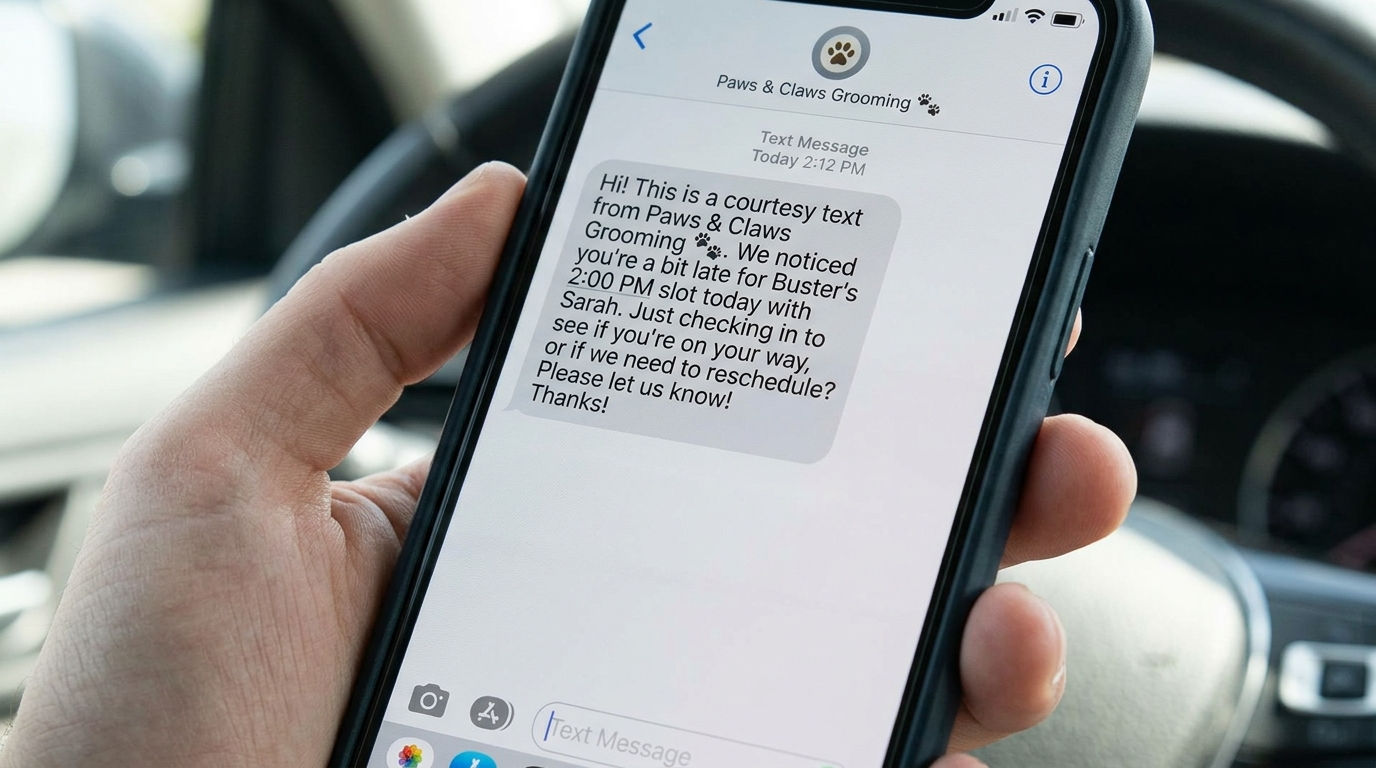
Price estimates, deposits, cancellation rules, late-arrival messages and grooming suitability need especially careful wording. Write these messages with the actual policy beside you. Check that a phrase such as “from £40” cannot be mistaken for a guaranteed price if coat condition changes the cost. Avoid apologising for a rule in a way that appears to waive it, and do not invent exceptions when a client pushes back. Where judgement is needed, the assistant should explain who will review the question and what happens to the appointment in the meantime.
Test message length on a phone. A paragraph that looks short on a desktop can become a dense block in SMS or chat. Put the action near the beginning, break up complex information when necessary and avoid decorative emojis that obscure dates or prices. The dog and owner's names can add warmth, but only when they are correctly recorded. A misspelt name repeated in every message feels less personal than a neutral greeting.
Maintain the voice as your salon changes
When you introduce a new service or change opening hours, review the assistant's example replies as well as its knowledge base. Keep a small collection of approved messages and a list of discouraged phrases. Once a month, read a sample of real conversations to see where customers became confused or asked the same thing again. Rewrite the underlying instruction, then retest the complete conversation. A recognisable voice is built through consistency and restraint, not by asking the system to imitate a personality more loudly.
A small before-and-after writing exercise
Compare “Your query has been successfully processed and an appointment request has been initiated” with “Thanks for asking about Friday. I've sent the request to the groomer, who will confirm a time.” The second sentence is easier to understand and makes a promise the system can actually fulfil. Review every automated message for the same qualities: one useful answer, a precise booking status, a natural question if needed and an honest indication of who acts next. The business's personality belongs in those decisions more than in decorative adjectives.
Compare five real reply styles
- Use five anonymised, routine client questions and write the reply a groomer would actually send.
- Test the same cases in your assistant and edit answers that are too promotional, too long or overconfident.
- Keep a clear human-contact option in replies involving discomfort, pricing uncertainty or unusual services.
Official background reading for Making AI Booking Replies Sound Like Your Business
Make clarity the centre of the tone guide
Clients do not need a perfectly human impersonation. They need a clear, considerate message that sounds plausible for the salon and tells them exactly what happens next. Build your voice around real examples, consistent service language and a willingness to say when the groomer needs to check.