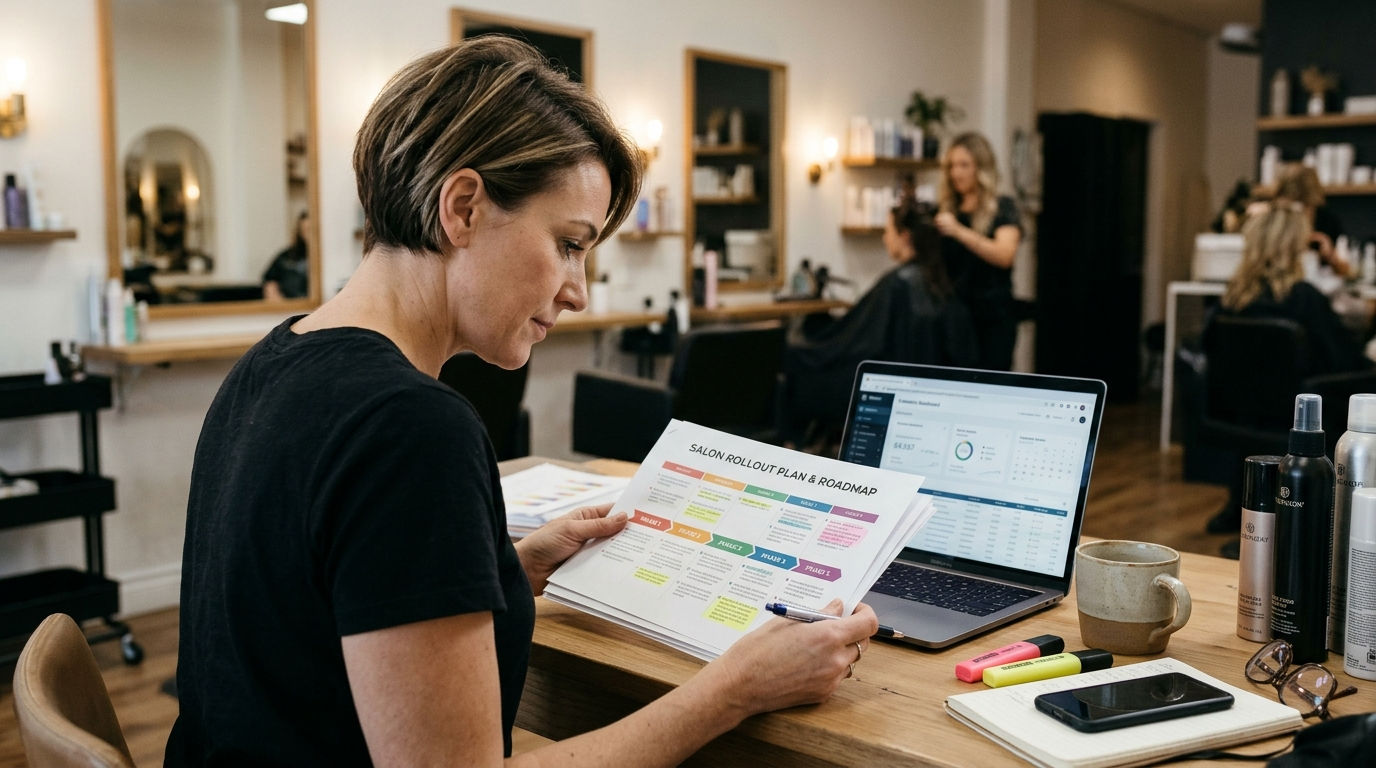
A sensible AI rollout does not start by handing every booking to a chatbot. It begins with a narrow problem, reliable service information and a way to tell whether the tool helps in real working conditions.
For an independent groomer, gradual deployment limits the chance that a software error affects a full diary. Each stage should have a named responsibility, a clear test and a simple way to stop or reverse the change.
Week zero: describe the problem precisely
Before buying software, identify whether the main friction is missed calls, repetitive questions, rescheduling messages or manual confirmation. A vague goal to “use AI everywhere” makes it difficult to judge success or contain mistakes.
A groomer believes all phone calls are a burden, but a short diary review shows that most interruptions are simple requests for opening hours. Choose one observable result, such as fewer after-hours callbacks or faster confirmation of routine enquiries, and record the current baseline.
Phase one: clean up service information
Automation can only follow the rules it has been given, and inconsistent prices, hours or service descriptions will produce inconsistent replies. The website shows one cancellation deadline while an old PDF and an email signature show another.
Make one maintained source for business hours, service names, booking rules, contact options and conditions that need human approval. Do not let a tool invent missing prices or policies in order to sound helpful.
Phase two: start with an enquiry-only assistant
The assistant collects a dog's service, preferred day and contact details while the groomer continues to confirm actual availability. Answer routine factual questions or capture requests without granting permission to change live appointment records at first.
A bot that writes pleasant messages but loses essential information is not ready for greater authority. Test after-hours FAQs, incomplete requests, typos and explicit requests for a person; review what the client sees and what you receive.
Phase three: implement safe escalation
Specify handoff triggers and response expectations, and check that the resulting summaries are brief and useful. Before adding booking actions, the assistant should demonstrate that it recognises uncertain prices, welfare disclosures, complaints and conflicting details.
A new customer mentions severe matting and asks for a guaranteed standard slot, which must go to a person rather than be automatically approved. A failed handoff is more serious than a slow ordinary reply because it can conceal a decision the groomer needs to make.
Phase four: connect calendar read access
Seeing real availability is valuable, but reading a calendar and writing to it require different levels of trust. Test closed days, service durations, buffers, staff and equipment restrictions before enabling firm bookings.
Showing an open thirty-minute gap does not mean a two-hour groom can be fitted there. The assistant offers times from a connected diary but cannot yet reserve them, so every suggested option must be labelled as provisional.
Phase five: test booking write access separately
Only after the earlier stages work should the assistant create or change confirmed appointments through a dependable integration. Never let a payment receipt or fluent confirmation override the actual calendar's final state.
Two test customers request the final Friday slot almost simultaneously while one changes their dog and service during the conversation. Verify duplicate prevention, atomic confirmation, failed transactions, rescheduling and the messages sent after each outcome.
Use the same trial criteria described in comparing AI booking tools for independent dog groomers.
Phase six: measure and correct the results
Review meaningful operational outcomes, including time saved after corrections, completed bookings, client confusion and avoidable interventions. The tool answers more enquiries than before, but the groomer spends an hour each week fixing mislabelled services.
Compare a representative before-and-after period, investigate incorrect responses and improve the specific rule that caused each problem. A successful trial is evidence for a next step, not proof that the system can safely handle every appointment type.
Phase seven: expand at the salon's pace
A solo groomer adds automated reminders after the enquiry pilot, but retains human approval for matted or behaviour-sensitive first visits. Voice calls, two-way texts, deposits and wider self-service changes can follow only if the smaller workflow is stable and worth maintaining.
Broad automation should remain optional: some decisions will always be better served by an informed human conversation. Set owners for policy updates, review vendor changes periodically and keep a documented fallback to ordinary calls and manual booking.
Start by defining one frustrating task
A salon does not need an “AI transformation strategy” to begin improving booking admin. Choose a specific problem such as repeated after-hours enquiries, missed phone calls or clients asking whether an appointment is confirmed. Describe what currently happens, who handles it and where mistakes occur. That gives you a baseline against which to judge a tool. Avoid beginning with a purchase decision or allowing a supplier's feature list to determine the business problem.
Write a few operating rules before choosing software. What services can be requested online? Which information affects duration? When is a deposit required? Which cases need the groomer's approval? What happens if a calendar connection is unavailable? These are ordinary business decisions, and they remain the owner's responsibility even if a chatbot is able to phrase them fluently.
Pilot information-gathering before autonomous booking
Begin with a narrow task that has a clear failure mode, such as answering verified opening-hour questions and collecting enquiry details outside working hours. Make the contact route and handoff expectations visible. Test a straightforward customer, a first-time owner who omits a critical detail and a conversation that changes halfway through. Review whether the assistant correctly distinguishes a request from a confirmed appointment. A bot that fails these tests should not be given permission to edit the diary.
When the messages are dependable, consider adding live availability lookups. Read-only access can help the assistant suggest possible times without committing them. Next test controlled calendar writes using sample bookings, including two people competing for the final slot. Check service durations, buffers, cancellation states and payment conditions. Each extra permission should correspond to a demonstrated need and a testable safeguard. Do not turn on full booking rights because the demo looked impressive.
Train the exceptions as carefully as the happy path
A groomer will still need to assess some coats, discuss sensitive behaviour notes and resolve disputes. Define triggers for human review and provide concise summaries rather than unmonitored notifications. Test what happens when a person asks to speak directly to the groomer or when the assistant cannot answer. Consider whether clients understand the response window and what happens to a provisional time while they wait. Handoffs are part of the design, not a failure to automate enough.
Build a fallback procedure for outages. If the chatbot, diary or payment provider stops responding, the system should stop promising completed actions. A client may still leave an enquiry, but the booking status must remain honest. Staff need a simple method to reconcile requests when the service returns without creating duplicates.
Decide whether expansion is justified
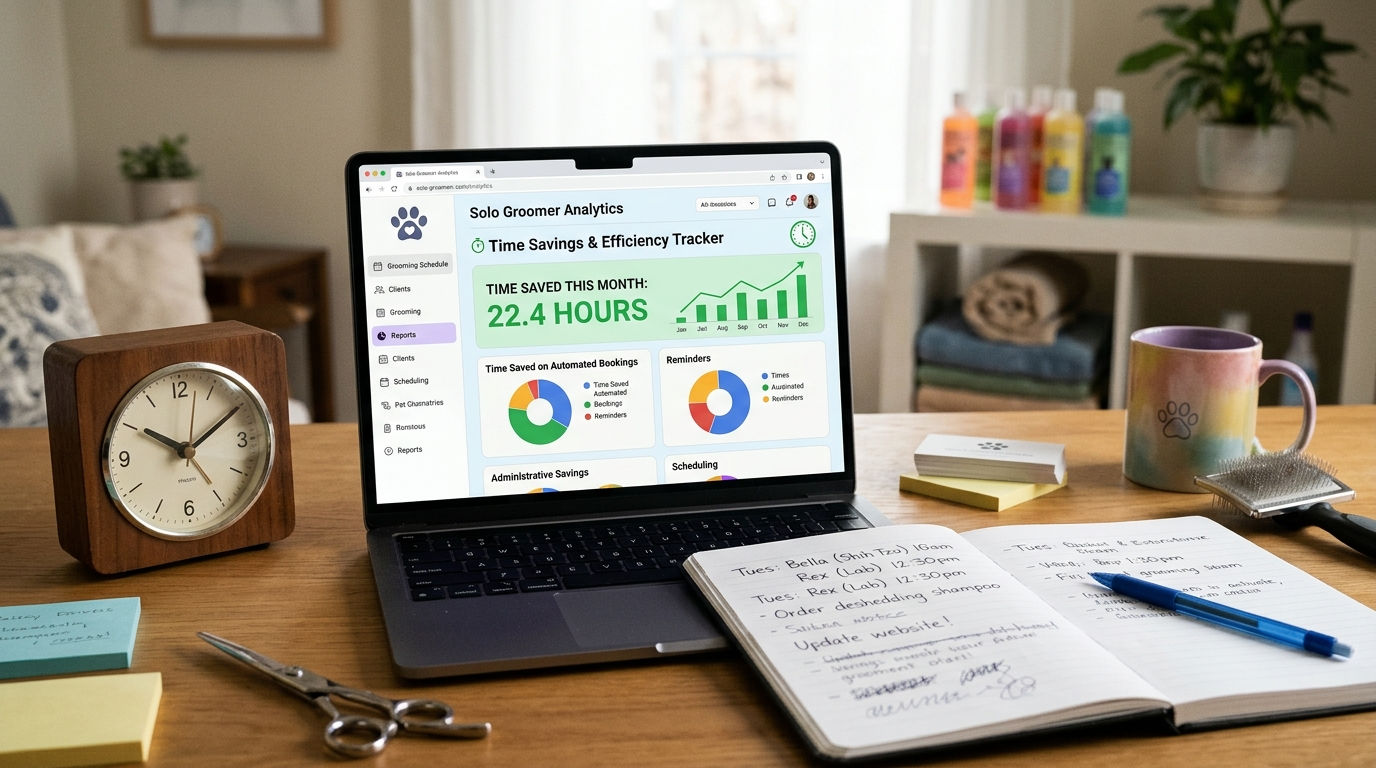
After a supervised trial, review what actually changed. Count corrected appointments, repeat questions, staff review time and any reduction in interruptions. Compare similar periods and avoid turning each saved minute into assumed revenue. If the workflow is more confusing for clients or harder for staff to correct, simplify it before adding voice calls, SMS automation or additional integrations. A good rollout advances only when the present stage can be maintained reliably.
Document the final operating instructions in plain language and make one person responsible for updating them. Services, hours, staff capacity and policies change, and an assistant becomes unreliable when its information is neglected. The best end state is not maximal automation. It is a manageable system that answers routine enquiries well, protects the diary and gives the groomer control over decisions that require professional judgement.
Use simple gates between rollout stages
Before moving from FAQ replies to appointment suggestions, check that opening hours and service information are accurate and that the bot recognises questions needing human review. Before granting diary write access, demonstrate a successful booking, a conflicting booking, a cancellation and an interrupted connection. Before adding deposits, make sure the payment state can be reconciled with the actual reservation. Before adding voice calls, test read-backs, transfer requests and the handoff queue. Each gate should have a clear pass or fail result, not just a positive feeling about the demonstration.
Keep a rollback option at every stage. Staff should know how to stop automatic confirmations, revert to collecting enquiries and continue using the calendar manually if an integration behaves unpredictably. Communicate any temporary change honestly to clients. A small, deliberate rollout may look less exciting than switching on every feature at once, but it makes the business easier to operate and gives you evidence that the new process is actually helping.
Plan a reversible two-week pilot
- Start with answering opening-hour questions and collecting callbacks, without granting automatic calendar edits.
- Keep a list of cases requiring human intervention and review a sample daily.
- Choose a rollback owner and export a backup before changing how confirmed bookings are stored.
Official background reading for A Practical Rollout Plan for AI Booking at Your Salon
Make the next stage earn its place
Rollout success is a chain of small, verified decisions. Start with accurate information, then enquiry capture, safe handoff and only later live booking actions. The system should improve how the salon works without making a difficult day depend on an opaque automated promise.