AI booking is often presented as a simple subtraction: fewer calls means more time. The reality is more complicated. An assistant may answer a great many enquiries but also require supervision, corrections, system maintenance and follow-up conversations.
A practical time-saving calculation measures work removed and work added. You do not need complex analytics to begin; a representative sample of your real week is enough.
Establish a baseline before automation
Estimate the number and type of booking enquiries you currently handle, and how many minutes each consumes. If the baseline is guessed after software installation, it will be easy to overstate the improvement.
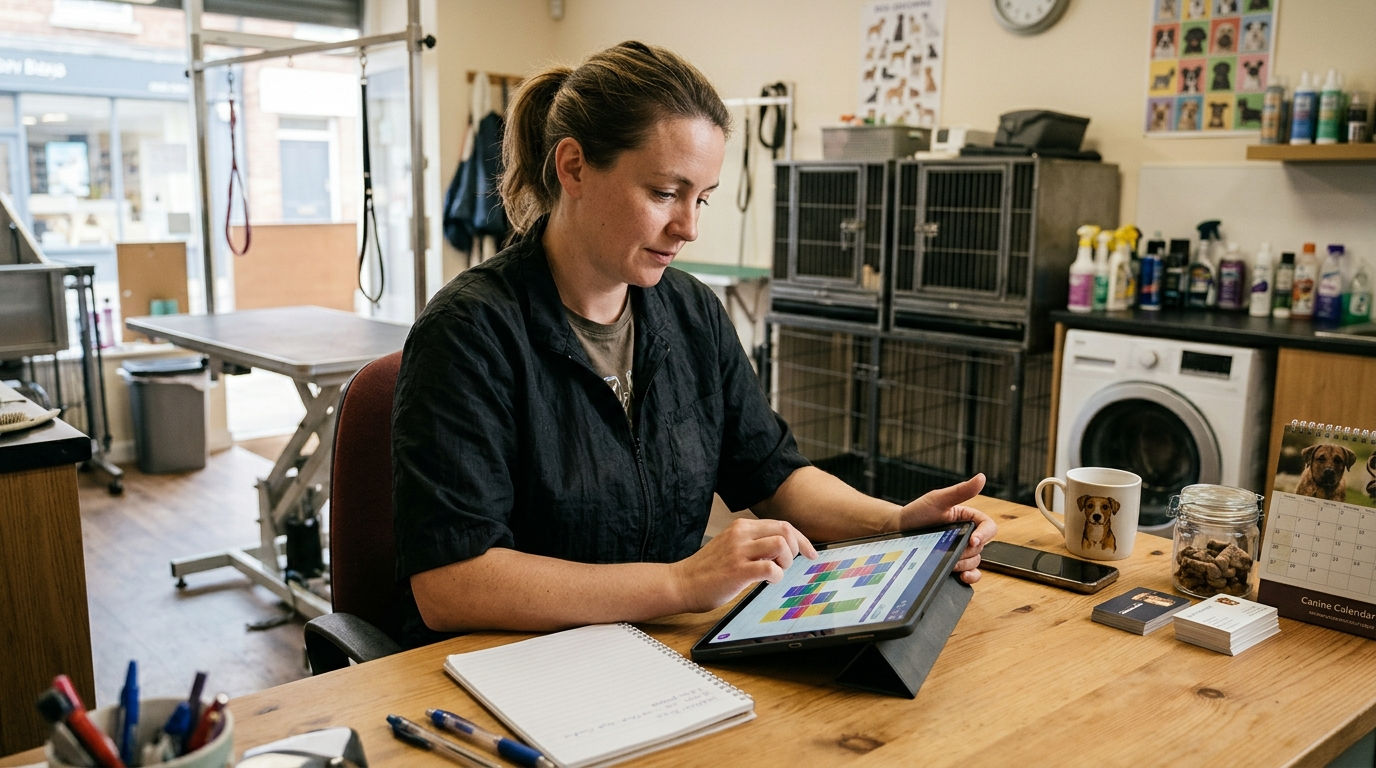
A solo groomer spends time on missed-call callbacks, routine opening-hour questions, deposit explanations and complicated first-visit discussions. Track one or two typical weeks, separating simple questions from reservations, changes and handoffs; use actual rather than idealised time.
Count the right kind of completed work
Messages answered and conversations started do not necessarily represent time the groomer no longer spends on administration. The bot sends twenty replies but leaves fifteen conversations needing a manual confirmation that takes almost as long as before.
Count enquiries resolved accurately, verified bookings created and changes completed without further intervention. A high chatbot engagement number can hide low booking completion and duplicated work.
Include supervision and correction time
A groomer spends half an hour each morning checking ambiguous chat summaries that the provider reports as “handled.” AI requires occasional review, policy updates, failed-integration handling and manual answers for complex cases.
Ignoring oversight makes an automated process appear free even when it still interrupts the working day. Record minutes spent on testing, reviewing and fixing conversations, and include them in the monthly calculation.
Separate setup effort from ongoing cost
Estimate one-time setup hours, then calculate how many months of genuine net time savings would recover that effort. Configuration, staff learning, service descriptions and calendar migration are upfront investments that should be treated differently from weekly maintenance.
A new tool takes several evenings to configure before it can handle even simple booking requests safely. A short free trial rarely reveals the full learning and migration cost without a deliberate test plan.
Use a simple calculation
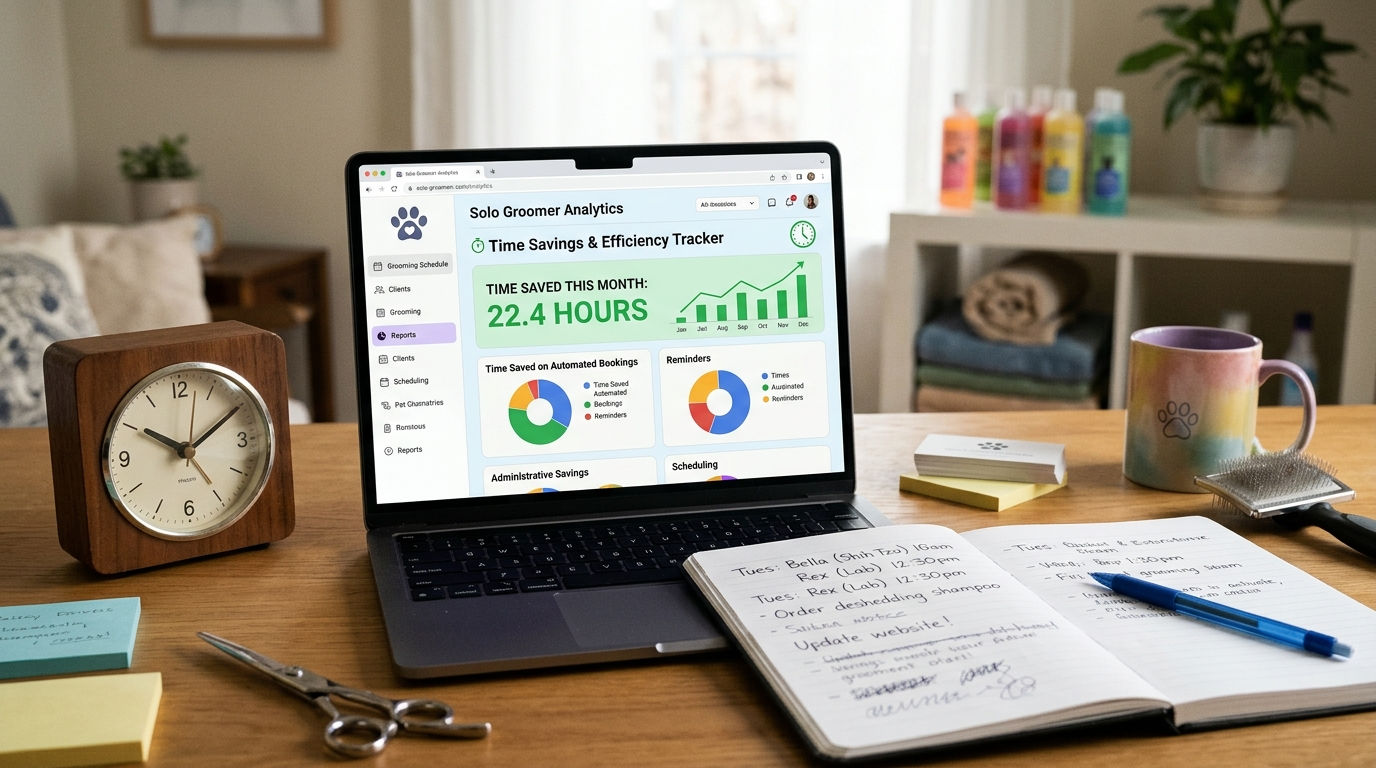
The core idea is time otherwise spent on resolved enquiries, minus new time spent reviewing, correcting and maintaining the automation. Keep the formula transparent and use a range when your estimates are uncertain, rather than reporting a false precision.
Saved minutes are not the same as additional revenue unless there is usable demand and capacity for more grooming work. Forty simple calls at three minutes each equal two hours; if review and corrections take fifty minutes, the net gain is much smaller.
Check whether time is truly usable
Five scattered minutes between dogs may not create a new appointment, while fewer interruptions can still be valuable for focus and animal handling. Do not count every freed minute as billable work or assume all of it converts into extra sales.
Reducing calls during a difficult groom improves concentration even if the calendar cannot accommodate another pet that day. Record both measurable admin minutes and qualitative benefits such as fewer interruptions, calmer handoffs or faster responses.
Look at errors and customer effort
A system that shifts labour from the groomer to the client may save internal minutes while making the business harder to book. Customers abandon a confusing bot and call repeatedly until someone answers, inflating the recorded number of “handled” contacts.
Track booking corrections, client complaints, drop-offs and time spent clarifying wrong service or price information. A reduced call log is not evidence of a healthier workflow if missed opportunities or frustration increase.
Compare after a realistic trial period
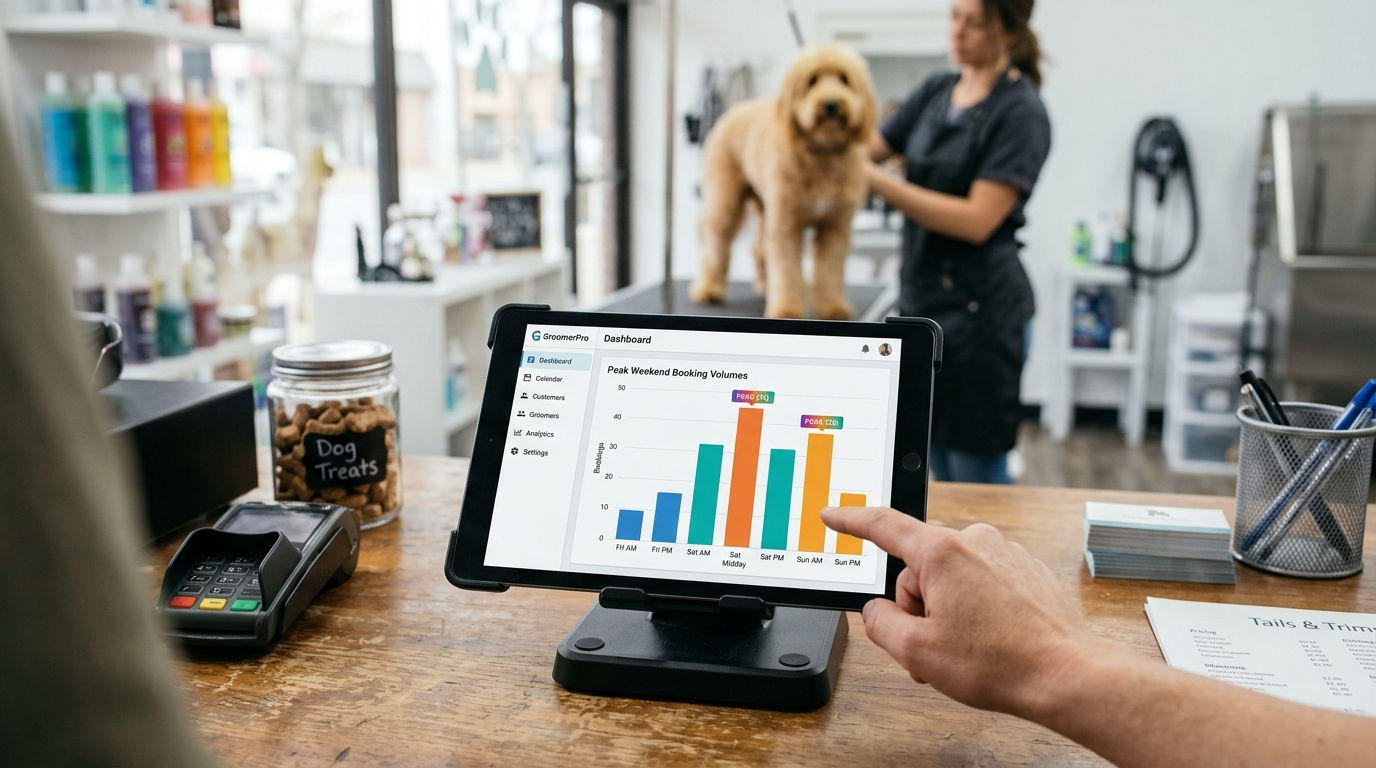
Holiday booking peaks create many routine enquiries, while quieter weeks involve more rescheduling and relationship-based conversations. Small sample sizes and seasonal fluctuations can distort short comparisons; aim for a fair before-and-after view.
Avoid turning one successful demonstration into an annual return-on-investment guarantee. Compare similar periods or account for the different request mix, then decide whether the subscription and work saved justify expansion.
To make the calculation meaningful, compare candidate products using the independent groomer's AI booking tool checklist.
Count the interruptions, not only the messages
A solo groomer may answer a dozen short questions during a working day, but that does not mean automating them saves twelve complete blocks of productive time. Each interruption involves noticing a notification, deciding whether it is urgent, replying and returning to the task at hand. Some enquiries can wait until a scheduled admin period; others involve a genuine opportunity to book a feasible slot. Record the pattern for an ordinary period before adopting a tool. Note the enquiry type, approximate time spent and whether it led to a booking or a later follow-up.
Separate routine information from decisions that need judgement. A bot may handle opening hours and send a link to the booking page with little supervision. A question about a dog's matted coat, unusual behaviour or a disputed charge may still need a personal reply. The system could save time by collecting context for those conversations, but it will not eliminate the decision itself. Counting every message as “automated” can hide the work that returns through escalation queues and corrections.
Build a simple comparison that reflects cash and time
Start with recurring software fees, expected message or call charges, payment processing differences and any installation costs. Then estimate the groomer's own time spent configuring rules, reviewing conversations, managing exceptions and maintaining the service list. Compare those with the admin time genuinely displaced and any additional confirmed appointments that fit within existing capacity. Do not convert every recovered minute into extra income unless the salon can actually use that time for paid work. A quieter day and fewer interruptions may be worthwhile on their own terms.
A useful calculation can include several scenarios. In a conservative case, the assistant answers some routine questions but still requires regular supervision. In a more favourable case, the calendar integration also reduces repeated scheduling messages. In a poor case, inaccurate answers create corrections that erase most of the saving. Use ranges rather than a single precise figure when information is uncertain. The value of a tool changes with enquiry volume, service mix and how much of the day the owner spends away from a screen.
Measure the cost of errors
Double bookings, incorrect service lengths and promises about a final price can be expensive in ways a subscription spreadsheet misses. A mistaken confirmation may mean an awkward phone call, an unused slot or a rushed appointment that should have been longer. Record corrections during the pilot and include time spent resolving them. A tool that reduces the number of incoming messages while increasing booking mistakes does not represent a clear gain. Reliability should be part of the benefit calculation, not an afterthought.
Also examine the customer side. If clients have to repeat information when handed to the groomer or struggle to understand whether an appointment is confirmed, the business has transferred its administrative burden to them. That may not appear in the owner's time log, but it can affect future bookings and trust.
Review the numbers after the novelty wears off
Trial a narrow workflow and compare similar weeks where possible, allowing for seasonal or service differences. Keep the method simple enough to repeat later. If a tool saves time only because clients stop asking questions they still need answered, that is not a healthy improvement. If it helps organise messages and protects uninterrupted grooming work without reducing care, it may be valuable even with modest direct financial returns. The decision should remain grounded in what happens in the salon.
A worked calculation without false precision
Suppose a groomer notices that routine enquiries consume roughly an hour across a typical working day, but only part of that time could be automated. If a tool handles simple questions while a person still reviews complex cases and corrections, subtract that remaining supervision from the apparent saving. Add the monthly subscription, message charges and setup time. Then ask what the freed time is actually worth: perhaps fewer interruptions, a reliable break or capacity for a suitable extra appointment on some days. These are different benefits, and it is better to state them separately.
Avoid comparing a quiet winter week with a busy holiday week and attributing the difference to software. Use comparable periods when possible and record service mix, staff availability and unusually complicated bookings. A conservative range is more honest than claiming that every bot-handled message translates directly into earnings. If the tool leaves clients uncertain about whether their appointments are real, the resulting correction work belongs in the calculation too.
Keep a distinction between admin and capacity
Time saved on messages does not automatically create room for another groom. A new appointment needs an appropriately sized slot, enough equipment capacity and time for safe handling. When you estimate financial benefit, first identify whether the recovered minutes occur in a usable block or as scattered interruptions across the day. Both outcomes can matter, but they should not be treated as equivalent revenue opportunities.
Calculate time saved with real work included
- Measure enquiries per week, average handling time and how many already resolve without further contact.
- Include bot-review time, failed handoffs, subscription charges and manual correction work.
- Compare the actual hours freed with the cost of the system over a full month.
Official background reading for Calculating Whether AI Booking Saves Solo Groomers Time
Measure net saved time, not activity
Net time saved is the time genuinely removed from the business after all new supervision and corrections are included. A small tool that eliminates a few repeated questions may produce a better outcome than an expensive assistant that handles everything poorly. Measure first, then expand.