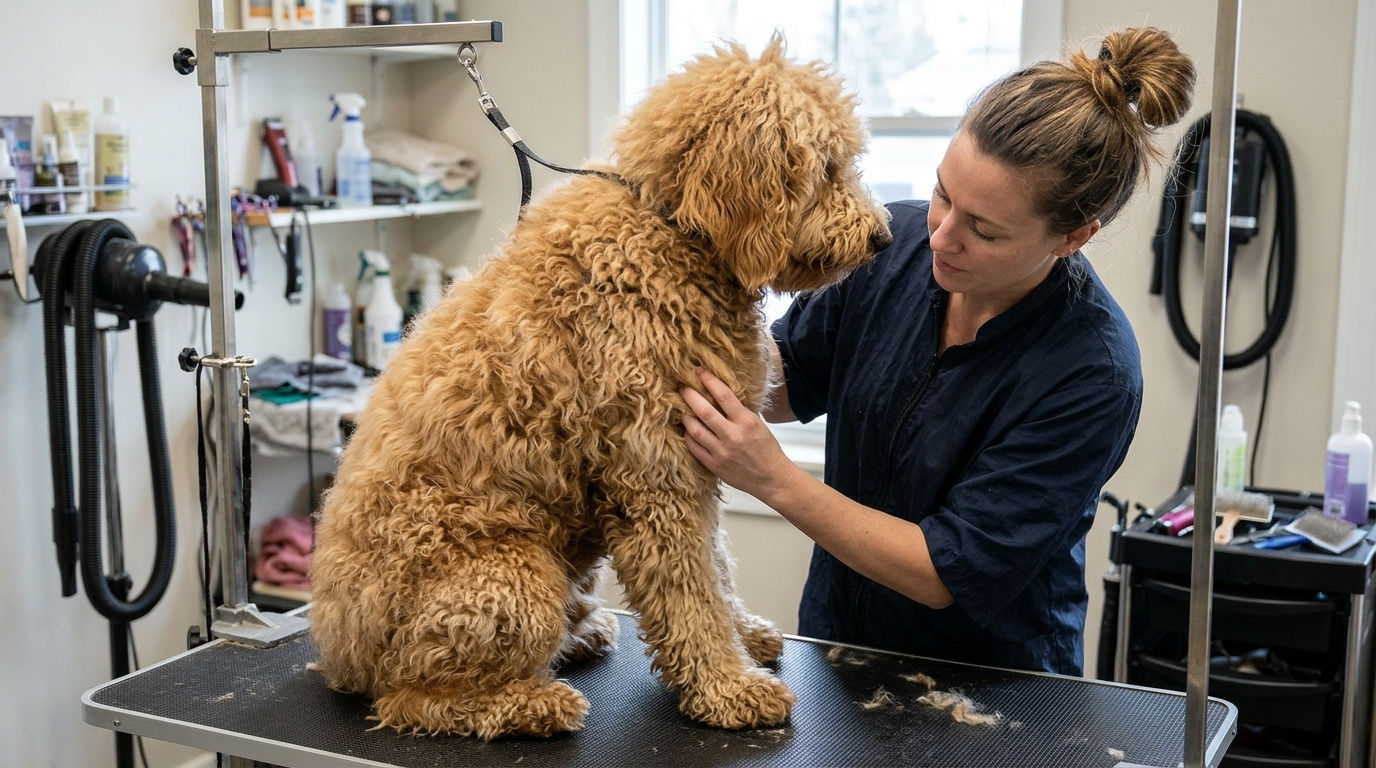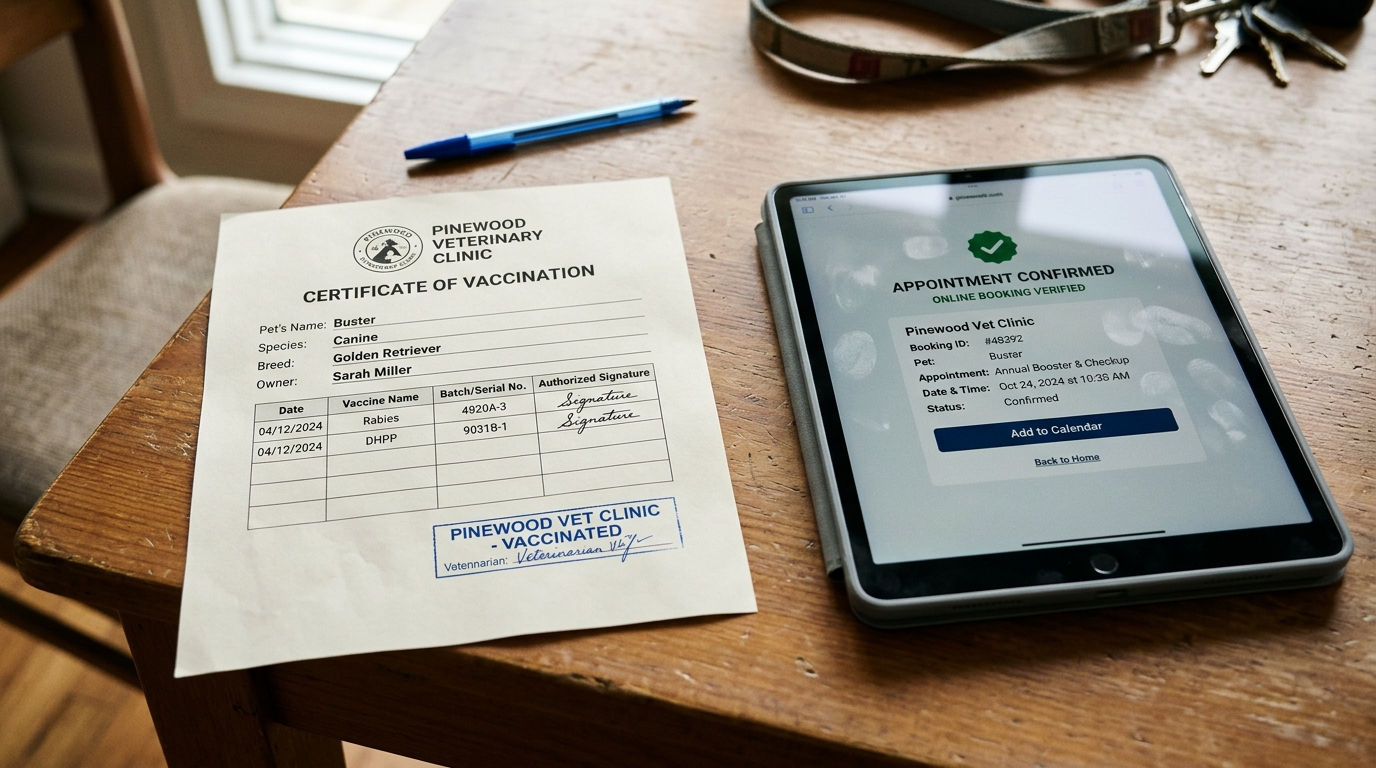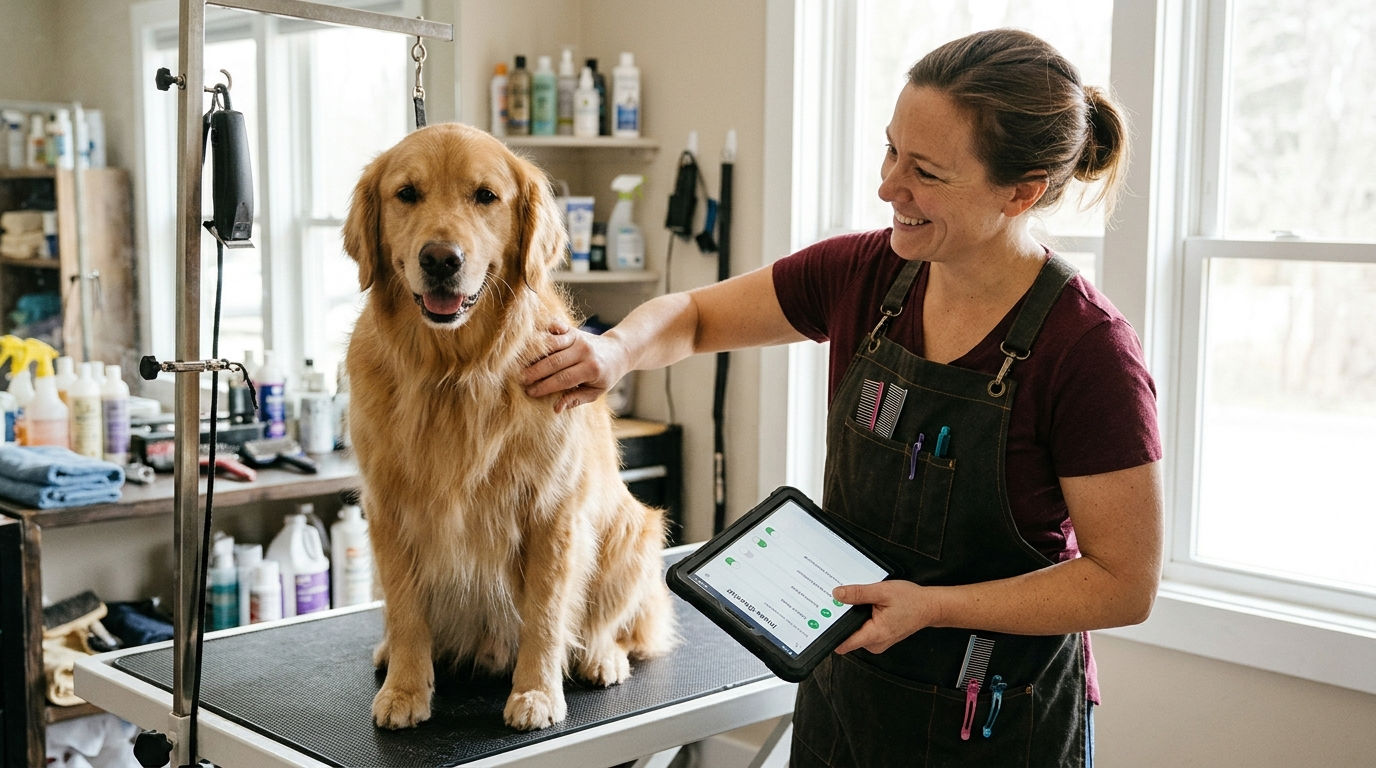
Matting and skin sensitivity can be uncomfortable subjects for owners. An effective intake conversation does not blame anyone; it gathers enough context for the groomer to decide what is feasible and how to explain the options.
Online questions can support that discussion, but no chatbot or photograph can reliably assess a coat the way a professional examination can.
Use plain language for coat questions
Many owners do not know grooming terminology and may interpret “matting” differently from the professional meaning. Ask where brushing is difficult, whether knots feel tight and how the dog responds when those areas are touched.
Avoid technical jargon or questions designed to make the owner feel they should already know the answer. A family describes the coat as “a little tangled” while noticing that a comb will not pass through several areas.
Learn the recent maintenance history
Time between grooms and the home brushing routine help identify where a standard appointment estimate may need review. Frequency alone does not determine coat condition; an individual assessment is still needed.
A long-coated dog missed two planned visits during a household move, and the owner expects the usual short tidy. Ask when the previous groom occurred and whether there have been changes in coat maintenance since then.
Ask about sensitivity without diagnosing it
Reported soreness, irritation or reluctance to be touched should lead to a careful human discussion and possibly veterinary input. The owner mentions that the dog flinches when a brush touches one patch near the hindquarters.
Invite a neutral description, flag it for the groomer and avoid suggesting a treatment or promising that clipping will solve the problem. An AI intake tool should never diagnose skin disease, recommend medication or claim that grooming is safe in every circumstance.
A booking form can highlight these concerns without diagnosing them; see using forms to flag behaviour and coat risks.
Offer photos as supporting information only
A fluffy front-view image looks fine while the concealed coat around the legs is heavily compacted. A photograph can show a general coat pattern or area of concern, but it cannot reveal all trapped undercoat or the dog's tolerance for handling.
False confidence from image analysis can lead to a rushed, unsuitable appointment. Allow an optional image if necessary, explain its limited role and request an in-person check where uncertainty affects timing or welfare.
Set expectations about the final service
Explain before arrival that coat welfare and the dog's comfort take priority, and that options and pricing may need discussion. The safest grooming plan may differ from the owner's preferred cosmetic finish after the coat has been examined.
A customer requests a long teddy-bear trim but the groomer finds sections that cannot be handled as originally planned. Do not promise dematting, specific coat length or a fixed result simply to secure an online booking.
Give complex cases appropriate diary space
A difficult coat may require longer assessment, altered service or a different appointment arrangement rather than a standard automated slot. Have the booking system pause for human review when answers suggest significant uncertainty, then agree a realistic next step.
Arbitrarily doubling every flagged booking does not replace deciding whether the service is suitable in the first place. A first-time dog with suspected tight matting is offered the same short appointment as a routine maintenance trim.
Protect the owner's dignity
Language can encourage honesty or shut down the conversation; treat uncertainty and difficulties as information, not moral failings. Automated messages that scold clients can discourage disclosure and make welfare planning harder.
An owner hesitates to mention knots because previous interactions made them feel judged for the dog's coat. Use compassionate, direct questions about what the groomer needs to know and focus on the dog's present comfort.
Update the plan after seeing the dog
The intake answer is not final once the coat is examined, and the client should understand how changes will be discussed. A reported mat turns out to be more extensive than expected, and the booked service length and fee are no longer appropriate.
Stop and explain the revised options, obtain agreement where necessary and note relevant findings for future visits. Pushing ahead to meet the original timetable may compromise dog welfare and client trust.
Use language that invites an honest answer
Coat questions can make owners feel criticised, particularly when they know brushing has been difficult. Avoid wording that assigns blame or suggests the dog is being judged. Ask about the practical situation: “Are there areas where the coat feels tight or difficult to part?” and “Does your dog seem uncomfortable when you brush around the legs, ears or collar?” Provide an option to say “I'm not sure.” That answer can be genuinely useful because it signals that the groomer should assess the coat rather than relying on an owner's uncertain label.
An owner may describe matting as a few tangles because they cannot see what is close to the skin. A photograph can provide context about length and appearance but cannot reliably reveal the severity of tight mats or the dog's sensitivity. The booking system should therefore avoid promising a particular trim, a fixed duration or a final quote on the basis of a photo alone. It can explain that the groomer will discuss realistic options after assessing the dog.
Distinguish comfort from cosmetic preference
An owner may hope to preserve a long style even when parts of the coat are uncomfortable or difficult to manage. The conversation should acknowledge that preference while making the dog's welfare the priority. The assistant should not prescribe dematting techniques or instruct an owner to pull through painful knots. If the owner reports soreness, wounds or a medical concern, a qualified professional may need to be involved; the chatbot should not diagnose or promise that grooming is appropriate.
The same caution applies to pricing. An estimated range may help the owner plan, but a difficult coat can change the work required. Explain the factors that affect the appointment without turning an uncertain estimate into a guaranteed charge. Where extra approval is needed, keep the booking marked as a request until the groomer has reviewed it. A transparent process usually makes collection conversations easier than an apparently low quote given too early.
Record useful, neutral observations
Instead of a broad label such as “severely matted,” note what the owner actually reported, which areas are affected and whether brushing caused discomfort. If the groomer later assesses the coat, their observations should be distinguishable from the original client statement. Update the profile after the visit so a future assistant does not repeat a stale assumption. The record needs to guide a practical appointment, not become a permanent judgement on the owner or pet.
If two dogs share a household, ask about each coat separately. One may require routine maintenance while the other needs assessment. A combined appointment request should not lead to a shared duration or generic handling plan. Allowing the owner to add a brief note for each animal can prevent mistakes without making the form excessively long.
Prepare the follow-up conversation
When the answers suggest the visit may need special planning, tell the customer exactly who will make the next decision. A message such as “Thanks for explaining; the groomer will check what appointment is appropriate before confirming a time” is more useful than an automatic rejection or vague promise. Offer a direct contact route for questions that are difficult to describe online. Calm, specific language helps owners share information that is relevant to the dog's comfort and the groomer's preparation.
An owner-friendly way to set expectations
Consider a client who asks for a long teddy-bear style but says the coat feels tight behind the ears. Rather than promising the style or refusing immediately, the booking message could say that the groomer will assess the coat and discuss comfortable options before confirming the final plan. This leaves room for the owner to understand the professional decision without feeling blamed for the condition. A booking assistant should never try to prescribe home treatment for painful matting or tell someone to persist through discomfort.
It is also useful to ask whether the dog has recently had a change in grooming tolerance. A dog that previously accepted brushing may now be sensitive for reasons that cannot be assessed in chat. Record the owner's observation, explain the need for human review and avoid turning the note into a permanent label. When the visit is complete, the groomer can update the profile with factual observations and any agreed maintenance advice. The next appointment then starts with better information and fewer assumptions.
Make space for a sensitive conversation
Some owners have had an uncomfortable experience discussing their dog’s coat elsewhere. If the form uses neutral wording and gives a direct route to the groomer, people may be more willing to disclose concerns early. Avoid promising that every mat can be brushed out or that a preferred style will always be possible. The aim of the question is to plan a suitable appointment and a respectful assessment, not to reach a cosmetic conclusion online.
Improve the wording of a coat intake form
- Replace vague labels such as “bad coat” with neutral questions about recent brushing, discomfort or knots.
- Offer an optional photo without treating it as a professional assessment.
- Route significant matting or painful handling concerns for the groomer to assess before confirming a full service.
Official background reading for Asking the Right Questions About Matted or Sensitive Coats
Lead with comfort and clear expectations
A good coat questionnaire helps owners speak openly and helps the groomer plan an appropriate conversation. Its purpose is not to predict a perfect haircut. Keep the language kind, uncertainty visible and the final decision grounded in professional assessment.