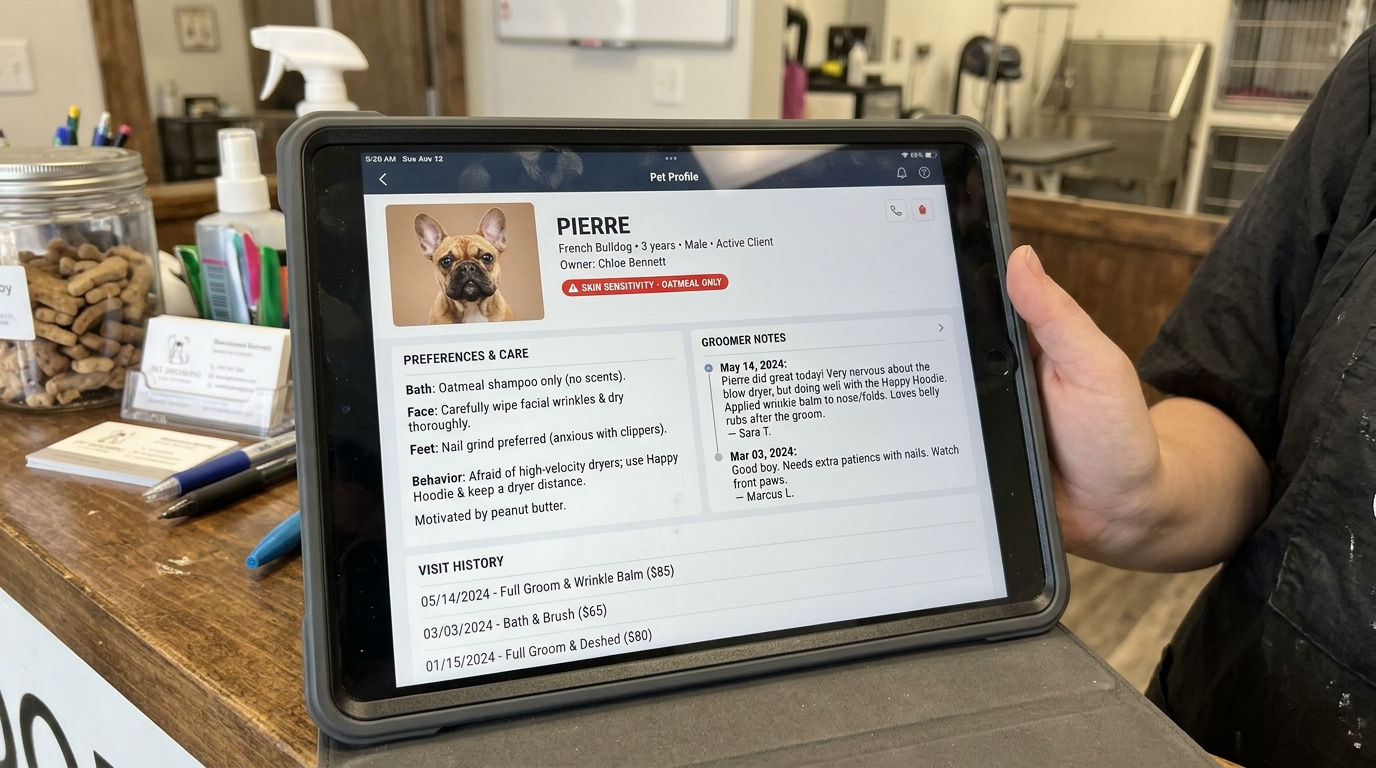
A good dog profile gives the groomer a quick picture of what matters at the next visit. It should help with service selection, timing, handling and communication. A sprawling record of every casual remark is harder to use and more difficult to maintain.
Think of a profile as a living working note, not a permanent verdict about the dog.
Keep identification unambiguous
Capture a unique pet identifier, clear name, approximate size, coat type and owner relationship without relying on name alone. Clients may have multiple dogs with similar names and shared contact information, so each pet needs an individual record linked to the right household.
Two beagles share a family phone number but have different service schedules and grooming tolerances. A merged profile can carry an inaccurate behaviour or service history into the next visit.
Record previous work in useful terms
Notes on services performed, approximate duration and coat condition are more actionable than vague descriptions such as “good groom.” Add a brief post-visit summary of service, timing difference, significant coat changes and any agreed next steps.
Staff should not be required to write lengthy narratives that nobody has time to read before the next appointment. A dog needed extra drying time on its last visit despite arriving with a well-maintained coat.
Note what helps the dog feel comfortable
Positive handling strategies can be as useful as warnings about difficult moments. Describe observations carefully and allow them to change. Avoid permanent labels like “impossible” after one challenging appointment or unsupported guesses about medical causes.
A shy dog relaxed after a quiet arrival and a short break before nail handling. Record what worked, what was stressful and whether a specific arrangement should be repeated.
Track owner preferences without overpromising
Preferred collection method, service style or communication channel can make the experience smoother, provided the preference is still current. An owner prefers a short text when the groom is nearly finished rather than an unexpected phone call.
Record practical preferences separately from confirmed policies, and ask clients to review them when circumstances change. A saved preference should not override a welfare decision or automatically guarantee an unavailable stylist or slot.
Keep history readable at appointment time
A safety-relevant handling note sits behind several tabs of invoices and marketing history. The best information is the information a busy groomer can find quickly while preparing the station.
Complex custom fields are not worthwhile if their structure makes staff miss important information. Surface essential current notes first, then keep a concise chronological history for details that need review.
A useful appointment summary can show three things at a glance: the service booked last time, the current handling notes and the next action needed from the owner. Keep old detail available for context, but do not let it crowd out the latest observations. That ordering can be more valuable than adding another dozen optional profile fields.
Allow correction and revision
Update the current handling note, retain appropriate history and let clients flag factual errors or changed contact information. Dogs change with age, home maintenance, training and experience; records should reflect that rather than preserve every observation as permanent truth.
A dog previously sensitive to dryers becomes more comfortable after several carefully managed visits. An unchecked old note can influence how a dog is treated long after the circumstances have changed.
Control access and retention
A profile is a business record involving the client and may include information that should not be widely visible. Use individual logins where available, remove access promptly and define how long inactive profiles should be retained based on purpose and obligations.
Cloud storage does not remove the salon's responsibility to understand access, backups and deletion arrangements. A former staff member retains access to a cloud system containing contact details and visit notes.
Make profiles help the next booking
The real benefit appears when history informs the timing, service options and contact process for a repeat visit. Excessive auto-filling can hide a new coat issue, changed health need or updated owner preference.
A known long-coat appointment automatically proposes a sensible duration but still invites the owner to report any significant changes. Connect current profile information to booking decisions without treating previous details as unquestionable facts.
The initial record should start with a proportionate form, as described in collecting pet details before the first visit.
Keep a profile centred on the dog
A repeat-client record should let the groomer understand the pet without reconstructing old appointments from messages. Start with stable details such as name, breed or approximate size, owner contacts, preferred services and grooming history. Add relevant coat, handling and comfort notes in clear language. Avoid an endless collection of observations with no indication of which are current. A short, accurate record is more useful than a long diary of impressions that have never been reviewed.
Separate owner-reported information from the groomer's observations. “Owner says Bella becomes anxious around dryers” and “Bella tolerated a low setting after breaks at the last visit” convey different kinds of evidence. Both may help plan the next groom, but neither should automatically dictate the future. Use dated notes when changes matter and make it simple to flag that a situation has improved or worsened. Unqualified labels such as “bad dog” are neither respectful nor informative.
Capture the result of an appointment, not every movement
After a visit, record the service delivered, noteworthy coat observations, any agreed styling changes, and any next-visit recommendations the owner should know. Where a dog needed extra time, make sure the future duration is adjusted or flagged for review. A copied note such as “needs an hour” becomes actively misleading if the last three visits took considerably longer. Booking software should connect practical appointment planning with the profile, rather than storing notes that nobody reads when choosing a slot.
A useful profile can also support consistent communication. If the owner prefers text and needs time to arrange transport, that preference may help shape reminders. But do not assume a communication preference never changes. Confirm details occasionally and provide a way to correct them. Avoid recording unrelated personal information merely because it came up in conversation.
Design access for a small team or future growth
Even a solo groomer benefits from defined access rules. If an assistant can read pet data, decide exactly which fields it needs and whether it can edit them. A model should not be allowed to overwrite a professional handling note based on a casual chat message. If the business grows, new staff should be able to see necessary appointment information without gaining unlimited access to every private record. Test exporting one profile and a set of future appointments before committing to a provider.
Photographs may be useful for comparing coat or style references, but obtain any appropriate permission and store them in the right place. Avoid placing identifiable client information into photo filenames or sharing private images through general-purpose promotional channels. A pet profile is an operational record, not an automatic content library for social media.
Make maintenance part of the visit
A simple end-of-groom review can keep the record current: what service was performed, what changed, what needs attention next time, and whether the appointment length still fits. The next booking should use those facts without removing the owner's opportunity to disclose new concerns. Profiles save time when they reduce repeated explanation while preserving judgement. If the groomer no longer trusts the notes, the system has become a source of friction instead of a memory aid.
An example profile worth trusting
A useful record might say: “Mabel—small spaniel; bath and tidy; last groom completed with an extra drying interval; owner prefers SMS; groomer to check coat length at next visit.” That is a workable starting point. Compare it with “Mabel: difficult, fluffy, 60 minutes,” which is too vague to guide preparation and may be unfair to the dog. Structured facts and dated observations help staff understand what actually happened rather than inheriting a judgement.
When the owner returns, the assistant can ask whether the service and relevant circumstances are still similar. If the dog has grown older, undergone a medical procedure or changed coat style, the grooming professional should decide whether the usual slot is suitable. Profiles should support informed repeat visits without pretending that previous information never changes. A brief review after each appointment is usually easier than a major database clean-up several months later. Make it possible to correct errors without losing the information needed to understand past bookings.
Keep the profile separate from marketing
A dog profile exists to support grooming and scheduling. Notes about handling, coat sensitivity or medical disclosures should not automatically flow into advertising or social posts. If the business wants to share a photograph, obtain the appropriate permission and treat it as a separate decision. This separation makes it easier to explain why the business collects each field and prevents a useful operational record from becoming a source of unnecessary exposure.
Audit one repeat-client record
- Keep the last actual grooming service and date distinct from future preferences.
- Record handling strategies that helped, without labelling a dog permanently after one difficult visit.
- Give staff a clear method for correcting old notes and deleting unnecessary information.
Official background reading for Creating Dog Profiles That Make Repeat Visits Easier
Make history useful, not permanent
A useful dog profile is short enough to read, specific enough to guide the next appointment and flexible enough to change. Review the most important fields regularly, and judge the system by whether it improves the dog's experience and the groomer's preparation.