Booking systems hold ordinary customer details and sometimes more delicate information about health, behaviour, addresses or payment arrangements. AI features may send those details to additional vendors. The business should know what is collected, why it is needed and where it goes.
Good privacy practices are not just a lengthy policy page. They appear in form design, staff access, message retention and how easily a record can be corrected or deleted.
Map where booking data travels
A website form, AI chatbot, calendar, SMS provider and payment processor can each receive different parts of a client's information. A customer gives their address to a chat assistant for a mobile groom, and the transcript is also retained by an unrelated analytics service.
Draw the path for each field, identify processors and integrations, and check contractual roles and data destinations. A tool described as “AI-powered” does not tell you who stores the data or how long it is kept.
Collect only what the appointment requires
A simple nail appointment form demands a full home address and a detailed dog health questionnaire despite no need for either. A booking does not justify unrestricted collection of addresses, medical histories or unrelated personal details.
More data can create additional privacy and security burden without improving the groom. Review every field and remove questions that do not change service planning, communication or a legitimate business obligation.
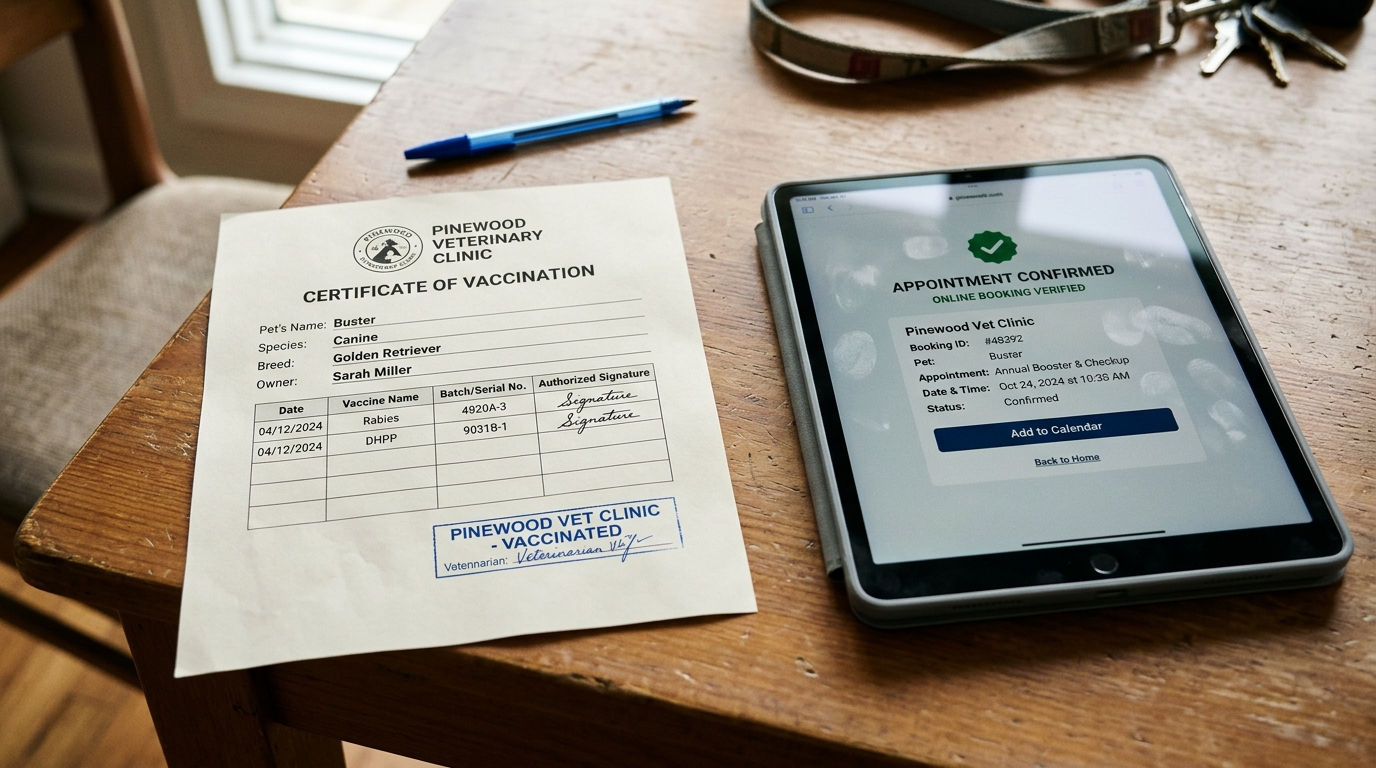
For a concrete example of limited document collection, see capturing vaccination details during online booking.
Separate ordinary contact from optional marketing
Explain operational messaging, obtain appropriate permissions for optional marketing and maintain reliable opt-out handling. An owner supplying a phone number for appointment updates has not automatically agreed to promotional messages.
A client asks for a text when their dog is ready and later receives unwanted sales campaigns. A generic pre-ticked box is not a substitute for the specific choices required by applicable messaging rules.
Restrict access in the salon
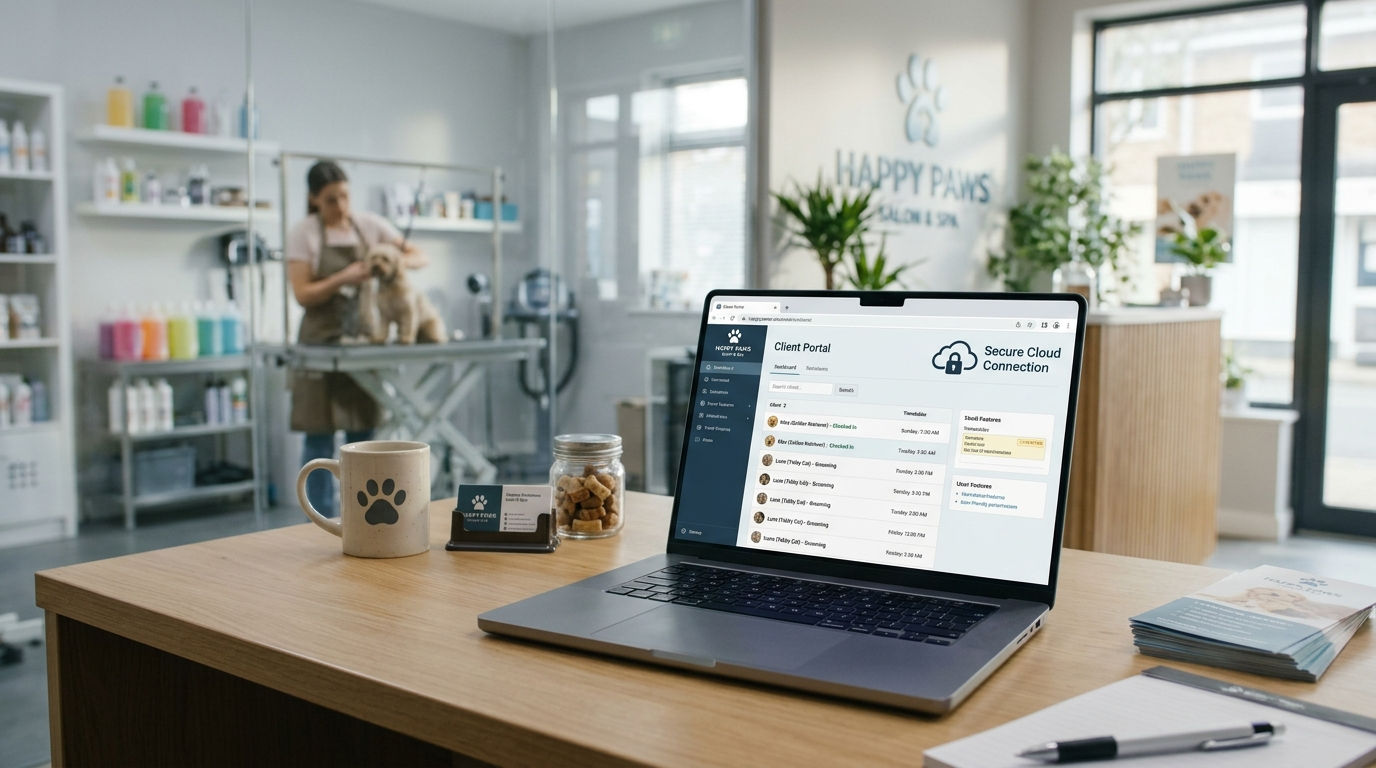
A shared device or one password used by everyone makes it difficult to control who can see, edit or export customer records. Use individual accounts, appropriate permission levels, strong authentication and prompt removal of old access where the vendor supports them.
Screens left unlocked and exports stored on personal devices can defeat sophisticated cloud security features. A temporary worker can view historical notes and contact details long after their shift has ended.
Understand AI retention and training settings
Suppliers differ in whether conversations are logged, how long records are kept and what options exist for use in model development. Do not advertise that client details are never shared with any third party if your booking service relies on external processors.
A salon assumes a chatbot deletes messages immediately, but the provider keeps full transcripts for troubleshooting. Read the current processing terms, retention settings and model-use controls, and choose limits consistent with your actual purpose.
Keep payment data in appropriate systems
Card details should be handled by reputable payment processing flows rather than pasted into chat logs or salon spreadsheets. A client types a card number into a chatbot because it asks them to pay a deposit in conversation.
Use hosted payment pages or properly integrated payment services and avoid collecting sensitive card credentials directly. A generic text box is not a safe substitute for a payment system designed around relevant security requirements.
Plan for access, correction and deletion requests
A family changes contact information but the old number survives in a separate SMS tool and continues receiving notifications. Clients may ask what is held about them, correct a pet's details or seek deletion where applicable. Records should be organised enough to respond.
Deleting a visible profile does not guarantee that vendor copies, backups or legal retention obligations have been addressed. Document where data is held, how to update connected services and who handles formal privacy enquiries.
Prepare for incidents before they happen
Establish an incident contact, retain enough audit information to investigate and seek qualified advice on reporting requirements when necessary. A lost device, compromised login or accidental recipient error is easier to handle when responsibilities and next steps are already written down.
An appointment export containing client numbers is accidentally shared outside the salon's authorised team. Assuming every problem is harmless because records concern pets ignores the personal information attached to those records.
Trace where an enquiry travels
A booking assistant may collect a name in chat, pass a mobile number to an SMS provider, read an appointment from a calendar and store a pet note in a customer record. Those actions may involve different companies even when the groomer sees only one dashboard. Map the actual flow: what information is collected, which provider receives it, why it is needed, and who can view or change it. Do not rely on a generic claim that a system is “GDPR compliant” to substitute for understanding the business's own responsibilities.
For each field, ask what would happen if it were absent. A contact route is needed to reply to a booking; a detailed personal biography normally is not. Behaviour and coat notes may be relevant to safe service planning, while unrelated owner details should not be stored out of habit. Photos and attachments often contain more information than expected, so decide whether the full file is necessary or a concise verified note will serve. Data minimisation makes the workflow easier to explain and maintain.
Be careful about what enters an AI prompt
A booking model does not need unrestricted access to every client record to answer a question about opening hours. Separate public business information from private appointment data, and limit each integration's permissions to the task. A tool that only answers FAQs should not have permission to cancel appointments or read sensitive pet notes. If the assistant summarises a conversation for the groomer, check that it does not include irrelevant identifiers or confidential material.
Understand how providers handle transcripts, model training, retention and deletion. Different products have different terms and settings; do not assume a familiar brand name guarantees a particular privacy treatment. Ask where information is stored, whether international transfers occur and how the business can respond to an access or deletion request. A useful vendor should be able to explain the controls in language a small business owner can evaluate.
Protect the everyday access points
Strong passwords and multi-factor authentication help, but practical access design matters just as much. Former staff should not retain shared logins. A mobile device used for bookings should have a screen lock, and automatic message previews should not display sensitive pet notes unnecessarily. Paper forms and downloaded spreadsheets need secure handling as well. If the groomer exports client records to switch systems, determine how old copies are deleted when the transfer is complete.
Set realistic retention rules rather than keeping every transcript forever. Some records may be needed for ongoing service or legitimate business purposes, but the reason should be clear and periodically reviewed. The privacy notice should describe the processing actually taking place, including any form submissions and third-party services. Avoid copying a legal template that promises cookie controls or tracking systems the site does not have.
Prepare for a mistake before one occurs
A misdirected confirmation, compromised account or accidental disclosure should be investigated through a defined process. Know who can suspend access, contact the service provider, preserve necessary evidence and assess whether regulatory or client notification is required. Do not promise that a chatbot can handle those decisions. The practical objective is to reduce the amount of sensitive data at risk, notice problems promptly and respond in a way that respects the people who trusted the salon with their information.
A minimum-access exercise
Take one routine task, such as answering “what are your opening hours?” and list the information the assistant truly needs. The answer should be available without granting access to any client record. Next take “can I move Bella's appointment?”; that requires identifying the authorised customer, finding the right booking and checking rescheduling rules, but not reading every other pet's medical or behaviour notes. Narrow permissions make it easier to understand the consequences of an account compromise and simpler to explain the workflow in a privacy notice.
Also consider a customer who accidentally sends sensitive information to a general chat. Staff should know where that information has been stored, whether it was shared with a service provider and how to correct or delete it when appropriate. Avoid repeating the detail in automatic reminders or internal notification previews. Security is not only about encryption; it is about designing a small and understandable path for each piece of information. Data that was never unnecessarily collected cannot later be exposed by a forgotten export.
During software changes, test what happens to deleted records, exported customer lists and staff accounts that no longer need access. Ask vendors how backups and integrations are handled rather than assuming a deletion button erases every copy immediately. A practical retention schedule should reflect the business’s legal obligations and actual needs.
Map one booking record through the system
- Identify where owner contact information is received, stored, sent and backed up.
- Verify that staff can only access the records needed for their work and that accounts use strong authentication.
- Check the vendor’s retention, deletion and AI-processing terms before importing real client records.
Official background reading for Protecting Client and Pet Data in AI Booking Systems
Trust begins with knowing what you hold
Choose a smaller, clearer data footprint and understand the providers that handle it. Practical privacy means collecting less, safeguarding what is kept and being accurate about how the system operates. If an AI feature cannot explain its data flows, that is a reason to pause before enabling it.