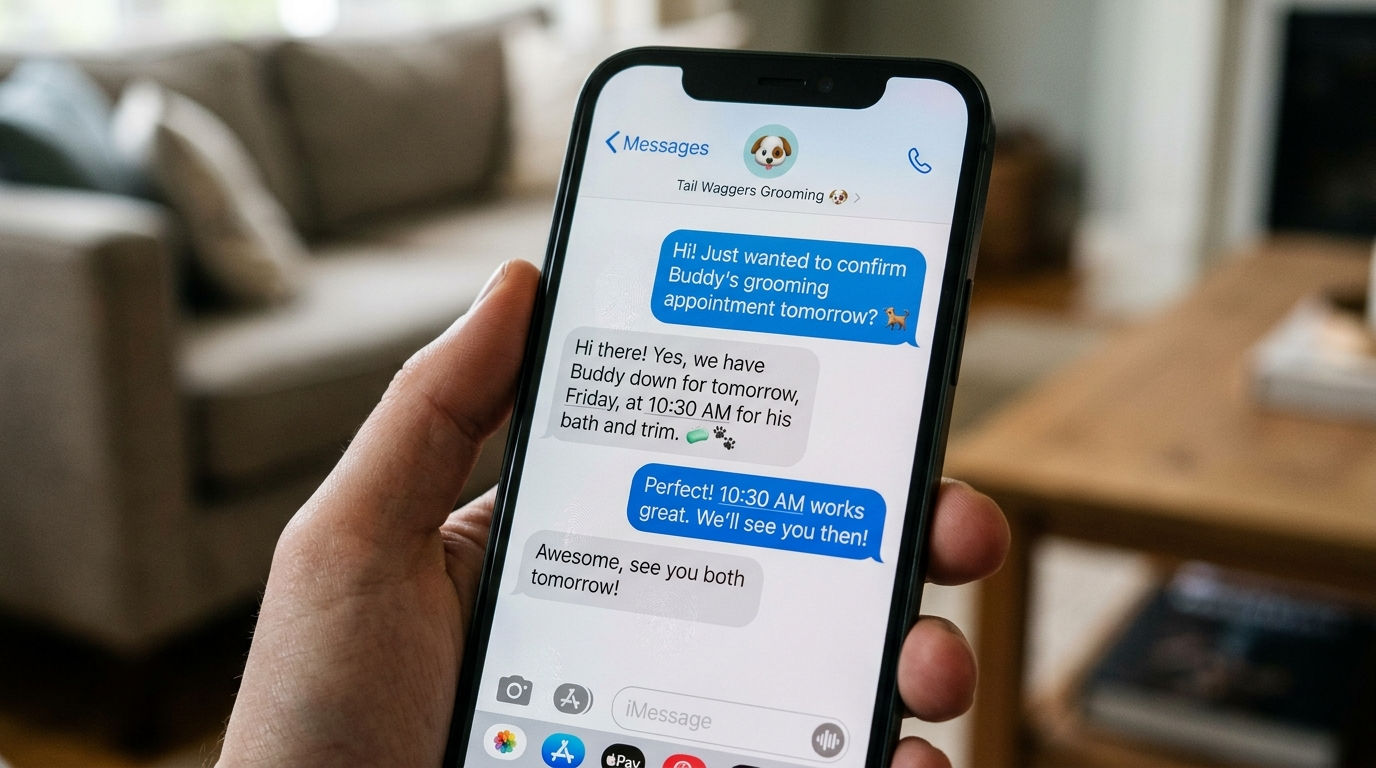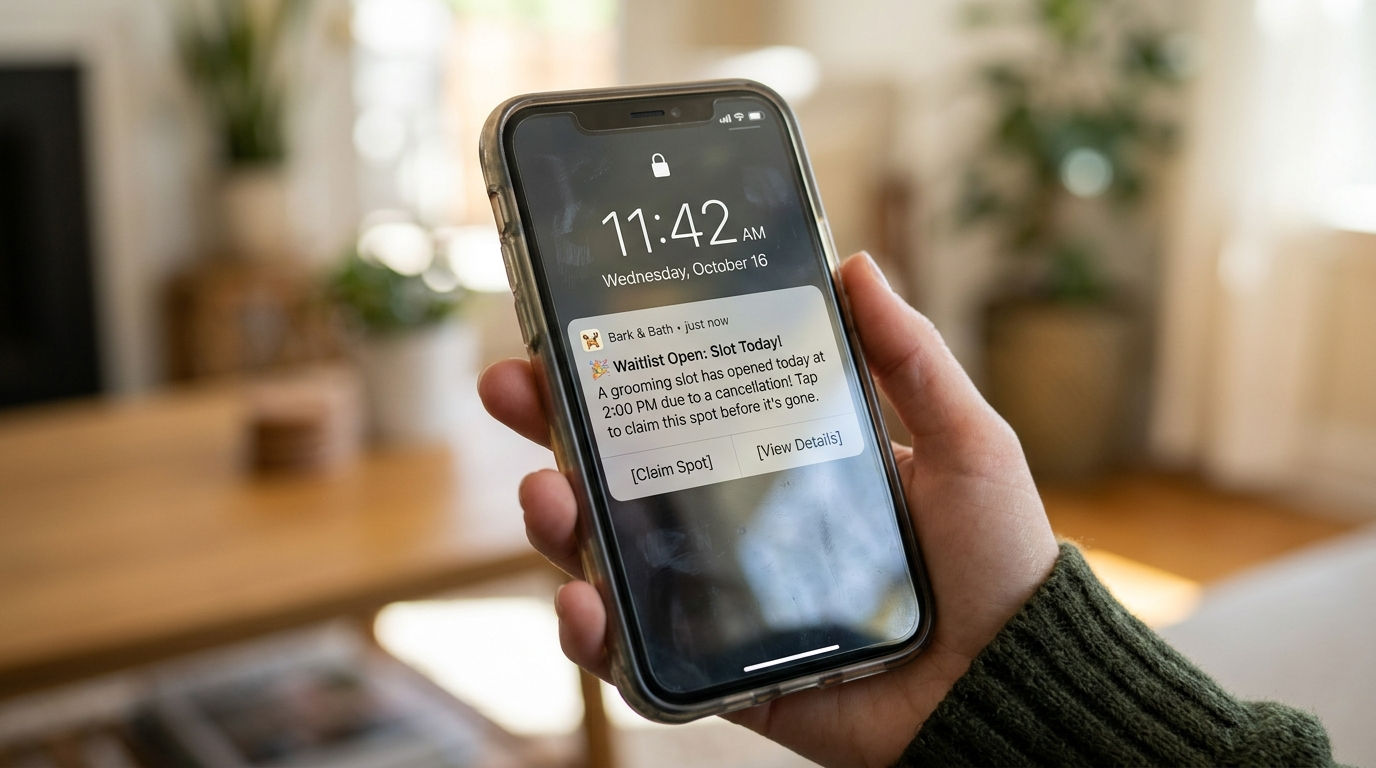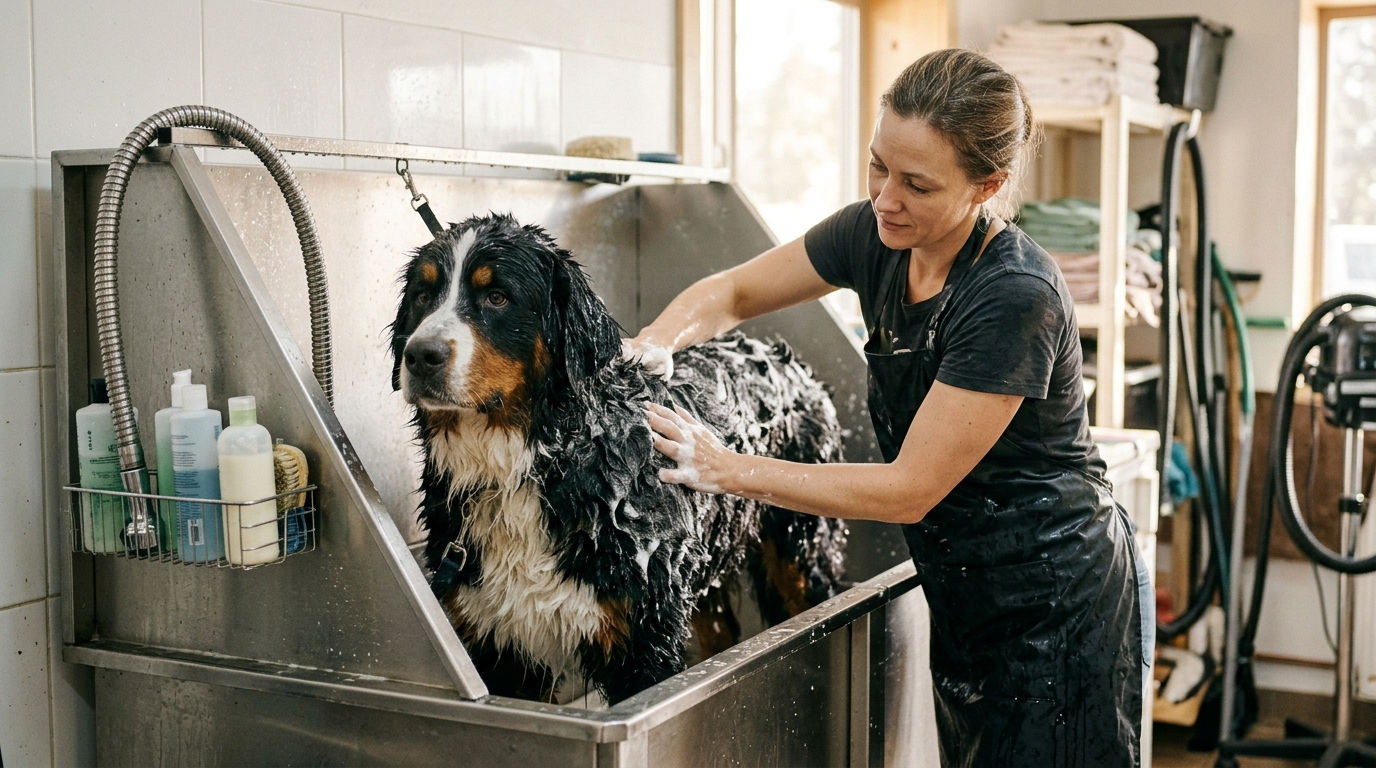
The moments after a groom are a chance to confirm that the client knows what happened, share useful care notes and make the next appointment easier. They are not automatically permission to send a stream of marketing messages.
A good follow-up reflects the service that actually took place and respects the client's preferences and the dog's needs.
Begin with what the owner needs to know
Practical home-care notes, collection details or a reminder of an agreed next visit provide value before any promotional message. A dog needed extra drying care and the groomer wants the owner to know what to watch for at home without making a medical claim.
Write short, specific notes relevant to the completed service and keep any health concerns within appropriate professional boundaries. Generic compliments about “perfect pups” cannot replace clear instructions when the client has asked a practical question.
Choose a respectful send time
An owner collects their dog during a busy evening and reads the care advice calmly after arriving home. A follow-up sent at collection may be overlooked; one sent weeks later can feel disconnected from the grooming visit.
Automatic timing should not delay information that affects the dog's immediate comfort or welfare. Test a short next-day message for non-urgent tips and allow human handling when immediate contact is genuinely necessary.
Make rebooking an option, not pressure
Suppress rebooking prompts when a suitable future appointment exists, and offer a simple booking route when the client has not booked. Some clients prefer to arrange the next visit at collection, while others need time to check family plans or budgets.
A client has already booked the next six-week appointment and still receives multiple “book now” texts. Repeated offers can feel intrusive and may require separate marketing permissions depending on their content and context.
Respect individual coat maintenance needs
A suggested return interval should reflect the groomer's assessment and the owner's circumstances, not a fixed breed-based marketing sequence. Agree a tentative interval during the visit where possible and frame the message as a reminder of that plan rather than an automated prescription.
An AI tool should not provide veterinary or welfare advice beyond what the grooming professional has actually approved. A well-maintained coat may support one rhythm while a dog with a changing coat condition needs a different plan.
Invite feedback without forcing a review
A private route to report concerns is often more useful than asking every client for a public rating immediately. Do not publish or invent testimonials, suppress legitimate criticism or imply professional results that cannot be verified.
A customer is pleased with the groom but wants to mention that the collection instructions were confusing. Offer a direct way to share feedback, acknowledge genuine concerns and only request public reviews where appropriate without incentives that mislead readers.
Keep messages grounded in completed appointments
Follow-ups should not be sent for cancelled visits or the wrong dog because of a stale booking or household record. A family with two dogs receives care notes intended for the pet that did not attend.
Trigger the workflow from a verified completed-service state and include the correct dog and agreed recommendations. A payment marked successful does not necessarily mean a particular grooming service was completed as originally planned.
Handle promotional consent correctly
A care message quietly adds a discount for unrelated services and is sent to a customer who requested no marketing. Operational notes and rebooking offers may be treated differently under electronic marketing rules; the wording and purpose matter.
Assuming every customer who booked online wants advertising by text or email creates legal and trust risks. Keep helpful service information separate from optional promotions, and manage consent or other permitted marketing grounds appropriately.
For help keeping automated follow-ups natural, see grooming reminders that do not sound robotic.
Evaluate relationships rather than clicks alone
Review appropriate repeat bookings, client questions, message preferences and feedback alongside costs and opt-outs. A strong follow-up should help clients understand care, feel listened to and return because the service suits them.
An enthusiastic discount campaign produces clicks but also more opt-outs and clients questioning why they received it. Short-term clicks are not a reliable measure of whether the salon is communicating respectfully.
Give the dog and owner a useful closing message
A follow-up is most helpful when it reflects something actually discussed at collection. The owner may need to know when to check a grooming note, how to contact the salon about a concern or when it may be worth considering another appointment. Do not invent a glowing assessment of the dog's behaviour or imply that the visit was perfect if the groomer noted a difficulty. A simple thank-you with a clear contact route can be more appropriate than a long promotional message delivered automatically to every client.
If the groomer recommended a maintenance interval, the system can record that recommendation as a suggestion. It should not turn it into a confirmed future booking without the owner's agreement. Coat type, styling choices, the dog's tolerance and the owner's routine affect what interval is practical. Allow the groomer to adapt guidance rather than using a fixed period for every pet.
Separate service care from marketing
An operational message about an appointment is different from a promotional campaign. A client giving their phone number to arrange grooming has not necessarily agreed to receive ongoing special offers or newsletters. Review your applicable consent and communication rules before adding marketing to the follow-up sequence. Provide a straightforward way to change preferences where required. Trust is easier to preserve when customers understand why they received each message.
A sensible post-visit message might invite the owner to contact the salon if anything needs clarification and, where appropriate, offer a direct link to request the next appointment. Avoid pressure tactics such as claiming the diary is almost full without evidence. If the salon has a genuine seasonal peak, communicate availability accurately rather than manufacturing urgency. Rebooking should follow the dog's needs and the owner's choice.
Capture what the groomer learned
The visit may reveal that a dog needs longer drying time, benefits from a quiet arrival or is ready for a different style next time. Make it easy to record those details in the pet profile, with appropriate dates and context. A follow-up can ask whether the owner has any questions, but should not invite extensive health details by unsecured text. Concerns that require professional assessment should reach the groomer through a monitored route. Keep sensitive notes out of broad automated promotions.
If an owner responds with criticism, do not route the message into a cheerful sequence of loyalty offers. Pause automation and let a person review the issue. Likewise, if a dog was unwell or grooming was not completed, the default “hope they look amazing” message may be insensitive. Event triggers need exception rules so the right tone reaches the right situation.
Choose rebooking prompts based on reality
Look at actual repeat-visit patterns and ask clients whether the timing is convenient. A reminder to consider the next groom can be helpful; multiple escalating prompts may be annoying. Make it simple to reply, book or decline. Measure genuine repeat appointments and client satisfaction instead of the number of texts opened. The strongest rebooking habit often begins with a reliable visit and an informed conversation at collection, with automation quietly supporting rather than replacing it.
Match the message to the visit that actually happened
A routine successful visit may warrant a simple thank-you and an invitation to request the next appointment. But if a groom had to be stopped because the dog became distressed, the standard “hope your pup loved every moment” message would be inappropriate. The system should allow the groomer to suppress or adapt follow-ups for exceptional cases. That does not require complicated AI sentiment scoring; a clear staff-controlled status can be more reliable.
When a groomer recommends an interval, include it as advice rather than an automatic reservation. An owner might choose to book at collection, ask for a reminder later or prefer to contact the salon themselves. Record that choice and respect any marketing preferences. If the client replies with concern about the service, stop the promotional sequence and route the message to a person. Repeat business grows from trust in how the salon responds, not the volume of rebooking prompts it sends.
Keep the opt-out path simple
A client who does not want promotional reminders should be able to express that preference without losing access to essential appointment messages. Staff need to understand the difference so an opt-out is respected across text and email. Avoid repeatedly asking for a rebooking after someone has already declined or made another appointment. A customer who feels listened to is more likely to return when the timing suits their dog and household.
Separate aftercare from marketing
- Send aftercare instructions relevant to the completed service without inserting unsolicited promotions.
- Offer rebooking as an optional action instead of scheduling a new visit without permission.
- Let clients control marketing preferences separately from necessary booking communications.
Official background reading for Following Up After Grooming to Encourage Rebooking
Be useful after the groom, not just before it
A post-grooming follow-up works best when it continues the relationship already built in the salon. Lead with useful information, make rebooking easy and leave clients free to choose their contact preferences. Thoughtful messages are more memorable than aggressive sequences.