The right reminder time depends on why appointments are missed. Some clients simply forget the date. Others need enough notice to rearrange transport, confirm childcare or resolve a conflict without breaking the cancellation policy.
Rather than copying a universal sequence, examine how appointments are booked, how far clients travel and what action you want the reminder to make possible.
Understand the reason for missed appointments
Look at a small sample of past no-shows and late visits to distinguish memory problems from process problems. Timing can help forgetfulness but cannot fix confusing confirmations, inaccessible booking links or unclear salon directions.
A client remembers the day but arrives late because the last message never included the correct branch address. Automating extra messages before understanding the cause can add cost without changing attendance.
Confirm immediately when a booking becomes real
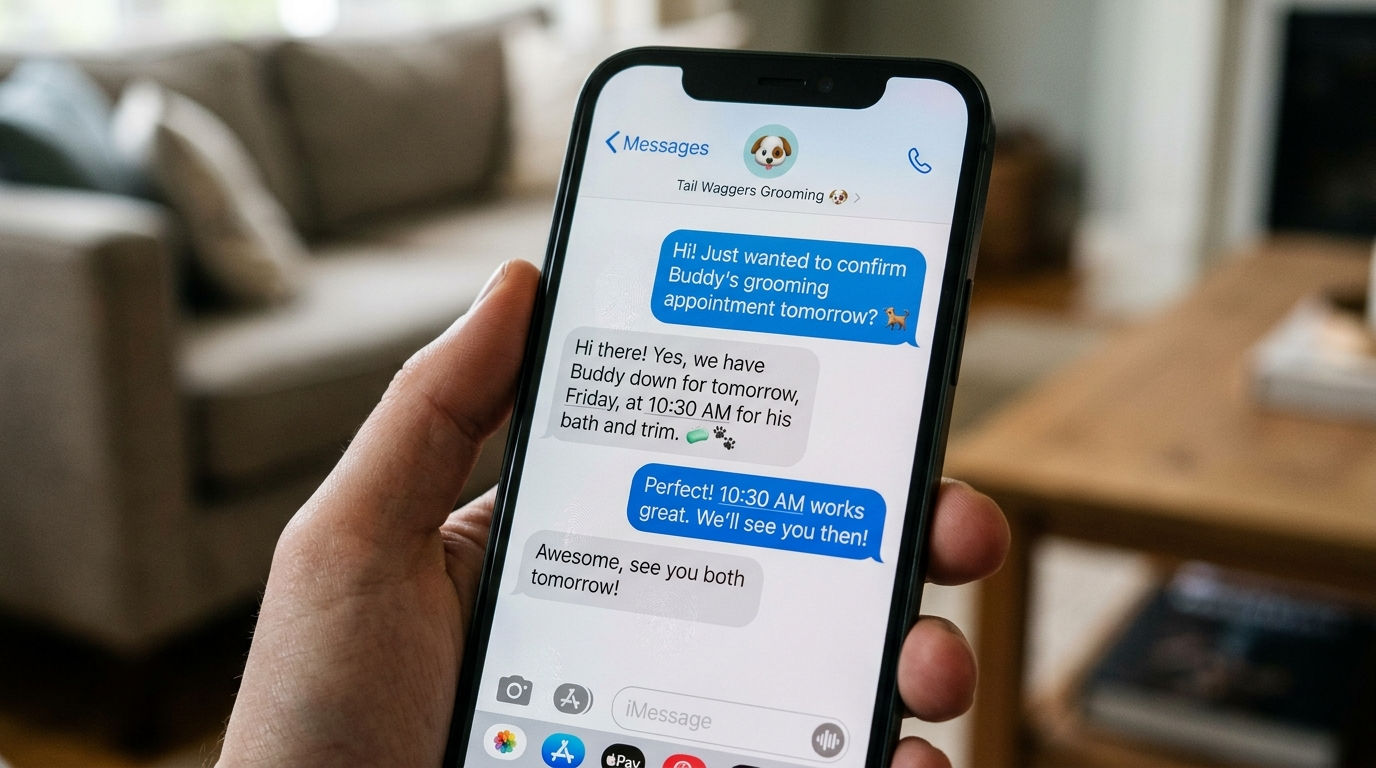
The first message should establish the appointment clearly; later reminders should reinforce, not introduce, its details. Send confirmation once the calendar actually holds the appointment, including dog, service, date, time, place and change route.
An enquiry awaiting approval should not receive a message written as if the reservation is confirmed. Someone books a slot weeks ahead and never receives a written record, so a reminder the night before feels unexpected.
Choose an advance reminder that allows action
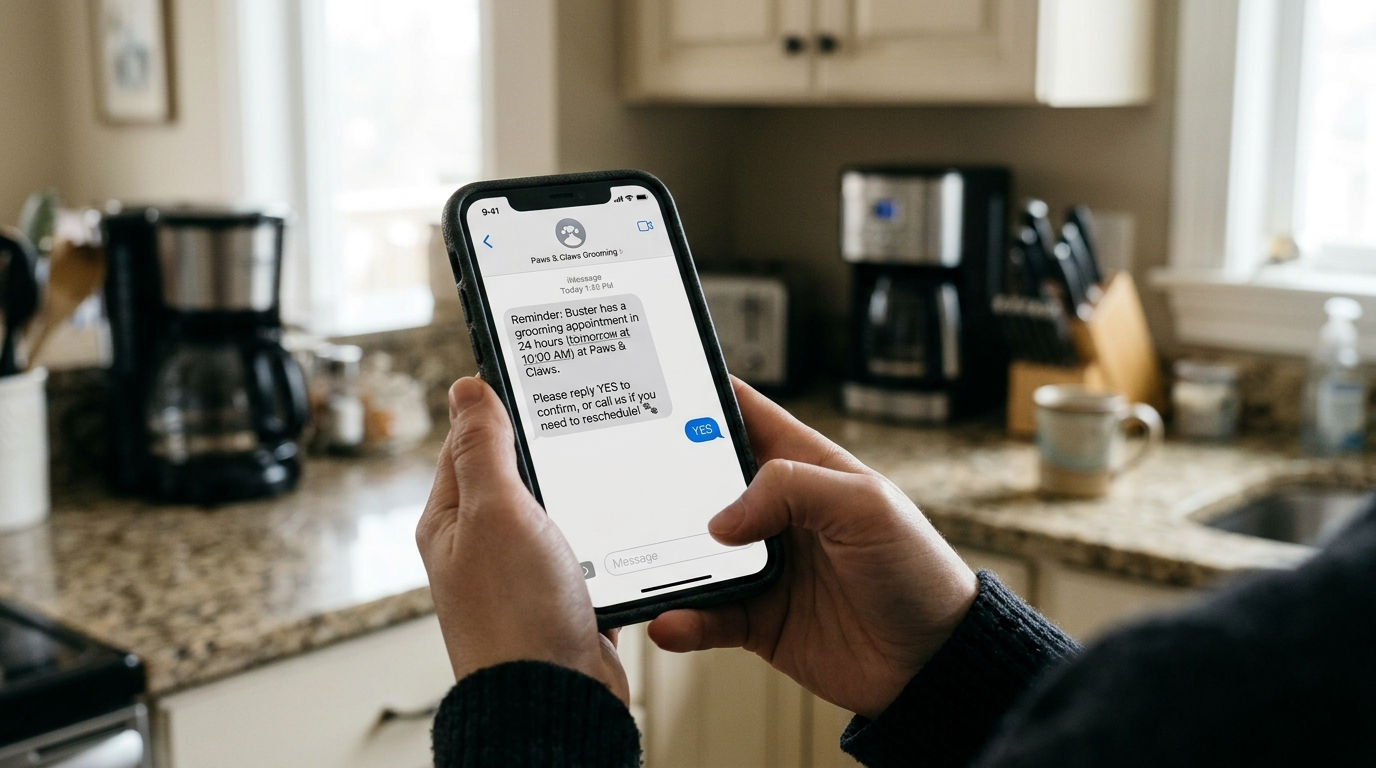
A reminder one or two days before may provide time to rearrange plans, but the best window depends on your cancellation terms and typical client needs. Sending a message moments after a fee cut-off may feel unfair if it is the first meaningful reminder the client receives.
A weekend groomer with a longer cancellation notice needs a different client decision window from a salon offering flexible same-day changes. Choose timing that gives owners a realistic opportunity to act within the published policy, then adjust using observed results.
Use same-day messages selectively
A morning reminder can help with early appointments or complicated travel, but extra alerts should have an identifiable benefit. A client with a 7:30 morning collection appointment may appreciate an early factual reminder but not a text delivered at 5 a.m.
Consider appointment time, ordinary quiet hours and individual contact preferences before enabling a same-day message. Avoid automatic send times that disturb clients or create pressure outside reasonable business communication hours.
Respect quiet hours and time zones
A reminder configured in UTC reaches a UK customer during an unexpected hour around the daylight-saving change. Automations can calculate incorrectly if the scheduling service, SMS vendor and customer records use different time zones.
A software default may not match the salon's local time or the message provider's sending schedule. Set and test the business time zone, seasonal clock changes and message delivery windows on actual dates.
Provide a clear reply action
Offer monitored two-way replies or a reliable reschedule contact route, and state the response deadline if one applies. Some clients remember a conflict only when prompted; a reminder should make correction easier than silently missing the visit.
An owner replies that their car has broken down but the text goes to an unattended virtual number. A one-way reminder dressed up as a conversation can make clients think their cancellation was received when it was not.
If clients need to act on a reminder, consider the workflow in using two-way texting to confirm appointments.
Sync reminders with live booking changes
The schedule must update when an appointment moves, is cancelled or changes from provisional to confirmed. Check the current booking status immediately before sending where the platform supports it, and suppress obsolete messages reliably.
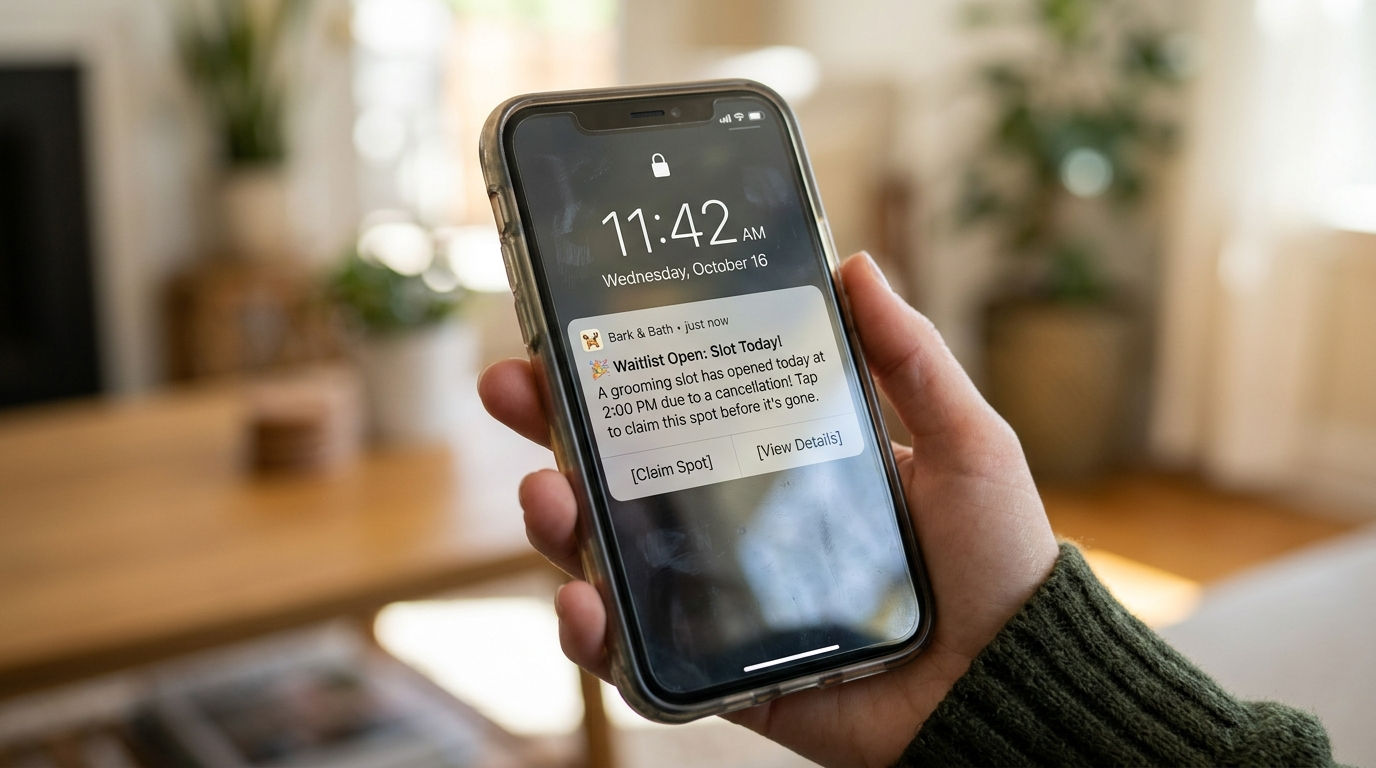
Delayed integration updates can create contradictory messages even when each individual tool behaves as designed. A client cancels a visit on Tuesday but receives the original Wednesday reminder and assumes the cancellation failed.
Measure attendance and friction together
A reminder sequence should reduce missed visits while remaining affordable and easy for clients to understand. Small samples can be misleading; avoid promising a guaranteed reduction based on one unusually quiet week.
A salon adds two extra texts and sees more replies but no real reduction in empty appointments. Compare no-show rates, late arrivals, reschedule lead time, message costs and complaints before and after a controlled change.
Understand why appointments are being missed
Before changing the reminder schedule, distinguish between forgotten appointments, transport problems, unexpected illness and customers who did not realise a booking was confirmed. A text cannot fix all of those issues. If the actual problem is an unclear confirmation process, sending an extra message the night before may only make the confusion more visible. Look at a small sample of missed visits and late cancellations, noting when the client was last contacted and whether they had enough opportunity to act.
Different appointment types may warrant different timing. A new customer travelling to an unfamiliar salon might appreciate clear arrival details earlier, while a regular client mainly needs the date and time. A multi-dog appointment or long service may be difficult to replace at short notice, making an advance confirmation particularly useful. Choose timing with the practical consequences in mind rather than adopting the maximum number of reminders a provider allows.
Make the early reminder useful
An advance message can give clients a chance to check arrangements while there is still room to change them. Include the dog, date and time, location and a simple reply or contact route. Where deposits or cancellation terms apply, point to the relevant published policy without turning the reminder into a threat. Avoid stating that a no-show fee will automatically apply unless the actual agreement and circumstances justify it. The reminder should help someone do the right thing, not introduce new conditions that were absent from the booking.
For a first visit, you may need to remind the owner about information that remains outstanding, but do not place sensitive details in the SMS itself. A simple request to contact the groomer or use a secure form is safer than repeating a veterinary or behaviour note. If the appointment is still pending approval, do not schedule a message that confidently says the dog is expected tomorrow. Booking state should control reminder content.
Use near-term messages sparingly
A brief message closer to the appointment can help someone confirm their plan or remember a collection time. It should not repeat a long introduction, every booking rule and three promotional offers. Too many messages can cause people to mute the thread or overlook the one that matters. For last-minute bookings, skip redundant advance reminders. If the customer has actively confirmed shortly before the visit, an additional prompt may add no value.
Time zones and delivery windows matter even for a local salon. Set times according to the groomer's locality, account for daylight-saving changes where relevant and avoid sending routine messages in the middle of the night. Check whether queued texts are suppressed after cancellation or rescheduling. A client's phone being switched off is not grounds for assuming they chose not to attend.
Learn from response patterns
Review whether clients confirm, ask to rearrange, ignore the message or report receiving duplicate notifications. Compare missed visits over reasonably similar periods, noting seasonal changes and the service mix. If you introduce deposits and reminders at the same time, do not claim the texts alone caused the improvement. Keep the measurement humble: the goal is a more dependable diary and less disruption for dogs and owners, not simply a higher number of delivered messages.
Decide what each message is meant to prevent
Imagine a first-time owner who has never visited the salon. An advance message with the address, parking directions and an opportunity to ask a question may be more valuable than a simple “see you tomorrow.” A long-term client who knows the route might need only the exact date and time. The timing decision should follow those different needs. Repeated prompts that lack fresh information can distract from the one reminder the client actually notices.
If an owner replies to an early reminder requesting a change, the workflow must update the live booking before any later messages are sent. A cancellation that leaves the old reminder active can look like the salon has disregarded the client's response. Test the entire message sequence with a cancelled booking, a last-minute reschedule and an appointment that was never confirmed. The best cadence is the smallest one that leaves customers prepared and the diary accurate. Review the results rather than assuming more reminders always mean fewer missed visits.
Review accessibility and channel preferences
Not everyone reliably reads SMS, and some clients prefer email or a direct call. A reminder plan should respect reasonable communication preferences and offer a route for correction. Do not assume that a delivered text was understood or that silence means consent to a change. If a client has already responded through another channel, staff should be able to update the booking and stop unnecessary repeats. Good timing depends on the person as well as the clock.
Test reminder timing against real availability
- Choose an advance reminder window that leaves enough time for another client to use a cancelled slot.
- Avoid sending late-night reminders or repeated nudges when a client already confirmed.
- Measure genuine no-shows and cancellations rather than counting sent texts as success.
Official background reading for Timing Text Reminders to Reduce Missed Grooming Visits
The best timing gives people a chance to act
Choose a reminder schedule that helps clients make a useful decision before the appointment. Start simply, test the system's clock and calendar logic, and revise from real attendance patterns rather than chasing a magical number of messages.