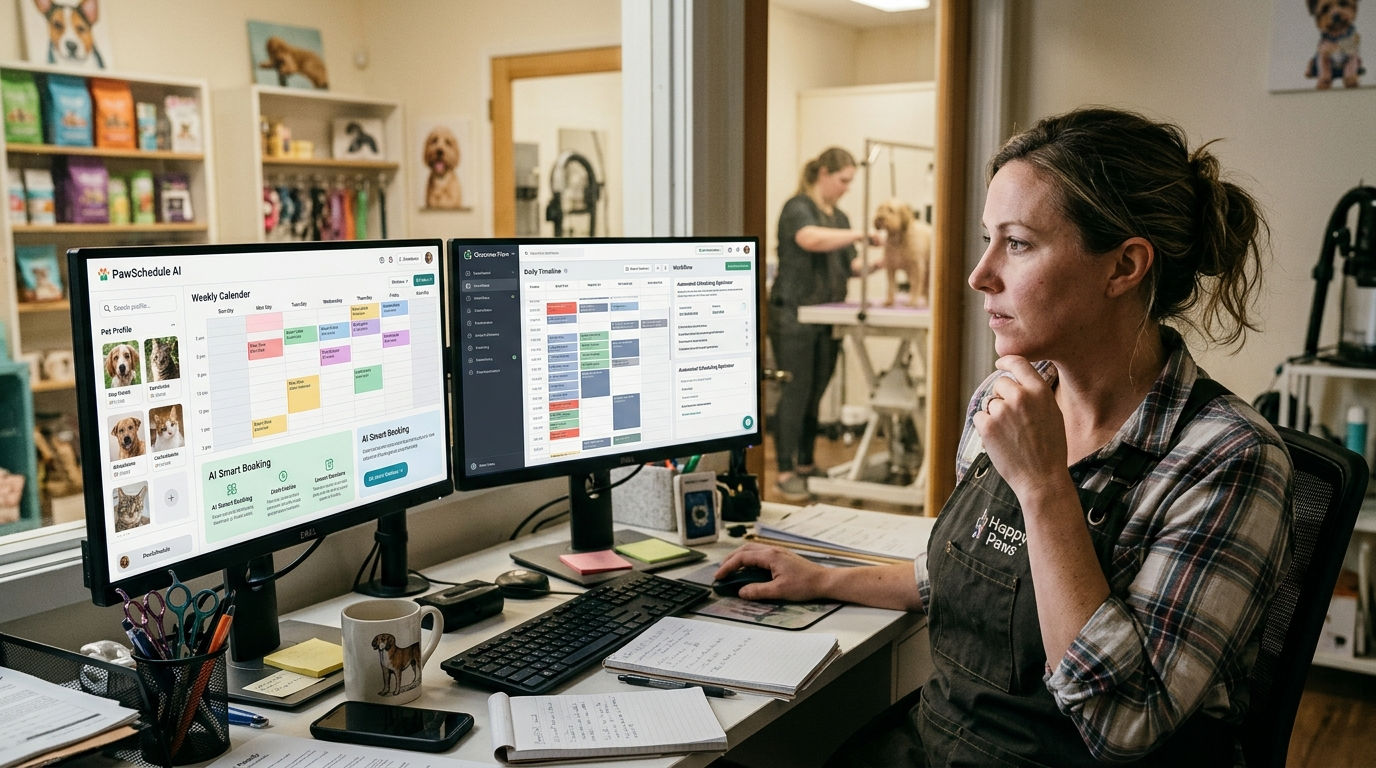
Solo groomers need software that protects working time without replacing one sort of administration with another. A package designed for a ten-person salon may have impressive features but awkward steps for a single groomer who handles dogs, payments and client messages alone.
Begin with the way appointments happen in your business. Think about who books them, how long each service really takes and which parts of the process should remain under your control.
Map a normal working week first
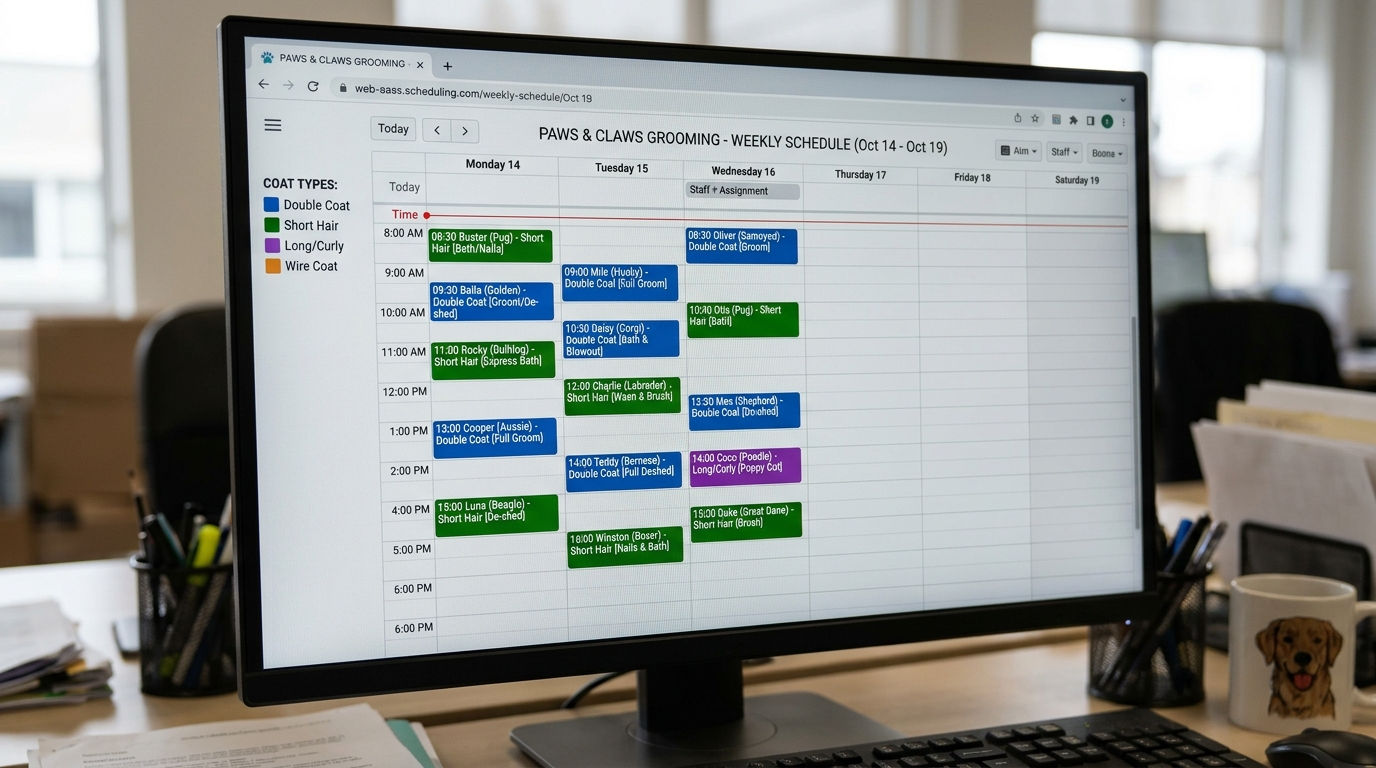
Sketch a real week on paper, including cleaning, breaks and admin, then use that pattern to test each trial account. The right system reflects actual opening hours, breaks, service lengths and room for unexpected delays instead of assuming every free rectangle is saleable.
A groomer with one large-dog appointment each morning and several smaller afternoon visits needs a different diary from a wash-only operation. A beautiful calendar is not useful if it cannot enforce the rules that prevent appointments from overrunning.
Define your essential functions
Separate must-haves from conveniences so the evaluation does not become a competition to count icons in the product menu. List the five tasks you perform most often and insist that trial software can complete them with a reasonable number of steps.
Bundles advertised as “all-in-one” may charge extra for messaging, payments, calendar sync or the features shown in demos. For one salon, SMS confirmations and online deposits may matter more than staff rotas or complicated inventory reports.
Check service durations and buffers
A booking tool should let you vary time by service, dog size and any known handling requirements, with manual overrides when appropriate. Rigid templates can encourage overbooking when a dog's actual coat or behaviour differs from a generic breed assumption.
An elderly dog needing a gentler pace may require a longer appointment than the standard profile suggests. Create representative services and attempt to schedule them alongside each other, checking that the system protects cleaning and transition time.
Make the client journey simple
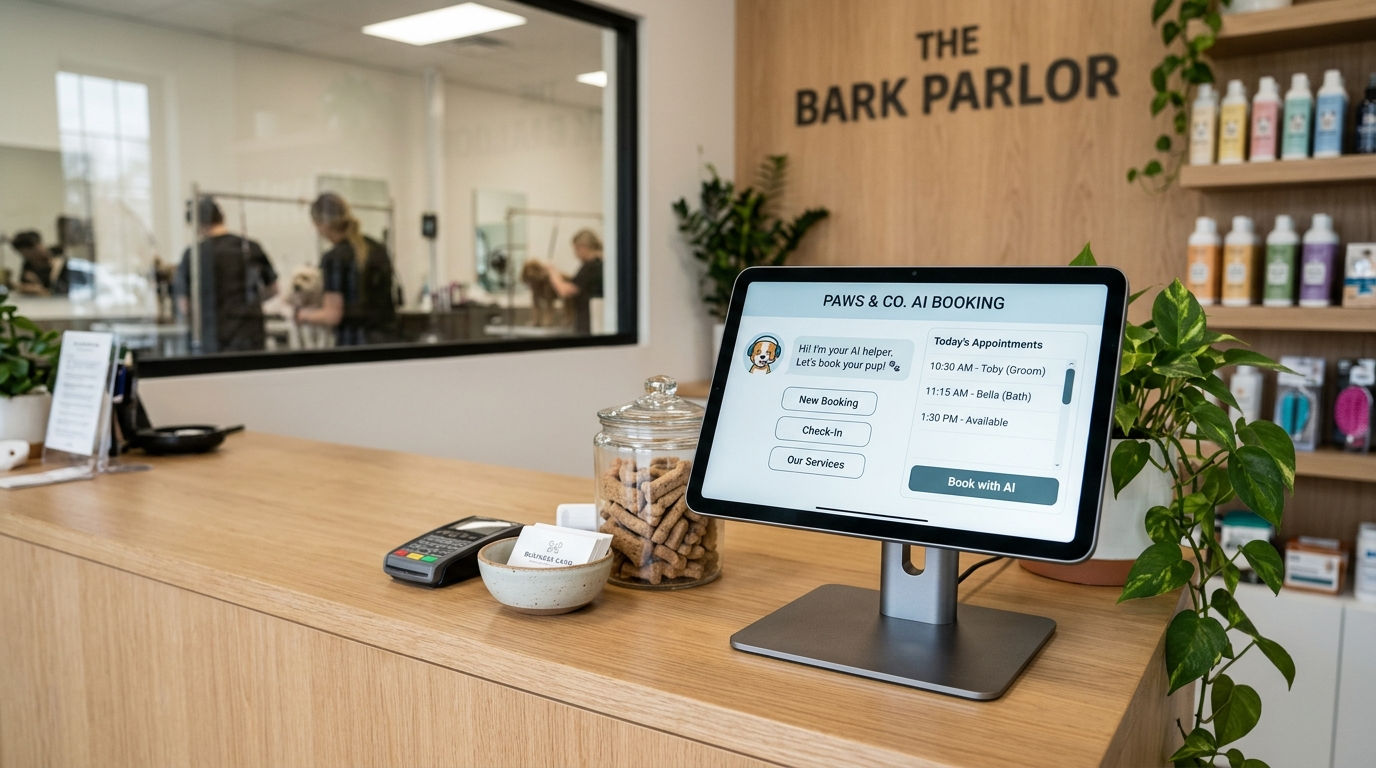
The client-facing page should explain services and prices clearly and work on a small screen without requiring a complicated registration process. A returning customer should be able to request the usual service without hunting through fifteen similar packages.
Complete a test booking on an ordinary phone, read the confirmation and try to correct a mistaken service before payment. A process that looks polished on your laptop may be frustrating for clients using older phones or limited data.
Understand total monthly cost
A low base price can become more expensive than a larger fixed package when each reminder incurs an additional charge. Price comparisons should include subscriptions, message charges, card fees, deposits, add-ons and the time needed to maintain the account.
Free trials do not always expose the pricing or limitations of the paid tier you will eventually need. Model a quiet month and a busy month using realistic transaction volumes, then compare the cost per completed appointment.
Examine data ownership and portability
Ask for an example export, examine access controls and check how cancellation of the subscription affects existing records. Client contact details, pet histories and future appointments are business records that should remain available if the software is no longer suitable.
A groomer changes systems after two years and discovers that the export contains clients but not future appointments or useful pet notes. A vendor's “cloud backup” claim is not the same as an understandable export and recovery procedure.
Trial difficult scheduling cases
Normal bookings rarely reveal limitations; test cancellations, duplicate attempts, blocked days, recurring appointments and late service changes. Make a short scripted test list, record what happened and ask the supplier specific questions about any unexpected behaviour.
Do not assume that a calendar connection automatically prevents conflicts across all linked platforms. Two people select the same appointment online while you are confirming a repeat client by phone.
A software trial should include the conflict tests in preventing double bookings across grooming services.
Choose for learning curve as well as features
An ideal system should be easy enough to maintain at the end of a tiring grooming day, not only during a guided sales call. Switching tools has a cost, so favour systems you can operate confidently and export from later.
A solo operator may prefer a simple, dependable appointment list over a detailed reporting dashboard that nobody uses. Observe how long it takes you to create, move and cancel appointments unaided, then compare the product with your original checklist.
Test the diary as if you are working alone
A solo groomer's calendar cannot be judged only by its attractive monthly view. It needs to reflect how you actually move between checking in a dog, bathing, drying, clipping, cleaning and speaking to an owner at collection. Make a shortlist of the services you really sell and assign realistic durations rather than copying the software's suggested defaults. Then enter a working week containing a long-coated dog, a nervous first-timer, a couple of straightforward regulars and a lunch break. The question is whether the system prevents impossible overlaps without forcing you to edit every appointment manually.
Try a booking request from each channel you expect to use. If someone books online while you are taking a phone call, the latest slot information should be consistent. If you also accept Instagram enquiries, decide how those become provisional requests rather than parallel, invisible calendars. Test what happens when you manually block a day for illness or equipment maintenance. A system that looks simple during a sales demonstration can become difficult when a client changes service halfway through booking.
Examine the client experience without a sales representative
Open the booking page on an ordinary phone and pretend to be a new owner who does not know your terminology. Are the differences between a full groom and a bath-and-brush obvious? Does the form give enough room to disclose matting or handling concerns without demanding unnecessary information? Can someone tell when a request is pending your approval? Ask a friend to complete the journey without coaching them, then have them explain whether they believe the appointment is confirmed. Their answer is a useful test of the wording, not merely the interface.
Look closely at how cancellations and rescheduling work. A client may need to change the day, but should not be able to choose a short service and move into a slot that is too brief for the real groom. Rules for lead times, deposits and restricted appointments should remain intact during self-service changes. Check that every action updates the same diary and that you receive a concise notification rather than an entire chain of repetitive emails.
Work out the full cost of ownership
The quoted monthly subscription is only a starting point. Add possible charges for texts, card processing, extra users, premium booking pages, phone integration and exporting records. Consider the time involved in setting up services, importing contacts, learning the interface and fixing mistakes. A slightly more expensive platform might be easier to maintain; a cheaper one might be perfectly adequate if you only need basic online booking. Neither conclusion follows from the headline price alone.
Ask how easily you can leave. Can you download future appointments, client contacts and relevant pet notes in a format you can use elsewhere? Will you keep access to the calendar if you stop paying? How are deleted records handled, and who can view health or behaviour notes? An export test during the trial period is more informative than a promise that data is “fully yours.” You should be able to operate the business during a software outage using a practical, secure fallback.
Run a controlled trial before moving the whole salon
Choose a handful of routine bookings and a few awkward cases, using test records where possible. Note the time needed to create, change and cancel each appointment, and inspect both the owner-facing message and diary result. Compare it with your existing method without assuming that every click saved is automatically billable time. If the platform passes the tests, move appointments gradually and keep a temporary reconciliation list so old and new calendars do not conflict. The best booking software is the one you still understand at the end of a difficult grooming day.
Questions to put to a software provider
Ask the provider to demonstrate a same-day cancellation followed by a new booking into the released time, and a reschedule that preserves the correct deposit status. Request a live view of how a pending first-time enquiry appears beside confirmed appointments. Check whether you can stop online booking during an emergency without deleting existing reservations. Finally, ask how long account support normally takes and whether basic data export requires an expensive plan. These are ordinary small-business needs that a long feature list can obscure.
The service configuration itself should be reversible. If you discover after two weeks that a full groom needs longer than planned, can you change new appointment durations without corrupting the old diary? Can you update reminder wording once and know it applies to the right messages? Is it obvious which owner or pet record is being edited? A trial is successful only when the person who will maintain the system can carry out such changes without a vendor representative beside them.
Try the software during a mock busy day
- Create a full groom, a bath, and a short visit with different durations and buffer requirements.
- Move one booking, refund a test deposit and export the diary to check that essential data is portable.
- Calculate total costs including messaging, payment charges, extra users and add-ons—not only the advertised monthly fee.
Official background reading for Choosing Booking Software for a Solo Dog Grooming Business
Pick the tool that fits a working day
The right booking software is the one that makes real grooming appointments more reliable and less stressful. Try a representative week, calculate the entire cost and choose the simplest system that handles your essential rules. A careful short trial is worth more than a long feature list.