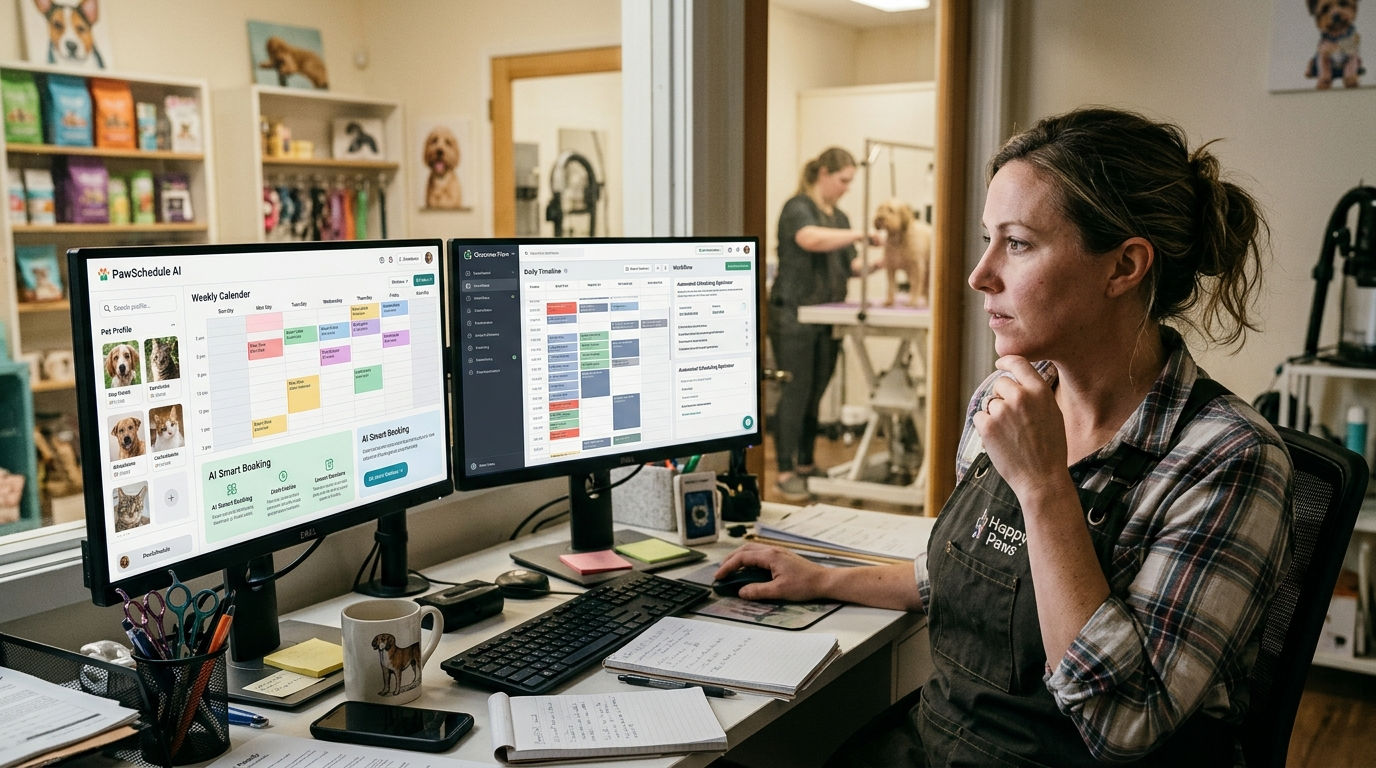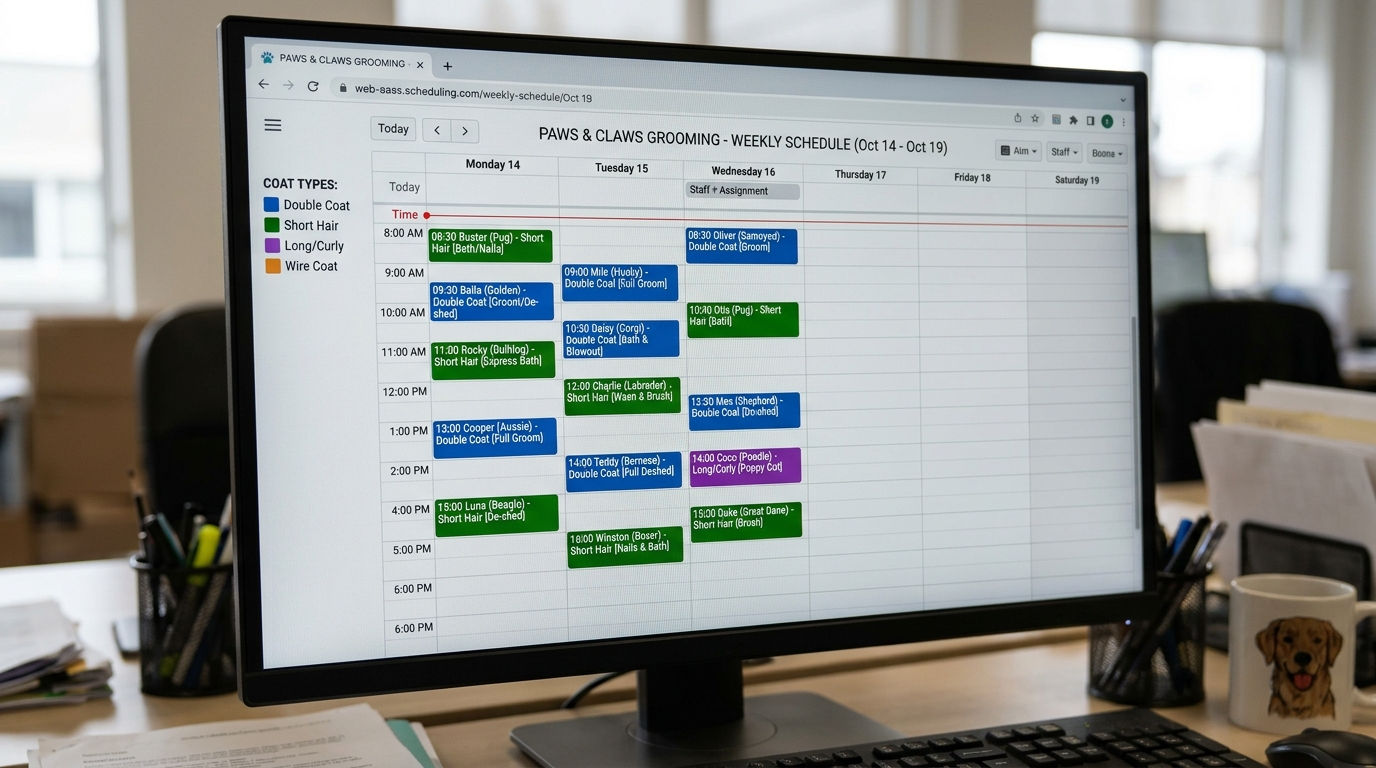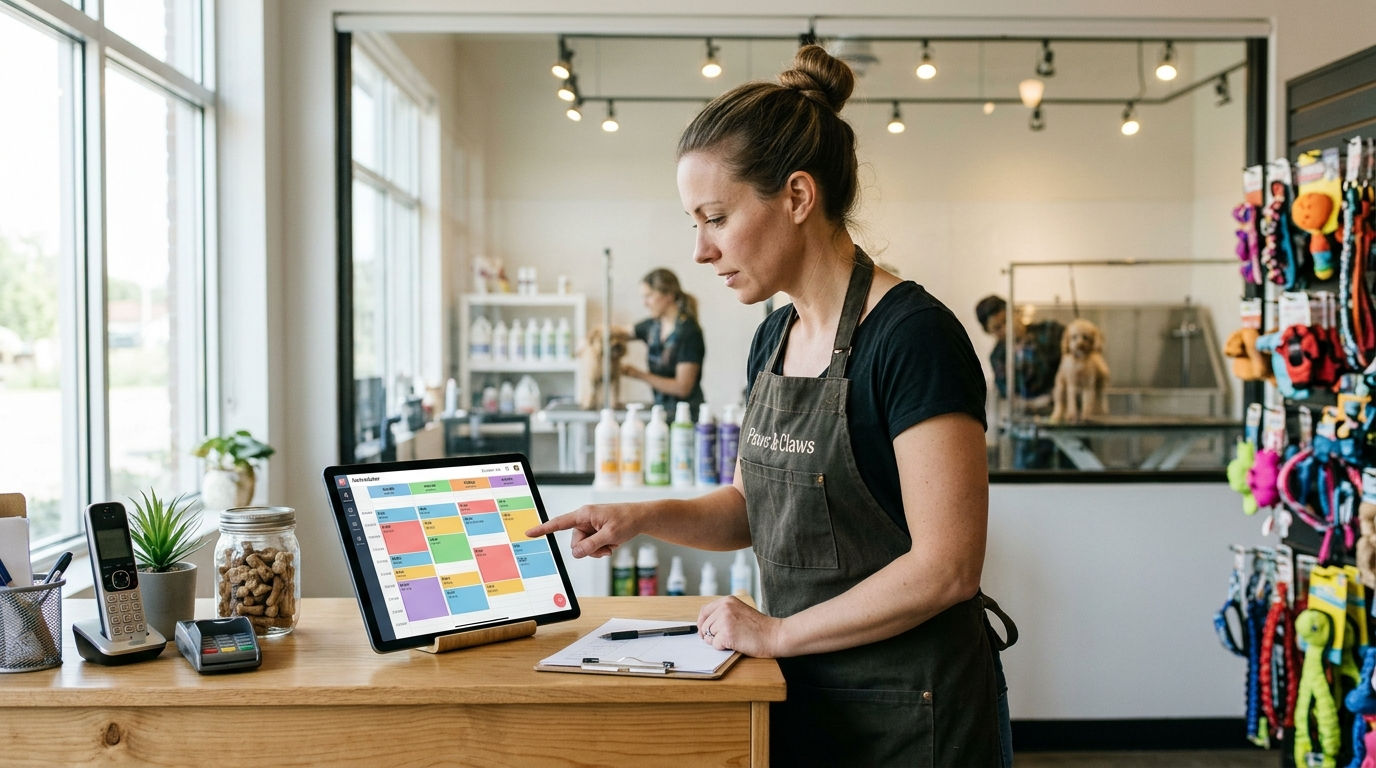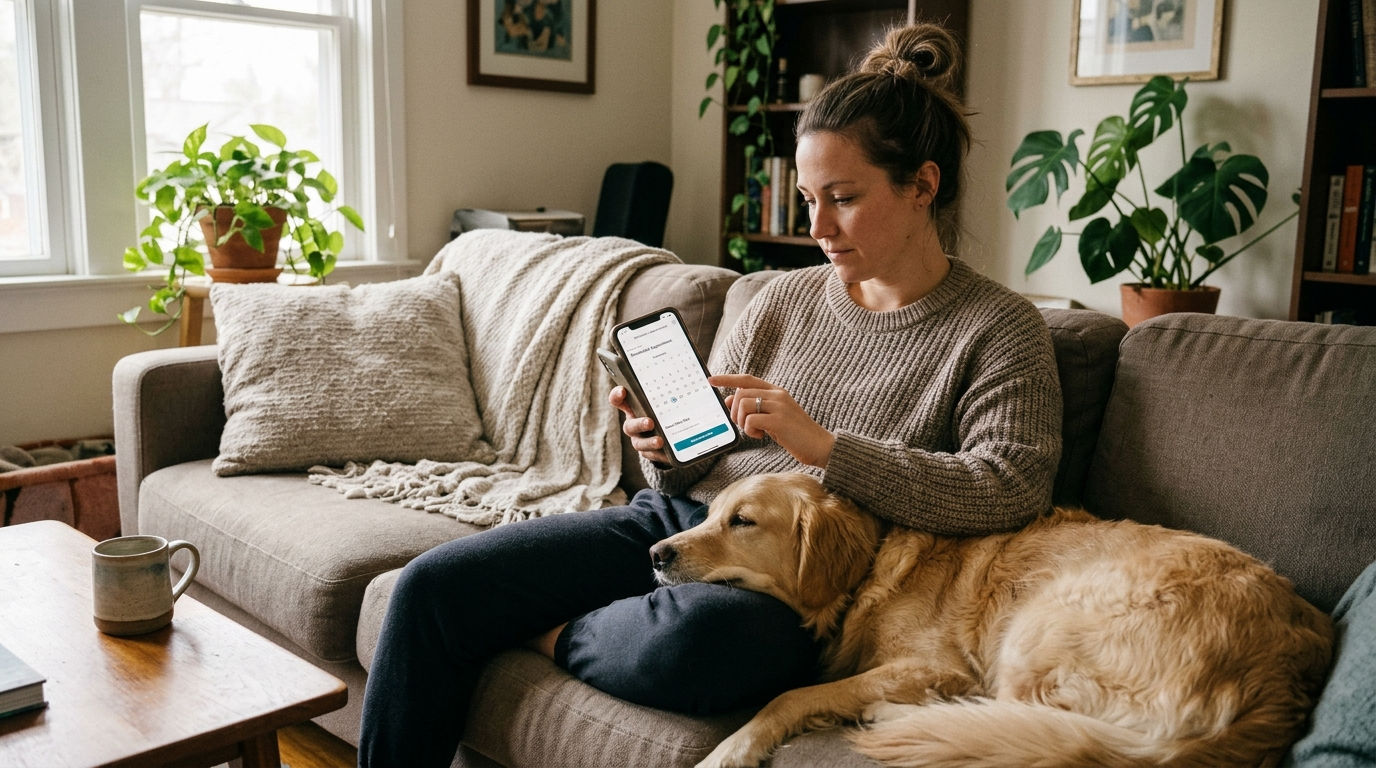
Rescheduling should not require a long chain of messages for every routine change. At the same time, a client moving their appointment must not be able to bypass service rules or silently push another customer aside.
A controlled rescheduling system gives clients options inside boundaries the groomer has already chosen, while reserving judgement for changes that affect coat needs, price or welfare.
Make the original appointment easy to find
A secure reschedule link or verified customer account should identify the existing appointment rather than accidentally creating a new one. Offer a visible rescheduling action that references the booking record, and explain when clients must contact you instead.
Avoid exposing someone else's dog profile or appointment details through predictable public links. An owner clicks “book again” after a confirmation email and ends up with two Friday slots for the same dog.
Keep service rules attached to the move
A two-hour groom needs another suitable two-hour slot; moving the date alone must not shrink the service or remove buffers. A visually open block is not necessarily a safe appointment for that specific service.
A client shifts a full groom into an evening gap that is only large enough for a quick bath. Recalculate availability with the existing service type, dog details, capacity and buffers before displaying alternatives.
Set a practical self-service window
Changes close to the appointment can disrupt the working day more than advance moves, so define when online changes are allowed. A client attempts to move a morning visit at midnight, leaving a gap the salon has little chance to fill.
Publish reasonable cut-off rules and provide a contact route for exceptional circumstances rather than hiding all options. Rigid restrictions without a humane exception path may frustrate good clients dealing with genuine emergencies.
Keep deposits and fees understandable
A client transfers a prepaid slot and worries whether the payment has moved with the appointment. Any change to deposits, payment allocation or cancellation charges must follow the actual booking policy and be shown before the customer confirms.
Do not let automation invent refunds or claim that a payment transfer succeeded before the provider confirms it. Display what happens to existing payments, whether a difference is due and when the groomer must approve an exception.
Update the diary in a reliable sequence
Use an update or transaction supported by the booking platform, then verify the final appointment state and notification queue. A reschedule needs to hold the new space and release the old one without leaving duplicate or missing bookings.
The client confirms Thursday, but a delayed sync leaves Wednesday blocked and two reminders queued. Deleting the old event before the new reservation is secure can strand the client without a slot.
Consider clients who prefer human help
Self-service should be a convenience, not the only way to ask for a change, particularly where accessibility or unusual needs matter. Keep an obvious contact option and use the automated path only when the original appointment details remain suitable.
Forcing a complex welfare discussion through a date picker can create avoidable distress and wrong service assumptions. A client is uncertain whether their dog's new health issue means the service needs changing as well as the date.
Send one clear revised confirmation
The client should see that the original booking has been replaced and which details now apply; ambiguity causes missed visits. Do not generate both a cancellation warning and a new-booking promotion for a straightforward reschedule.
Two confirmation emails show different times without saying which is current, so the owner arrives on the wrong day. Send the updated date, time, dog, service and location with a concise note that the previous appointment was changed.
To protect the new slot from conflicts, use the checks in preventing double bookings.
Watch for repeated changes and hidden gaps
A small number of clients may repeatedly move appointments, while an overpermissive system creates scattered unfillable time. A regular booking moves twice in one week, leaving two half-hour gaps the salon cannot use.
Review reschedule frequency, notice times and recovered capacity, then adjust fair and clearly stated rules when needed. Optimising only for the number of self-service changes can obscure a calendar that has become harder to operate.
Define exactly what a client may change
Self-service rescheduling works well for straightforward appointments, but the permission is not necessarily the same for every groom. A regular bath-and-brush may move within a set of suitable openings. A first visit with coat or behaviour concerns may require approval because the service length has not yet been established. Distinguish between changes to time, service, dog and location. Moving a confirmed appointment to another date is different from changing a small service into a full groom. If the software cannot enforce that distinction, restrict the online option to asking for a change rather than completing it automatically.
Make the appointment-selection screen show real availability, including buffers and resource limits. Avoid displaying a slot merely because no appointment starts at that time. The whole service must fit. For mobile grooming, travel must fit as well. When a client proposes a new time, check it before releasing the old one if the software supports an atomic change. Otherwise a failed reschedule can leave the owner with neither appointment and the groomer with an unexpected hole.
Put the policy at the point of action
A self-service link should not hide cancellation terms until after a customer clicks confirm. Show the applicable change window, any fee or deposit treatment and whether the move is immediately confirmed or awaits review. Use plain dates and local times. Messages such as “you can change anytime” can be misleading when weekends, specialist services or short-notice bookings have different rules. If an exception needs judgement, refer the client to the groomer rather than having the assistant grant permission that the policy does not allow.
Clients also need a clear way to recover from mistakes. A confirmation page should show the new appointment and identify the old one as replaced. Where a deposit is attached to the original booking, explain whether it moves, is refunded or requires a new payment under the actual business terms. Avoid making assumptions about refund eligibility or automatically charging a card after a change without the correct authorisation. The payment system and calendar must agree on what has happened.
Consider the messages that follow a change
Rescheduling should update future reminder times, collection instructions and any recurring appointment sequence that is affected. If reminders are already queued for the old date, they need to be cancelled or corrected so the client does not receive contradictory messages. A two-way text saying “can we do Friday?” is a request for review, not necessarily permission to delete Thursday. Ask one short confirmation question when the intent is unclear.
If several appointments belong to the same household, identify which dog and which visit the owner means. The system should not move both simply because they share a phone number. An accessible rescheduling process also offers a straightforward contact route for owners who cannot use the self-service link or need to explain an unusual situation. The ability to speak with the groomer remains part of good service.
Test the exceptions before enabling the link
Use sample appointments to try a late-night change, a move into the final available slot, a service-duration mismatch and a cancellation just outside the permitted window. Confirm that the diary, messages and payment states all show the same result. If the tool cannot explain an error clearly, return to a human-reviewed workflow for that case. Well-controlled rescheduling should give clients useful flexibility while protecting the time needed to groom each dog properly.
Show the change in one clear summary
After an online reschedule, a customer should see the previous appointment marked as replaced and the new date, time, service and location presented as the current booking. Where there is a deposit or a change fee, show the actual status without ambiguity. The system should also send the groomer a concise update, not a series of messages that look like multiple appointments. A client may otherwise assume both dates are still reserved and arrive at the wrong time.
Test an interrupted reschedule: the owner selects a new slot but closes the page before completing the final step. What remains in the calendar? Ideally the original confirmed appointment stays intact until the new one is successfully secured. If a platform cannot support that safely, explain the request-and-approval process instead of displaying a misleading instant-change button. The right balance gives customers flexibility without hiding operational risk.
Decide who owns the final approval
For specialist or uncertain services, the booking system may show a proposed new time that still needs a groomer’s agreement. Make this status visible and identify who will confirm it. If the requested change cannot fit, retain the existing confirmed appointment until the owner has chosen an alternative wherever the workflow permits. Clear ownership prevents a polite automated message from becoming an accidental cancellation.
Test the rescheduling boundary
- Attempt a move just before the notice deadline, then test one beyond the allowed window.
- Make sure the new appointment inherits the correct service length, resources and deposit status.
- Confirm the original slot is released only once the new time is actually accepted.
Official background reading for Letting Clients Reschedule Without Losing Calendar Control
Offer freedom inside sensible limits
Good rescheduling removes unnecessary back-and-forth without giving up the groomer's judgement. Preserve service rules, payment clarity and a single authoritative booking record. When the change is complicated, a calm route to a person remains the most useful feature.