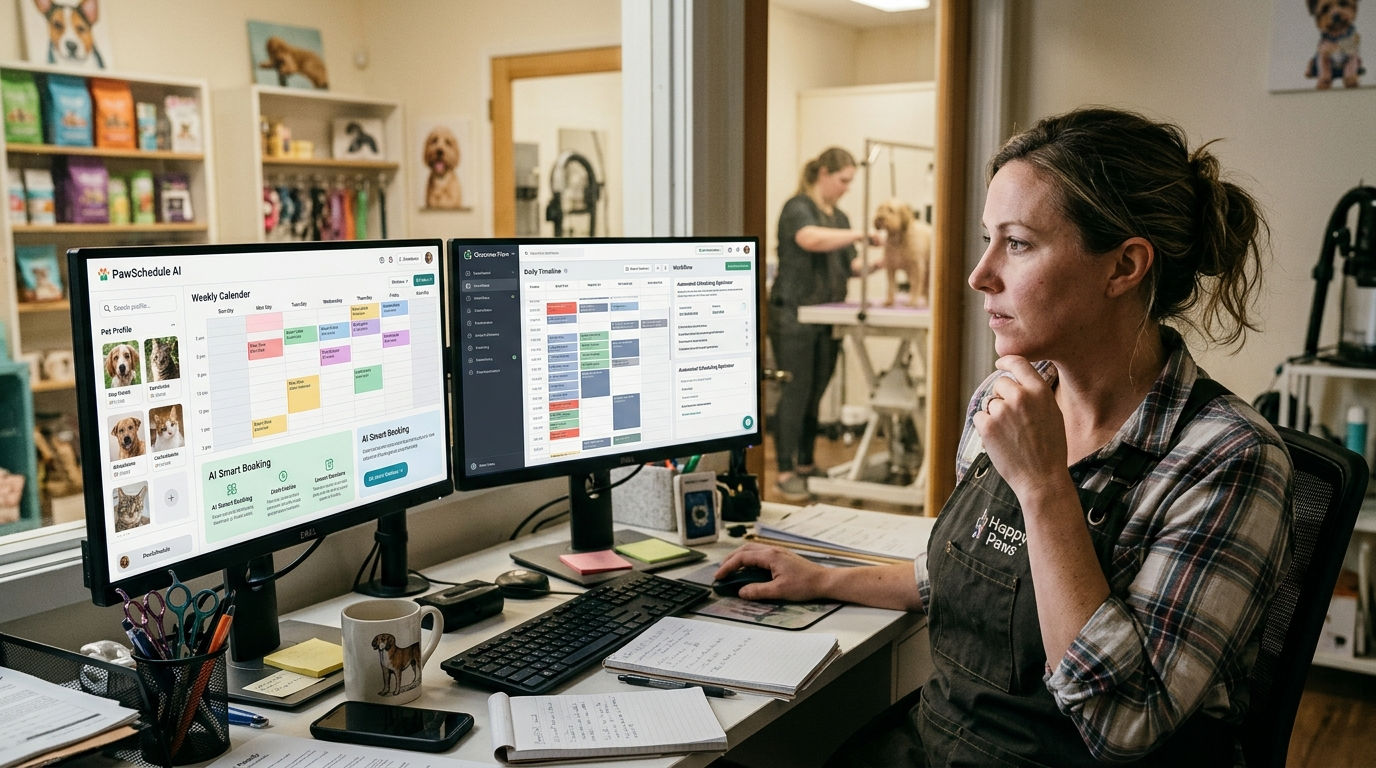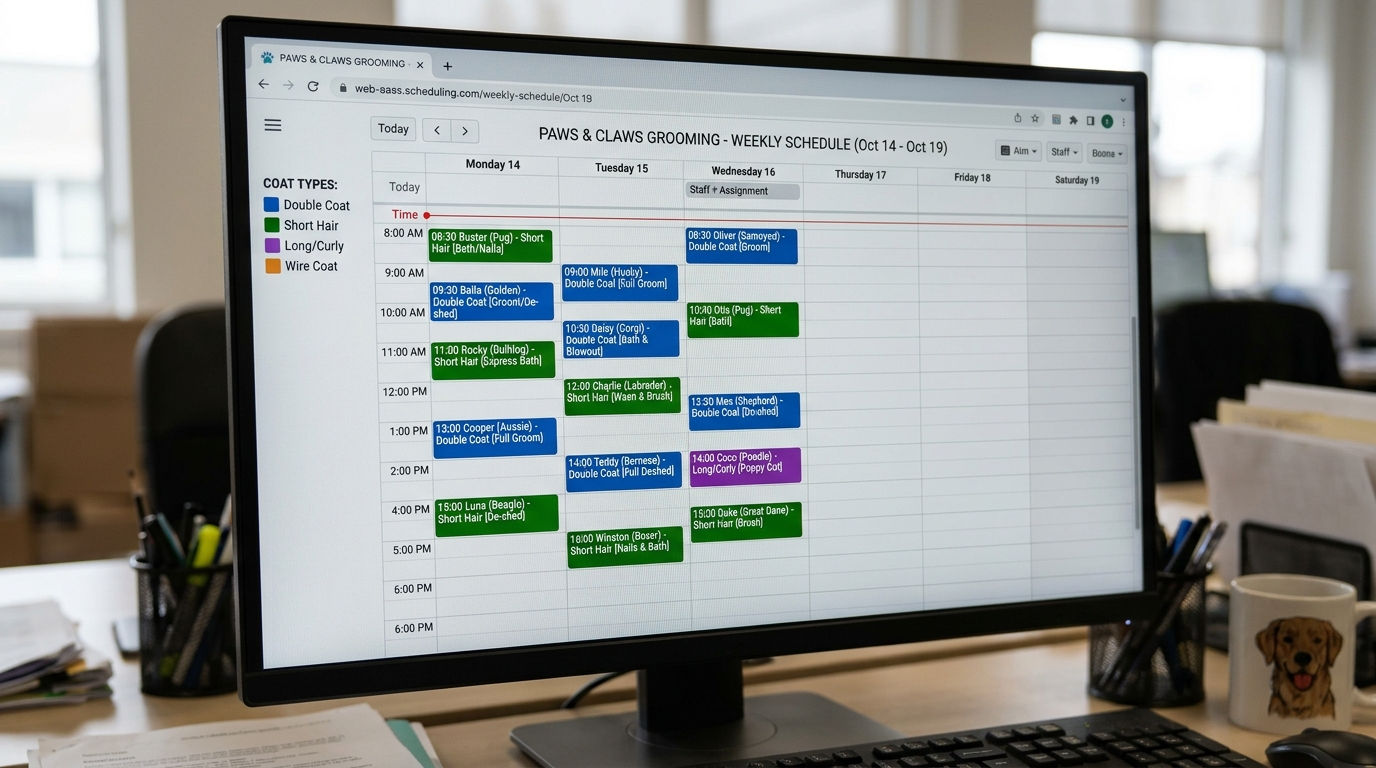
A calendar filled edge to edge may look efficient until one appointment runs long. Grooming time changes with coat condition, behaviour, client collection and the work needed to prepare the next station. A buffer is not wasted time by default; it can be the margin that protects the following appointments.
The challenge is choosing margins from your own experience rather than adding an arbitrary gap everywhere.
Locate the real sources of delay
The groom itself finishes on time, but the next dog cannot arrive safely while the previous owner is twenty minutes late. Separate service overruns, late client arrivals, collection problems, cleaning and equipment bottlenecks because each needs a different response.
An unqualified “everything takes longer” assumption hides solvable problems in communication or workflow. Review a sample of busy days and note which stage actually caused the time loss before changing the whole timetable.
Set buffers according to variability
Group services by how often they overrun, and start with modest buffers on the uncertain categories rather than every appointment. Predictable nail appointments and first-time heavily coated dogs do not need the same amount of protected time.
A repeat short-haired bath usually runs to plan, while a new rescue dog may need gentle pauses and extended settling. Overgenerous blanket gaps can make a small salon unnecessarily expensive to run.
A buffer is easiest to judge against the full workload described in building a weekly calendar around coat needs.
Protect cleaning and transitions explicitly
Cleaning and preparation are real work, not empty space that an online booking assistant may quietly sell to another customer. Add setup and reset time within the service or as a protected buffer, using consistent rules across web and manual bookings.
Hiding transition work in an informal mental schedule creates conflicts when clients can book online. After a messy de-shed, a groomer needs to clear the area and reset equipment before the next dog arrives.
Keep welfare separate from productivity targets
A buffer should support appropriate handling and breaks, not incentivise speeding through an anxious or uncomfortable dog. No buffer design removes the need to stop or change a groom when welfare requires it.
A senior dog needs repeated pauses and the groomer notices signs that the original service plan is unsuitable. Allow a human override, discuss revised work with the owner and adjust later appointments where necessary.
Explain arrival and collection windows
Some late running begins outside the grooming appointment itself; clear communication can reduce uncertainty without placing blame. A family thinks “ready at three” is a strict collection appointment while the salon meant an estimated finish.
State arrival expectations, notify owners when timing changes and provide sensible collection guidance that reflects the shop's capacity. Automatically penalising every delay without considering circumstances may damage trust and is not a substitute for good scheduling.
Distinguish travel time for mobile work
Two houses are geographically close but an access restriction makes the journey significantly longer than expected. A mobile groomer must account for driving, parking, water and power setup, and route changes between clients.
A fixed five-minute travel buffer is unreliable across very different locations and times of day. Reserve travel and setup margins separately from hands-on grooming time and confirm practical access before committing the route.
Review the numbers after a trial
Track scheduled versus actual finish, the reason for overruns, missed breaks and unused gaps, then revise by service type. The right margin is discovered through measurement and adjustment, not by copying another salon's standard.
A four-week trial may show that longer buffers prevent late afternoons without meaningfully reducing completed visits. A buffer that remains unused every time may be too large or could be redeployed more intelligently.
Plan for genuinely late appointments
Have a calm approach for days when delay exceeds the protected margin and the remaining diary can no longer absorb it. Contact affected clients promptly, offer realistic choices and avoid promising that the lost time can be recovered through rushing.
Automated “running late by ten minutes” texts are misleading when the actual recovery plan has not been agreed. A difficult coat appointment runs an hour longer and the next client is already travelling to the salon.
Identify what really causes appointments to run over
A buffer is not a vague amount of spare time that software can sprinkle between bookings. Start by noting where previous days slipped: late arrivals, drying dense coats, extra cleaning, a dog needing several breaks or an owner taking longer at handover. Those causes require different responses. A late-arrival rule might affect whether the service can still be completed; extra drying time might belong in the standard duration for a particular coat group. If every appointment needs the same large buffer, the underlying service lengths may simply be too short.
Try tracking planned versus actual start and finish times for a manageable sample of recent appointments. Record the reason for any overrun in a few words rather than building an elaborate time-study system. Compare similar services and separate genuinely unusual cases from a repeated pattern. If a thick double coat regularly takes longer than the standard full groom, updating that appointment type is more honest than hiding the difference in a catch-all buffer. A useful diary reflects the real service being delivered.
Place spare minutes where they protect the day
A small interval between consecutive grooms can allow cleaning and preparation. A longer reserved block may be more valuable after a known difficult service or before a hard collection deadline. Not every gap needs to be visible to customers as a bookable slot. Decide whether the buffer belongs before, after or inside an appointment, and whether it needs to block a particular resource such as a bath or drying station. The choice affects how many services can realistically run in parallel.
For an anxious dog that benefits from pauses, the additional time should be part of a considered handling plan, not an invitation to rush to make up minutes later. An owner who arrives late also needs a clear policy. Define how long the salon can reasonably wait, whether the service must be shortened or rearranged, and how any charges are handled. Automated messages may explain the rule, but should not make unsupported promises about what can be achieved in the remaining time.
Prevent buffers disappearing through another channel
A common failure occurs when online booking respects setup time but a staff member manually drags an appointment into that blocked interval. Test manual edits, recurring bookings and assistant-generated appointments to ensure they apply the same constraints. If a resource is shared, check that the buffer occupies that resource as intended. A calendar that displays attractive empty spaces but does not enforce restrictions may tempt clients to request times that cannot be delivered.
Review unusual gaps as well. Too many rigid buffers can fragment a day into intervals too short for useful services. Rather than indiscriminately shortening them, assess which appointment types genuinely need protection. Some salons reserve a flexible block near the end of the day; others distribute smaller gaps. The best configuration depends on the service mix and the groomer's working style, not a universal percentage.
Explain the outcome in client-friendly language
Clients generally do not need a lecture about buffer algorithms. They need reliable start times, realistic collection expectations and a clear explanation when a complicated coat requires a longer appointment. If a late arrival means the service must be reconsidered, say so respectfully and point to the salon's published policy. Internally, record which delays could have been prevented by better scheduling and which were unavoidable. A buffer should reduce pressure on both the groomer and the dog, rather than concealing a calendar that remains chronically overbooked.
A practical example of two different buffers
Imagine a morning with a ninety-minute bath-and-brush followed by a large, dense-coat groom. The first appointment may need a modest cleanup interval before the next dog arrives. The second may need extra protected drying time within the appointment itself, plus a margin before the following client. Treating both as identical “ten-minute buffers” can leave the calendar looking efficient while the groomer still runs late. Write the assumptions explicitly so the booking tool can enforce the right restriction.
Review the effect on collection times as well as start times. If a client has been given an exact collection estimate that repeatedly proves unrealistic, the problem may be duration design rather than reminder messaging. A small number of well-chosen buffers can protect the dog's comfort and reduce apologetic calls. More gaps are not automatically better: remove those that do not address a real constraint after checking the outcomes.
Separate protected time from bookable gaps
A buffer may appear as an empty square to someone who does not understand its purpose. Make sure external booking pages cannot offer that time, and train anyone editing the diary to recognise it. If you later reduce a buffer, do so because evidence shows the work fits comfortably, not because the week looks full. Spare minutes protect cleaning, safe handling and honest collection times, even though they are not a service you can sell.
Measure your actual buffer needs
- Compare the planned and actual finish times of several different service types.
- Reserve a separate cleaning and transition interval rather than hiding it inside a dog’s booked time.
- Keep enough flexibility to stop or reassess a visit if the animal becomes distressed.
Official background reading for Setting Booking Buffers for Late or Longer Grooming
Make breathing room intentional
Useful buffers come from understanding variability, not from fear of an imperfect day. Protect necessary preparation, build extra room around higher-risk appointments and review whether the margins actually reduce stress. A realistic diary is more valuable than a perfectly packed one.