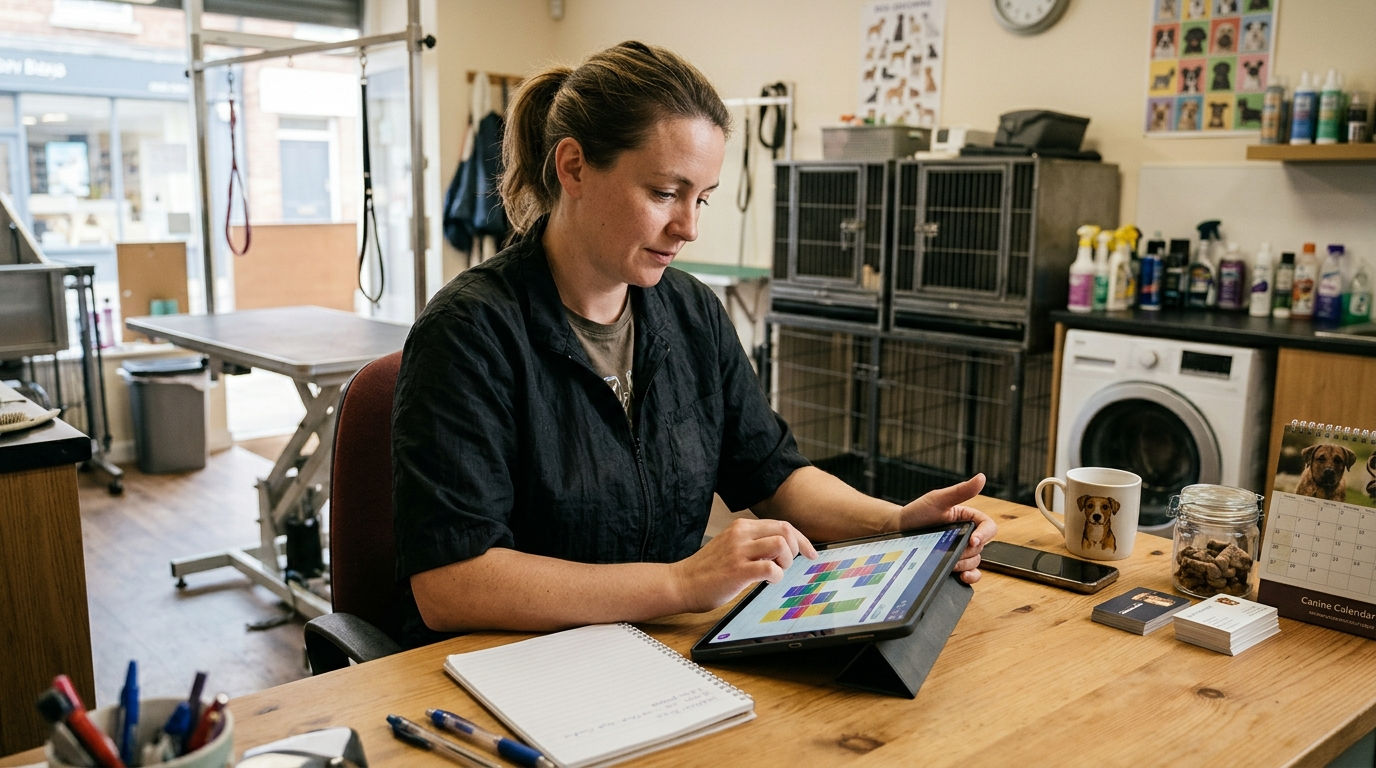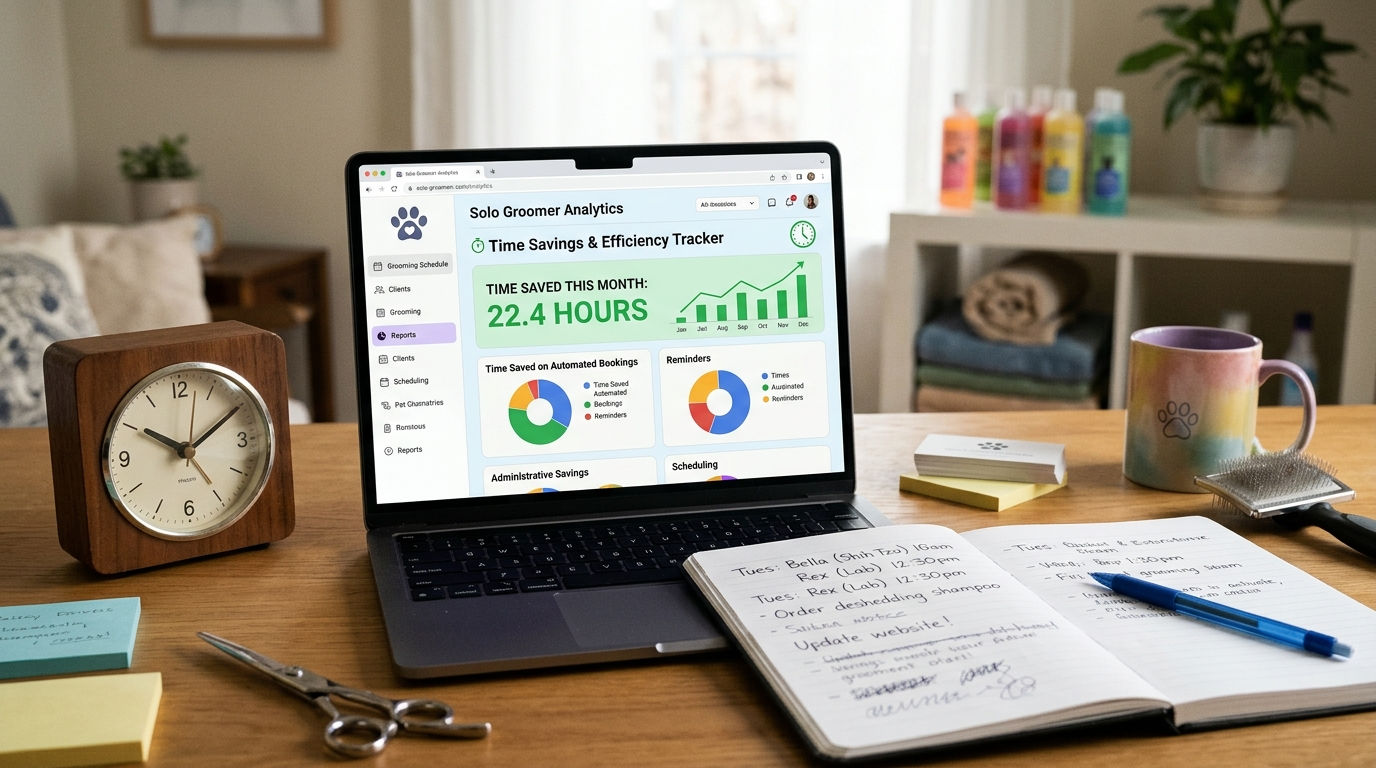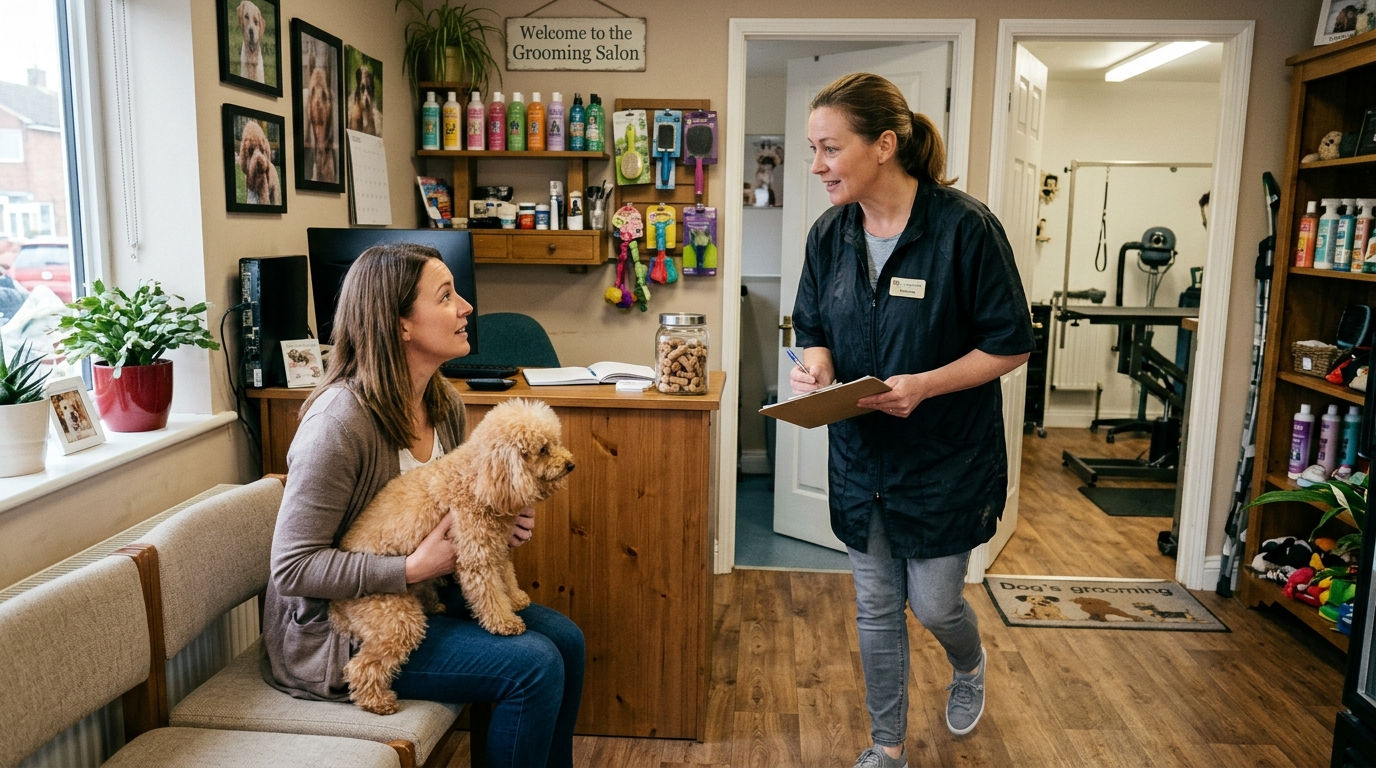
Grooming is personal even when the booking process becomes digital. Owners want to know their dog will be understood, and groomers need enough time and attention to do careful work. Automation is most useful when it removes repetitive tasks without hiding the human behind the service.
The question is not whether you should automate or stay personal. It is which interactions benefit from consistency and which need your own judgement, voice and care.
Identify the interactions that build trust
A first conversation about a nervous dog or an owner's concern is qualitatively different from repeating opening hours for the twentieth time. Keep sensitive assessments, first-visit decisions and complaints easy to route to you, while automating repetitive factual answers.
Measuring every conversation only by minutes saved can undervalue relationships that influence the quality of care. A customer worries that their newly adopted dog may become frightened by clippers and wants to discuss a gentle introduction.
Use automation for accuracy, not impersonation
A well-designed tool can send consistent confirmations and gather facts without pretending to be a human employee. Hiding the presence of AI may create distrust when the client discovers a promised decision was not made by a person.
A bot signs messages with a fabricated receptionist's name and later invents an exception to the cancellation policy. Make automated status clear, use approved business wording and provide an obvious route to speak with the groomer.
Preserve individual dog notes
Personal service depends on remembering what matters to each pet, but the notes should be specific, revisable and accessible. A spaniel is calmer with a brief quiet greeting, while another dog needs time away from the dryer.
Keep concise, respectful handling and coat information linked to the correct dog and review it before repeat visits. Automating profile collection is not useful if the groomer never sees the details at the moment of care.
Make the handoff part of the experience
A booking enquiry includes a recent medical concern and the assistant abruptly says it cannot help. A bot should not simply stop answering when something is difficult; clients need to know who will take responsibility for the next decision.
A seamless handoff does not mean the software should give a premature safety decision to avoid a pause. Acknowledge the issue, collect only essential context and explain when the groomer will review it.
Write messages that sound like the salon
Use real approved examples for reminders, booking replies and aftercare notes, keeping them brief and easy to understand. Consistent tone is part of being recognisable, but accuracy matters more than matching every emoji or expression.
A warm local shop suddenly sends stiff, formal messages that make routine visits feel impersonal. Automatic friendliness becomes hollow if it masks unclear prices, booking status or the ability to change an appointment.
Leave clients more than one contact route
Not everyone likes portals or chatbot conversations, especially when something unusual has happened. Keep a clear email or phone route as appropriate and explain which issues are best handled by a person.
Forcing every conversation through an online form may save staff time at the cost of accessibility and loyalty. A long-term customer is happy receiving text reminders but prefers to phone when their dog's behaviour changes.
Review whether the relationship feels better
Automation should reduce interruptions and confusion while preserving the confidence clients have in the groomer. Lower call volume can be a warning sign if clients are giving up, not a success measure by itself.
Appointment confirmations become more consistent, but customers say it is harder to reach the salon when they need help. Ask for direct feedback, monitor misunderstood messages and track the proportion of complex requests resolved well.
Expand only where control remains clear
A reliable reminder system does not automatically mean that AI should set prices, change service plans or handle disputes without approval. A salon adds a chatbot for FAQs, then considers connecting payment and calendar write permissions in one step.
Add capabilities separately, test limits and maintain simple ways to pause automation when policies or integrations change. The wish to appear modern should not make the technology more authoritative than the person responsible for the dog.
A cautious sequence for adding more tools appears in our practical salon AI booking rollout plan.
Protect the moments clients value most
A repeat customer may appreciate a quick automated reminder but still want to tell the groomer that their older dog is moving more slowly this month. Identify which conversations should remain personal: coat concerns, handling decisions, complaints, unfamiliar services and changes in the dog's comfort. Keep a direct route to the person doing the work rather than insisting that everyone must speak through a bot. The purpose of admin automation is to create more room for those conversations, not to replace them with polished but unhelpful scripts.
Routine questions can still be answered efficiently. Opening hours, directions, common service descriptions and steps for requesting a booking are good candidates for a knowledge base. Make the responses accurate and clear about what the assistant can and cannot do. A model that claims to have booked a dog without access to the diary creates more stress for both sides. When an answer depends on a groomer's assessment, the assistant should collect enough context for a helpful follow-up and then stop.
Let the groomer's actual style guide the wording
Use a few examples of messages you already send well. If the salon normally writes short, warm replies, the assistant should not produce long formal paragraphs filled with exaggerated enthusiasm. Make dates, prices and booking status prominent. Avoid jokes or emojis in messages about illness, discomfort, complaints or fees. Acknowledging uncertainty is part of good service; “I'll ask the groomer to check” is better than an invented confident answer.
Personal details are not decorative. The assistant should use a dog's name only when it is correct and should not infer its temperament or styling preferences from its breed. Stored notes can make repeat booking easier, but important changes need to be confirmed. A client should be able to correct an error without arguing with the system.
Design human handoffs as ordinary work
Some handoffs will be triggered by a complex question; others will happen because a client simply prefers a person. Both deserve a working route. The groomer should receive the request, relevant pet information, any proposed slot and what the client was already told. A handoff without ownership or a realistic response window can leave the customer waiting indefinitely. For a solo business, a simple list of unanswered enquiries may be enough, provided it is reviewed reliably.
Do not judge the system solely by how few messages reach the groomer. A low handoff rate can mean the bot is making decisions it should not. Check the quality of the cases that were escalated, how long clients waited and whether the information collected was actually useful. Human contact is not an inefficiency when it prevents an unsuitable appointment.
Measure the experience on both sides
Look at interruptions avoided, booking corrections, repeat questions and customer feedback. A successful change may be that the groomer can finish a session without constantly checking the phone, while the owner receives an accurate response about what will happen next. If automation causes clients to repeat their stories or makes the business harder to reach, it has moved rather than removed the burden. Keep the workflow small, transparent and reversible so it can be adapted as the salon changes.
The human-first test
Ask a regular client to send an enquiry about a dog who has recently become uncomfortable with brushing. Observe whether the assistant encourages disclosure, avoids making promises about the groom, and provides a genuine route to the groomer. Then ask a straightforward question about opening hours. The system should handle the latter quickly without forcing the owner into a detailed form. Those contrasting tests reveal whether automation has been designed around the level of judgement required rather than around the ambition to answer everything.
The result should feel consistent with how the salon already works. If the owner replies to a confirmation with a concern, a monitored person must be able to see and address it. If the customer simply wants a human conversation, the route should not be hidden. Good automation protects time for professional care and clear communication. It should never make a familiar grooming business feel unreachable behind its own software.
A small change can feel personal
If a repeat customer mentions that their dog has become reluctant to enter the salon, the next booking conversation should acknowledge the concern and let the groomer review it. The bot does not need to pretend it remembers a friendship or offer unsupported training advice. It can simply preserve the owner’s words and make sure they reach the right person. Thoughtful information flow is often more personal than an automatic greeting filled with affectionate phrases.
Define moments that remain personal
- List situations where a familiar groomer should call directly, such as an anxious dog or disputed service.
- Review a sample of automated messages for warmth, clarity and accuracy.
- Ensure the client can still reach a person without navigating a long chatbot exchange.
Official background reading for Keeping Personal Service While Automating Grooming Admin
Make more room for the human work
The most personal service often comes from having fewer interruptions and better information when the dog arrives. Automate the predictable, preserve the conversations that matter and make every automated promise accurate. Your judgement remains the business's defining feature.