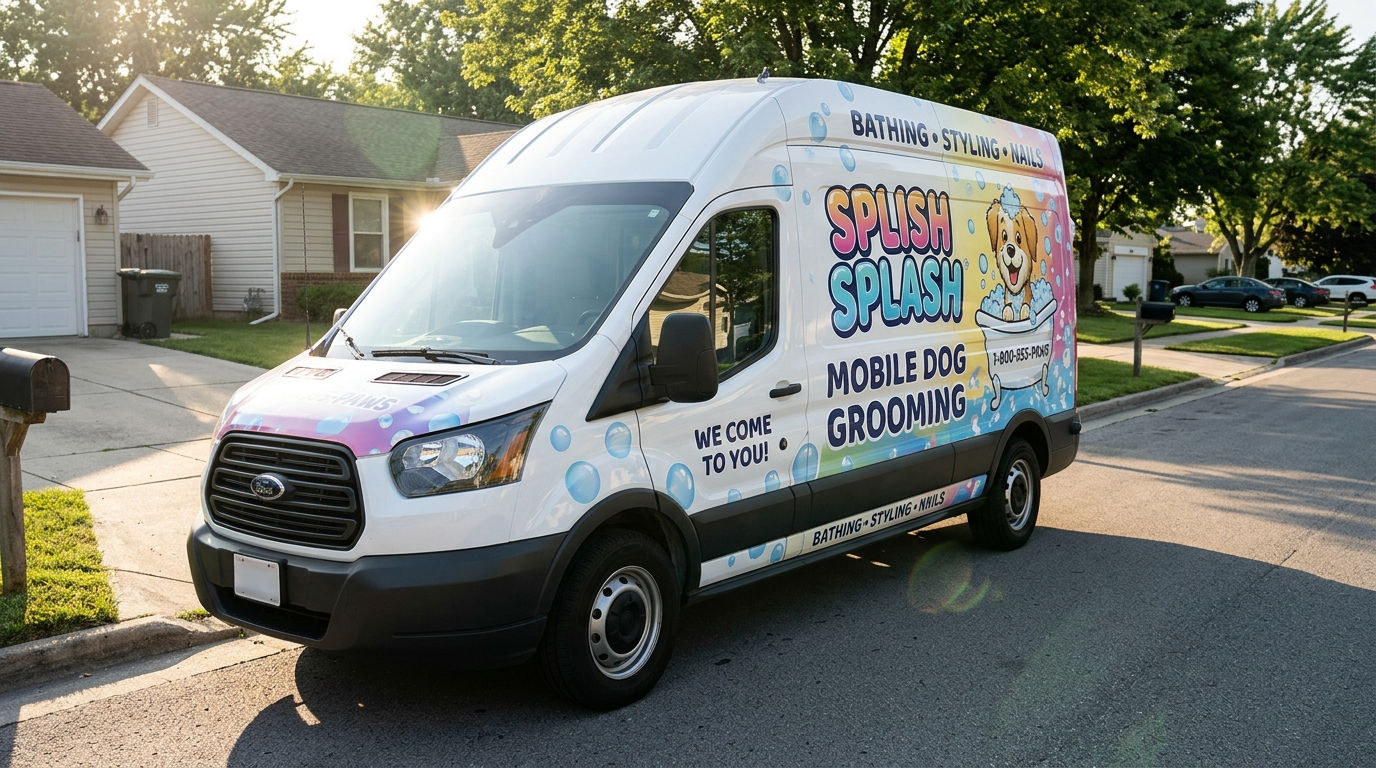
A mobile grooming business sells time in two places: with the dog and on the road. Standard salon booking software may offer open time slots without understanding whether the van can realistically reach the next address.
Online booking works when service duration and travel capacity are treated as one scheduling problem. It should also collect practical access details before promising a visit.
Define the area you can actually cover
Set clear service areas or postcodes, identify exceptions needing manual approval and test routes during the hours you usually travel. A straight-line radius is a poor substitute for route feasibility when traffic, road layout and service duration vary.
Two homes are geographically close but separated by a river crossing that adds substantial travel time. Do not let a broad map circle promise appointments that create unreasonable driving or unsafe pressure.
Include travel and setup in appointment blocks
The booked service includes arriving, finding suitable parking, preparing equipment and leaving the van ready for the next customer. Estimate travel, parking, setup and breakdown separately from grooming time, then build them into availability calculations.
A diary that displays only hands-on time can look profitable while being impossible to deliver. A groom takes ninety minutes, but the system has allowed only five extra minutes between different addresses.
Collect access information at the right time
The van may require suitable parking, safe access and particular utility arrangements depending on its setup. Avoid collecting unrelated household information or assuming every address is accessible from an online map.
A client books a narrow street with restrictions that prevent the vehicle from parking close enough to work. Ask for postcode and essential access details before confirmation, and offer a way to discuss unusual circumstances.
Decide whether customers choose exact times
Some mobile operators benefit from offering date windows or regional days rather than letting clients pick every minute of the route. An unrestricted calendar creates a morning appointment on one side of town, an afternoon on the other and an evening back at the start.
Consider location-based booking windows and confirm the precise arrival time after the route is workable. Promising exact slots too early makes later route optimisation feel like repeatedly changing the client's booking.
Match dog services to van capacity
A large double-coated dog needs more drying time and resource capacity than a small short-haired bath. Limited space, water, power and drying equipment may change which services and dog sizes are suitable on a given visit.
Do not allow software to accept a service that the mobile unit cannot perform appropriately. Define services around the van's actual equipment and safe handling limitations, with escalation for uncertain coats or behaviour.
Communicate arrival windows clearly
Send realistic windows, appropriate updates and a reliable contact method when your route changes. Clients should know whether the visit is confirmed, whether arrival time is approximate and how travel delays will be handled.
Roadworks delay the van by twenty minutes and the owner waits outdoors because the confirmation gave a rigid time. Automatically claiming “on our way” based on a scheduled time is misleading if the vehicle has not departed.
Practical route communication also benefits from keeping personal service while automating admin.
Handle route changes and cancellations
A cancellation can create a useful nearby opening or strand a long drive between two distant stops. Match any waitlist offers by location, realistic travel, service length and notice, then recheck before confirming.
Offering the gap to the first interested client regardless of distance may increase fuel cost and delays. A mid-route client cancels, leaving a gap that could be filled only by a nearby household with a compatible service.
Evaluate software using complete trial routes
A tool may pass individual appointment tests while failing to construct a realistic day from several bookings. A route feature's presence on a feature list does not prove its estimates suit your particular vehicle or service area.
Four bookings each look valid in isolation but the van cannot travel between them within the advertised windows. Build a full sample day with real postcodes, include parking and buffer assumptions, and compare the proposed schedule with your own route knowledge.
Make travel part of the booking rule
A mobile groomer's calendar is a route as well as a list of appointments. A client might see a free two-hour window, but the van still needs time to reach the address, park, set up and travel onwards. Define the areas you serve and practical travel allowances before publishing slots online. If the booking tool cannot calculate routes, use service zones, location-specific days or human approval for unusual addresses. It is better to collect a request than to confirm a journey that makes the rest of the day impossible.
Ask for the location details needed to plan the visit, including any relevant access or parking information. Do not request unrelated personal information. Where a property is difficult to reach or has restrictions, the groomer may need to confirm suitability before accepting the appointment. If the visit requires access to power or water, explain the actual van requirements rather than using a generic form that assumes all mobile equipment works the same way.
Make the appointment type reflect the real service
The online form should distinguish a routine repeat groom from a first-time dog whose coat or behaviour may change the duration. A mobile setup has less flexibility to move equipment or extend a session without affecting later travel. Ask concise questions about service, size, coat and any handling concerns, then route uncertain cases for review. Do not automatically assign one standard time to every breed or promise an elaborate groom based on a short message.
Some households want several dogs treated in one visit. That can reduce repeated travel but does not remove the work needed for each animal. List the services and durations separately and check whether the planned sequence, turnaround and van capacity are appropriate. A change to one dog's appointment should not silently alter the others.
Communicate arrival windows carefully
Road conditions and parking can change the exact arrival time. Avoid publishing minute-perfect promises if the route cannot support them reliably. Give the owner an accurate expected window and a monitored way to receive an update if the van is delayed. A short operational text can be useful, but should not expose the owner's address unnecessarily. Where a delay would shorten the service below what is appropriate, the groomer needs to decide whether to proceed or rearrange rather than rushing the dog.
Rescheduling must recheck the route. A client moving a slot from Tuesday to Thursday may change the geography of the entire day. Self-service tools that merely show a blank interval can miss that. Test whether your software accounts for travel and area restrictions before allowing customers to move visits automatically.
Plan for breakdowns and cancellations
Vehicle problems, extreme weather and equipment failures are operational realities. Decide how to contact affected owners, record provisional alternatives and prevent an assistant from repeatedly promising that the van is on its way. Keep a simple secure copy of essential future appointment information that can be used if the scheduling platform becomes unavailable. Cancellation and deposit messages should follow the same clear policies as salon appointments, with any location-specific terms explained beforehand.
Review routes periodically. If one day involves excessive travel for few services, adjusting your service zones or booking windows may help more than buying a complicated AI product. The strongest mobile booking system is the one that respects the real time spent on the road and leaves enough capacity to groom each dog comfortably.
Try planning a day with the map beside the calendar
Imagine two appointments on opposite sides of town with a short gap between them. A normal salon calendar may consider the gap free, but travel, parking and setup could make a new appointment impossible. Mark realistic driving time and necessary margins, then see whether the booking system can represent the restrictions. If not, reserve certain days or windows for particular service zones and keep unusual addresses subject to review. This is often more dependable than exposing every apparent blank space to customers.
When a client changes an appointment, reassess the route before confirming the new time. A move that works for the client may lengthen the journey between the remaining visits or leave an unusable gap. Explain a realistic arrival window rather than a minute-perfect promise that traffic may defeat. If the van cannot attend because of a breakdown, have a prepared method for notifying affected owners and rescheduling honestly. A mobile booking system succeeds when it respects the road as much as the grooming table.
Confirm the practical arrival arrangement
A confirmed time should include enough detail for the owner to prepare the van access, not just a date. If the groomer needs a safe parking spot, a particular entrance or an agreed arrival window, make that expectation visible before the day of service. Do not promise that every property is suitable without review. Accurate access details can prevent wasted journeys that an otherwise well-designed online calendar cannot anticipate.
Test booking by travel zone
- Map journey time and parking constraints before exposing available appointment slots.
- Add realistic travel buffers between visits and test a last-minute address change.
- Require confirmation when the requested location is outside the normal service area.
Official background reading for Setting Up Online Booking for a Mobile Dog Grooming Van
A slot is only available if the van can reach it
Mobile booking should make routes calmer, not just fill empty time. Give the system honest travel and service constraints, make arrival expectations clear and keep complex addresses or dog needs under human review. The best appointment is one the van can actually deliver safely.