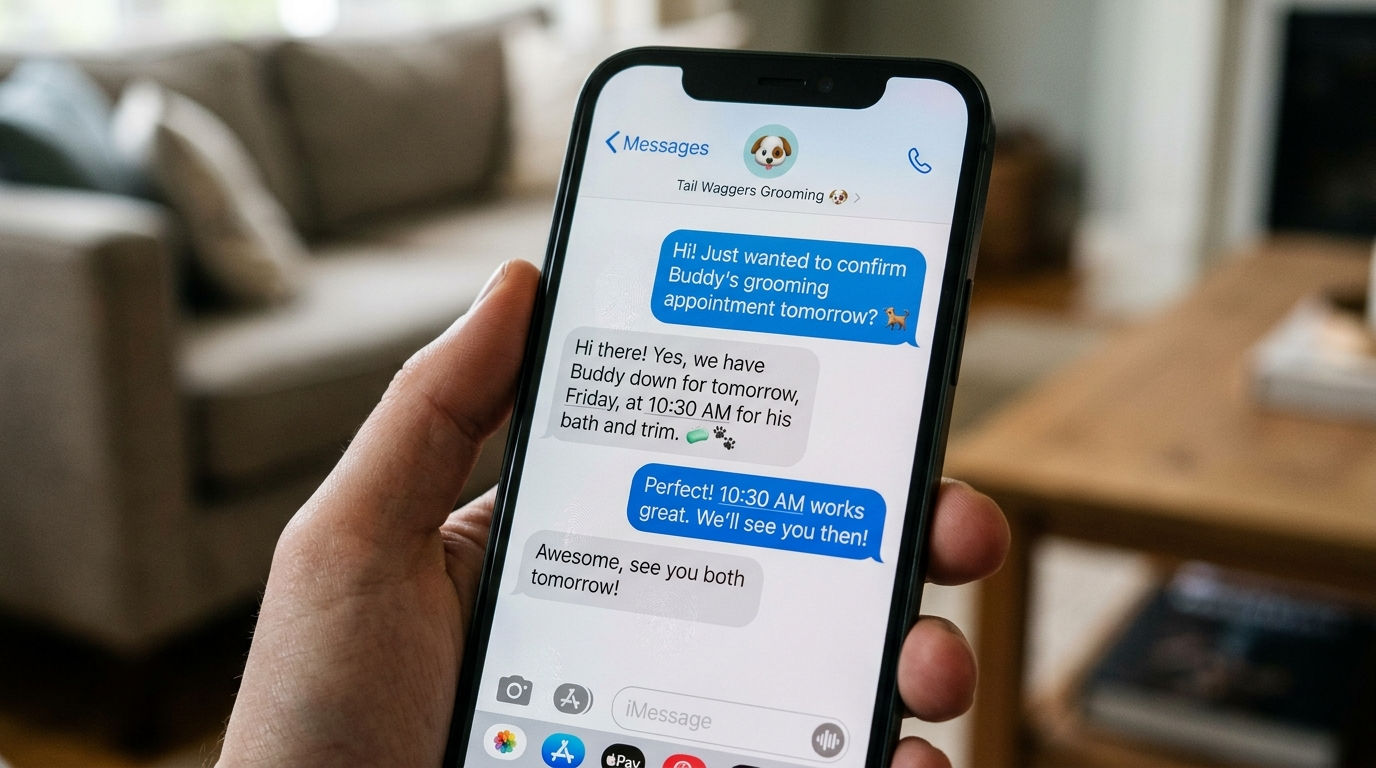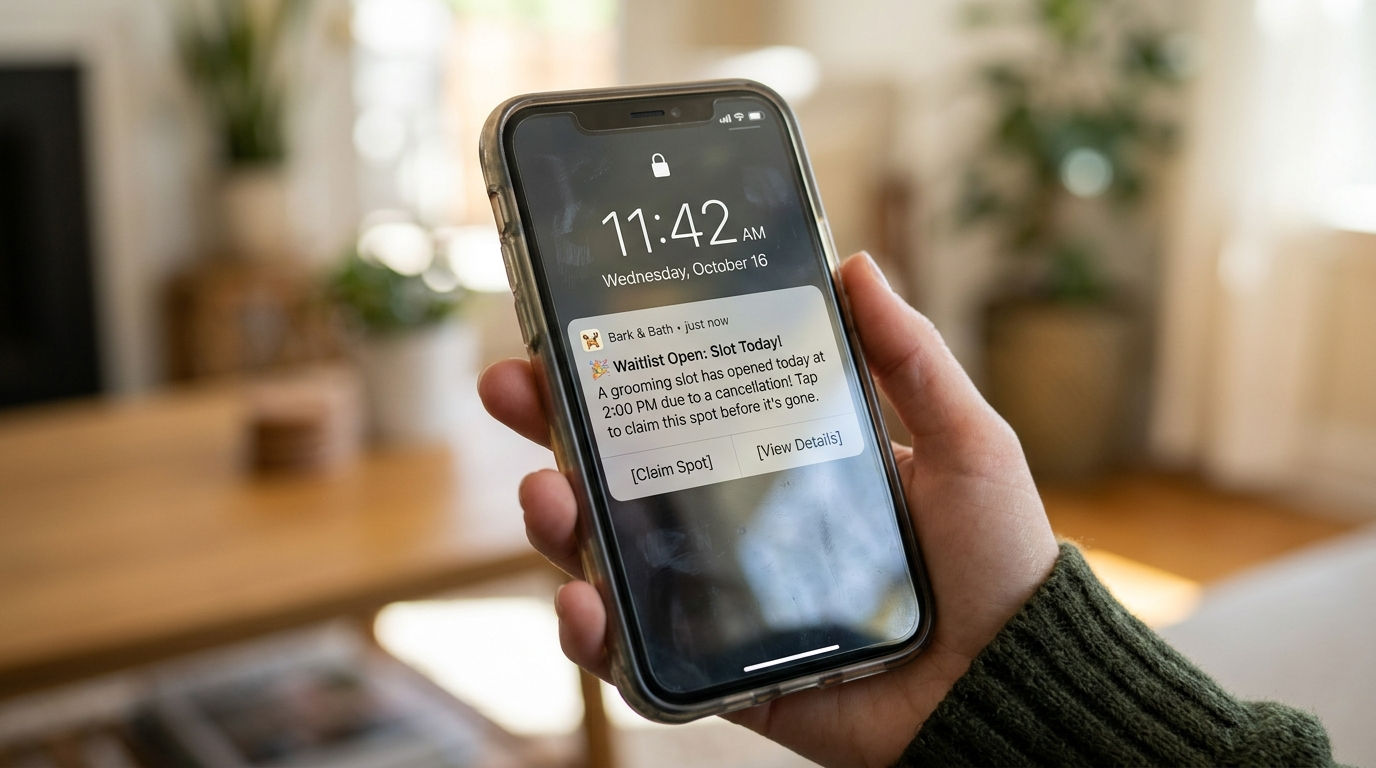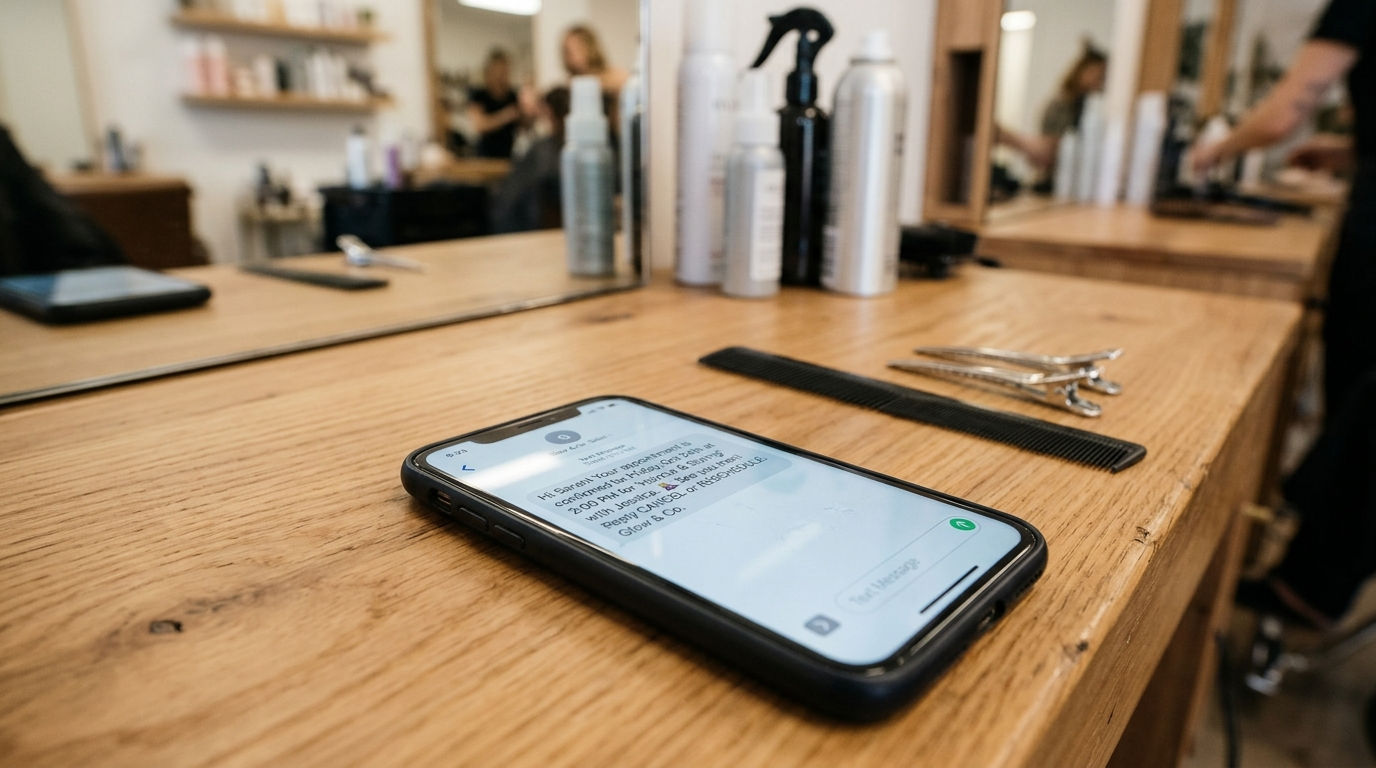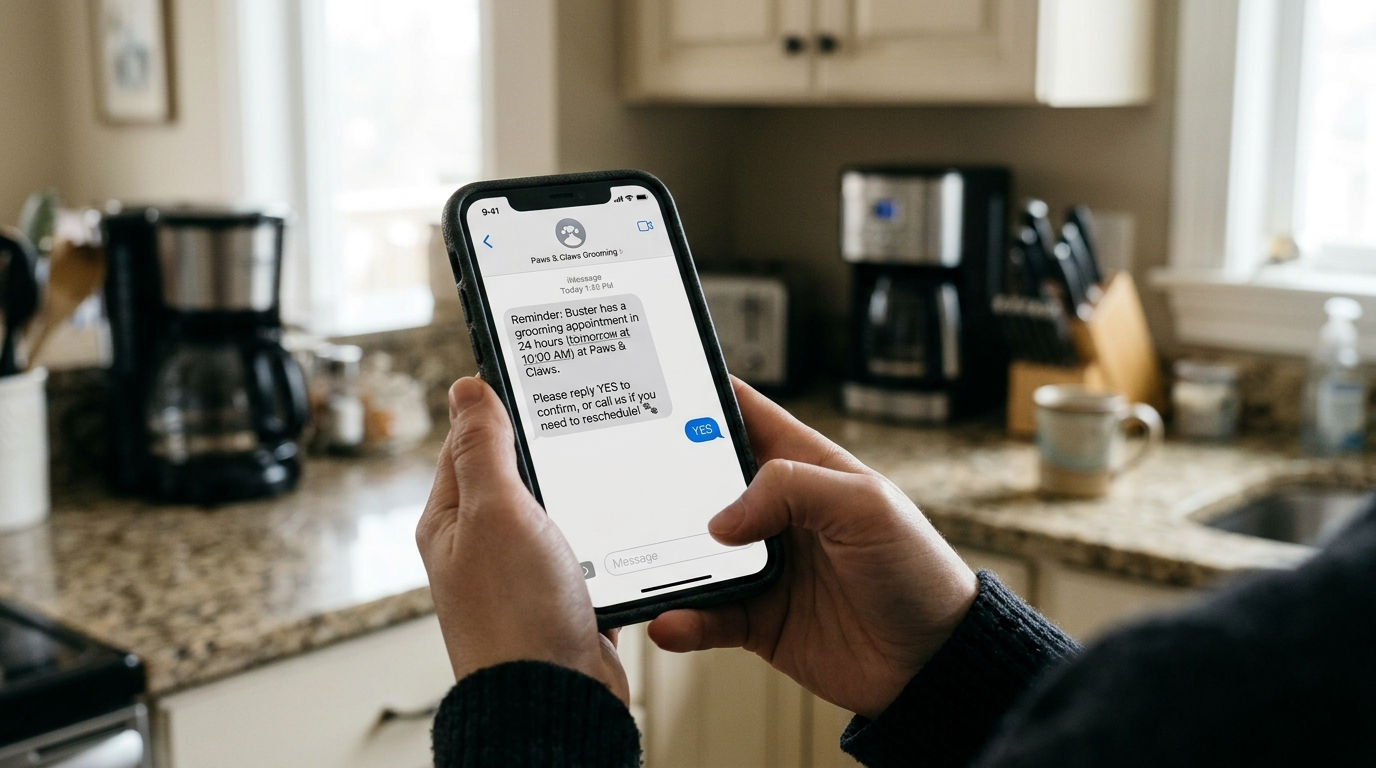
A late arrival can affect other appointments, client collection times and the dog's experience. Automatic messages may help communicate an existing policy, but an algorithm cannot always judge whether a shortened service is appropriate or whether the next appointment should move.
Plan for late arrivals before they happen: define expectations, preserve human discretion and give people a way to explain their situation.
Set expectations in the original confirmation
A policy is easier to understand when explained before the client is running late, not as an unexpected warning after the scheduled start. A vague “late fees may apply” phrase leaves uncertainty about the actual published terms and how decisions are made.
An owner thinks arrival within twenty minutes of the listed time is fine because the service is expected to last two hours. State arrival time, any grace period and what the client should do if delayed, using calm and precise language.
Distinguish a delay from a no-show
An owner sending a message from traffic has taken a different action from someone who has not contacted the salon at all. A client texts that they are ten minutes away while the automatic no-show workflow is about to cancel the visit.
Use monitored replies or a human review for borderline cases, and separate late, unconfirmed and missed appointment states. Automatically cancelling every appointment at the first minute of delay may produce unfair and avoidable disputes.
Never promise the same full service automatically
A heavily coated dog arrives well after its start time with another appointment due soon. Remaining time may be insufficient for the intended groom; the right choice depends on the dog, coat and what can safely be accomplished.
An automated “no problem, we can finish on time” reply encourages rushing and makes an unsuitable promise. Have the groomer decide whether a shorter appropriate service, later slot or reschedule is realistic, then explain any revised cost or terms.
Send a practical check-in message
Ask for an update using a channel the salon actually monitors, and include the appointment details to reduce mistaken replies. A brief, respectful prompt can establish whether the client is on the way and when the groomer might need to plan differently.
A groomer is ready at 9:00, but the owner has forgotten that the appointment moved from Thursday to Wednesday. Repeated escalating alerts can sound punitive, especially when the customer is already handling an unexpected problem.
Respect published cancellation and fee terms
Automated enforcement should follow the real business policy and applicable law, with review for exceptional circumstances. State the relevant rule without making assumptions, let the groomer handle disputed exceptions and document the final decision.
Do not use an AI assistant to invent penalties or guarantee fee waivers in order to end the conversation. A client experiences a family emergency and asks whether a late-arrival charge or deposit condition applies.
Arrival rules should be consistent with how deposits and cancellation conditions are explained before booking.
Protect the rest of the diary
Communication about one late arrival should not create contradictory promises to clients booked later in the day. Rushing the dog or ignoring cleaning time is not a sound recovery strategy.
A delayed appointment is squeezed into the next client's buffer and both customers now believe their bookings remain unaffected. Review remaining capacity, contact people who genuinely need an update and avoid offering space that the calendar cannot support.
Consider tone at a stressful moment
Customers may be embarrassed, worried or frustrated; the goal is to get reliable information and make a decision, not to shame anyone. A client already running late receives a message implying they are irresponsible and stops responding.
Use neutral wording, clear options and a route to speak with the groomer about unusual circumstances. A cheerful joke or harsh threat can both be inappropriate when the situation is uncertain.
Learn from repeat patterns
Several new clients arrive late because a map pin points to the rear of a building with no public entrance. Some lateness comes from unclear directions, unrealistic travel estimates or clients misunderstanding appointment starts rather than deliberate disregard.
Penalising clients cannot fix a communication error or location problem caused by the business. Review late-arrival reasons and update practical instructions before introducing more automated warnings.
Define what a late arrival changes
A dog arriving ten minutes late is not necessarily equivalent to a full missed appointment, but the consequences depend on the service, the remaining time and the appointments following it. Write a policy that reflects the real constraints of the salon. A short nail trim may be easier to accommodate than a long coat service requiring extensive drying. Avoid a rigid automated promise that the groom will always be completed after a late arrival. The groomer must retain discretion where rushing could affect the dog's comfort or the quality of the work.
Make arrival instructions clear before the visit. An owner might be late because the address is hard to find, parking is uncertain or the agreed start time was misunderstood. A reminder with the location and correct local time may prevent some delays. For mobile grooming, the arrival window and access arrangements can be different; explain them in terms the client can use rather than copying a salon-based policy.
Offer messages that inform instead of accuse
A short message sent when the expected arrival time has passed can ask whether the owner is on the way and invite them to contact the groomer. It should not automatically claim that a no-show fee has been charged or that a slot has been forfeited if nobody has reviewed the situation. Automated late-arrival triggers are only as accurate as the calendar's recorded start time, so test daylight-saving, rescheduled and manually moved appointments. A mistaken late message can be particularly frustrating when the owner is following the latest confirmation.
If the owner replies that they are delayed, the assistant can record an estimated arrival and flag the groomer. It should not promise that the remaining time is sufficient for a full groom. Where the appointment needs to be rearranged, refer to the actual cancellation and deposit terms and let a person handle unusual circumstances. The goal is to decide the next practical step with the customer, not win an argument about punctuality.
Protect the rest of the day
Delays often become costly because they push pressure onto the next dog. Decide who checks whether the appointment can still fit, which tasks can be adjusted and when rescheduling is safer than rushing. That decision should take account of the dog's coat, handling needs and the day’s available buffer. It may be appropriate to reduce a cosmetic element only if the owner and groomer agree and the dog remains comfortable. Never let an automated timer decide that a complex service is safe to shorten.
A clear internal note can help: planned start, actual arrival, response received and action agreed. Keep the record factual, avoiding judgemental labels about the owner. If the client has already called the salon, staff should be able to stop the automated messages so they do not continue asking what happened.
Review recurring causes
If late arrivals cluster around one appointment time, consider whether directions, parking, school-run traffic or collection instructions are contributing. If several owners misunderstand the start time, fix the confirmation wording. Do not add more punitive messages when the real issue is unclear communication. A respectful, consistent process can protect working time while maintaining the personal service that brings customers back.
Build a small escalation path
The first late-arrival action may simply be a friendly check-in: “We haven't seen you for Bella's 11 am appointment. Are you on your way? Please let us know.” The next action depends on the response, the service and the remaining day. If the owner is five minutes away and the groom can still be performed comfortably, the groomer may choose to proceed. If a long coat service no longer fits, a personal conversation about rearranging may be necessary. A timed message should never silently make that judgement for them.
Check what happens when the salon already knows about the delay. The assistant should not continue sending automatic warnings after a client has spoken directly to the groomer. Make it possible to mark an arrival as delayed by agreement or to pause messages for that appointment. Keep any fee discussion aligned with the published policy and the specific facts rather than using an accusatory automated script. The aim is a workable next step that protects the dog and the rest of the schedule.
Check the time source
Automated late-arrival triggers depend on the correct current appointment time. When a booking moves, verify that the reminder schedule and late marker move with it. Use the salon’s local time and handle daylight-saving transitions where applicable. A message accusing someone of being late because the system retained an old time can damage trust quickly. The groomer should be able to pause the automation as soon as a delay has been discussed directly.
Write a delay response that preserves choice
- Set a practical threshold for when the salon should ask for a new arrival estimate.
- Avoid guaranteeing the original full service if the late arrival would displace another dog.
- Record the owner’s reply and provide a clear route to reschedule or discuss charges.
Official background reading for Handling Late Arrivals With Automatic Client Messages
Protect the day without shaming the client
Late-arrival workflows need clarity and flexibility. Tell clients what you expect, ask for an update when necessary and keep the service decision with the groomer. Automation should support a fair recovery, not manufacture a false promise to catch up.