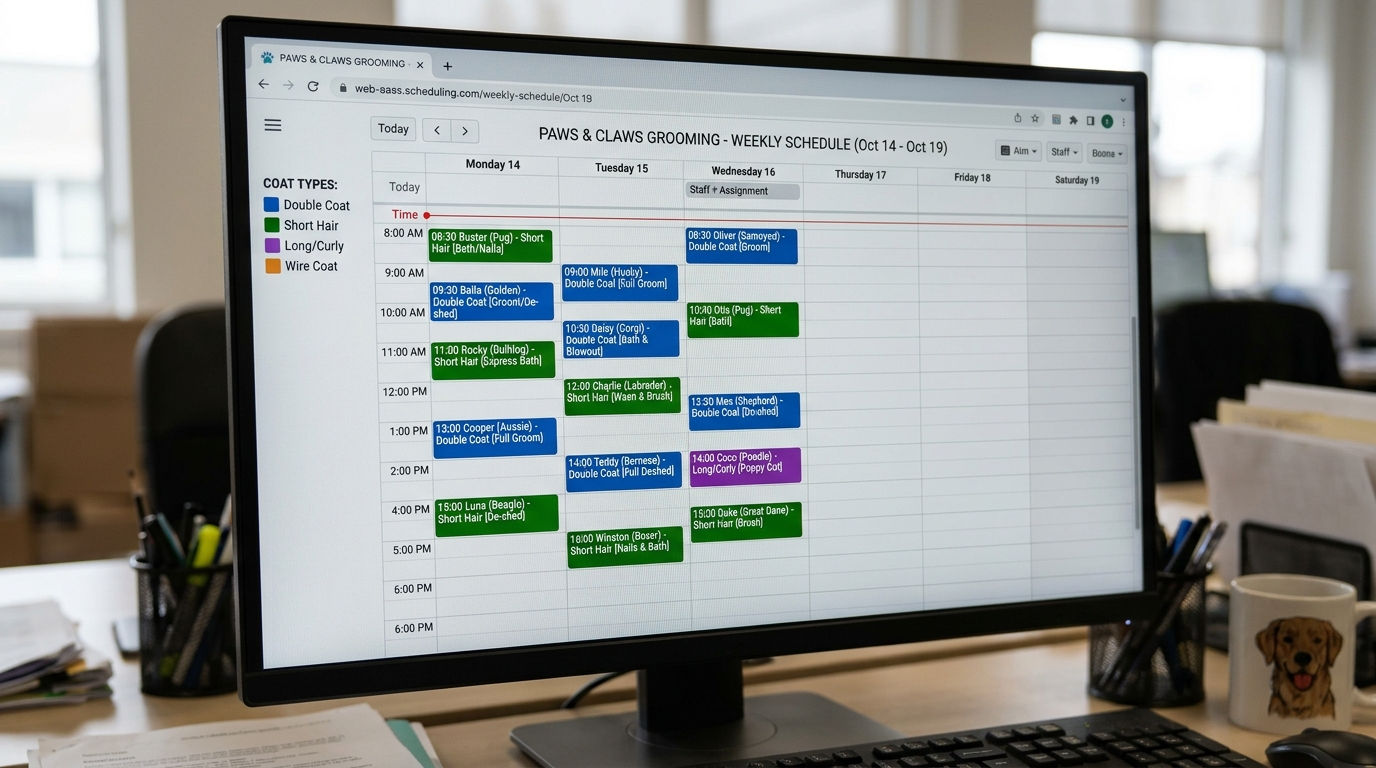
A cancellation can leave an awkward gap that is too short for one groom and too long to ignore. A waitlist helps only when it matches the open slot to a service that genuinely fits and gives customers a fair, unambiguous way to respond.
Automation can speed up invitations, but the business still needs rules about timing, suitability and what happens when several people want the same appointment.
Build the waitlist from real preferences
Ask for preferred windows and whether short-notice offers are welcome, then keep those preferences editable. A useful list records desired services, dog needs, days, notice periods and the contact method the client agrees to use.
Someone available only after school on Fridays should not receive every random weekday opening. Collecting a long list of names without service details makes each cancellation another manual sorting exercise.
Check that the service actually fits
A freed 45-minute slot cannot safely be offered for a two-hour full groom, even when the customer is ready to come immediately. Filter candidates by service length, buffers, groomer, location and any required prior assessment before sending an offer.
Treat a client's eagerness to come in as separate from whether the work is practical and humane. A nail trim may fit comfortably where a first-time doodle appointment would run into the next booking.
Decide how invitations are allocated
You may offer a slot to the first suitable person, use a priority order or send a small batch with a transparent first-confirmed rule. Automatic replies should not promise the slot is theirs merely because they answered “yes” to an invitation.
Sending one opening to fifty people can create disappointment and accusations of an unfair booking process. Choose a method you can explain consistently, including a reasonable expiry window and a clear rule for simultaneous replies.
Recheck availability at acceptance
The waitlist system and the master calendar must agree when someone accepts; otherwise the same vacancy may be sold twice. A client takes the opening by phone while another receives an automated text offering that exact time.
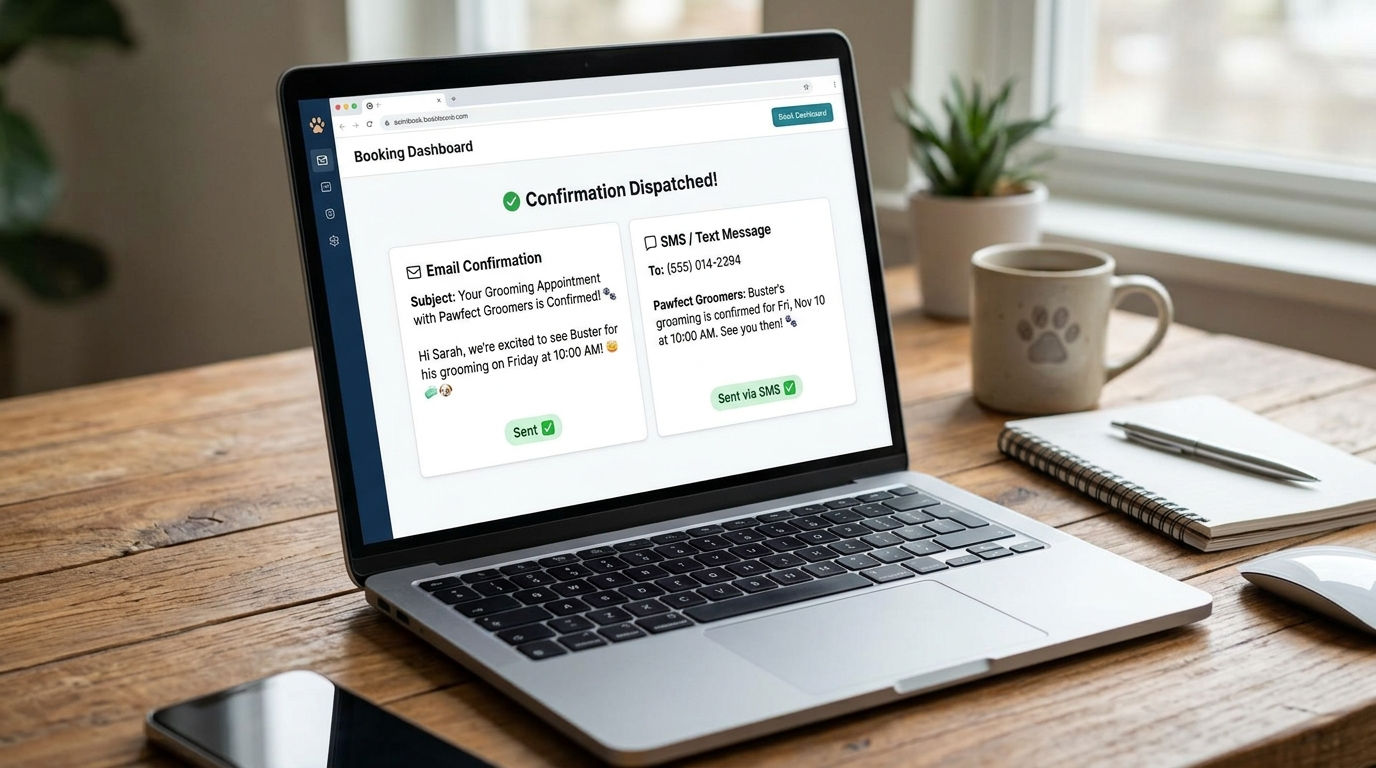
Lock or recheck the slot at the final step and issue a confirmation only when the booking is successfully created. If the booking fails, say so clearly and avoid charging or sending conflicting reminders.
An opening is only useful if it follows the same rules described in rescheduling without losing calendar control.
Keep cancellation policies separate from availability
A customer's dog becomes unwell and they cancel despite the salon's usual notice requirement. The decision to waive, retain or apply a cancellation fee should follow the business's published terms and any applicable rules.
Filling the cancelled slot later does not automatically determine the legal or contractual treatment of the original booking. Show the applicable policy neutrally, route exceptions to the groomer and record the actual decision without speculative promises.
Use appropriate short-notice communication
Limit offers to relevant preferences, identify the response deadline and provide an easy way to stop receiving optional alerts. A late opening may be time-sensitive, but repeated urgent texts to everyone on the list quickly become irritating.
A client opts into same-day alerts but receives four separate messages for slots that never match their availability. Distinguish service messages from marketing, and respect communication choices and applicable electronic messaging rules.
Preserve the original appointment's history
A cancelled visit, a newly filled slot and a waitlist invitation are different records and should not overwrite one another. Keep cancellation reason only when appropriate, record invitation and acceptance, and make sure reminders follow the new appointment rather than the old one.
Reusing an old booking record for a different dog's visit can corrupt pet histories and payment reconciliation. A groomer needs to understand whether a client missed their appointment or whether the slot was legitimately reassigned.
Measure net recovery rather than messages sent
A busy waitlist does not necessarily earn back useful capacity if offers arrive too late or involve unsuitable services. Resist making the process more aggressive simply because the system reports a low response rate.
Ten alerts go out for one opening, but nobody can reach the salon and the groomer spends twenty minutes managing replies. Track usable cancellations, openings filled, response time, no-shows and the admin involved to judge whether the process helps.
Build a waitlist that can make a sensible offer
A cancellation creates a piece of free diary time, not necessarily a suitable appointment for every person waiting. Before offering it, the system must know the service duration, any preparation or cleanup requirements, the relevant location and whether the dog needs individual approval. A thirty-minute opening is no help to someone requesting a two-hour full groom. Keep the waitlist requests current: preferred days, acceptable notice period, service, contact route and whether the client is genuinely ready to take a short-notice appointment.
For a mobile groomer, location can be as important as duration. An afternoon opening between two nearby visits might suit a client in the same area, but not someone across the city. If the software cannot account for travel realistically, treat the waitlist as a shortlist for human review rather than automatically promising a geographically impractical booking. A free slot on screen is useful only if the business can reach and complete the service.
Avoid the race created by mass messages
Sending the same opening to everyone at once may generate several enthusiastic replies and disappointment for most of them. Decide whether offers are made sequentially, through a short reservation window or through a first-confirmed system that guarantees only one successful calendar write. The customer should know if they are receiving an invitation rather than a held appointment. An unanswered offer should expire at a clearly stated time so the groomer can approach the next suitable person.
When two clients accept at nearly the same moment, the scheduling system must be authoritative. A text saying “yes” is not enough if another booking has already taken the slot. Confirm only after the diary succeeds and any required payment condition is satisfied. If the opening has gone, explain that promptly and leave the client's original appointment or waitlist status intact unless they request a change. Never silently cancel an existing appointment just because a better time was offered.
Keep the list fair and human
A fair waitlist does not have to mean strictly first-come, first-served when the requests require different service lengths or specialist handling. Set a transparent practical basis for choosing who can use a slot, then apply it consistently. Avoid hidden preferences based on personal assumptions. Some clients will have less ability to respond instantly; a short, reasonable reply window can help without leaving a groomer's diary unusably uncertain. The objective is reliable scheduling, not a competition for the fastest thumb.
Ask how much notice the client truly needs. Someone who can travel in twenty minutes is different from an owner organising transport for a large dog. If an appointment becomes available close to the start time, call or send a concise offer to a suitable client rather than generating a long automated sequence. Clear cancellation and deposit policies are still relevant. An offered slot should not come with surprise conditions that were absent from the original booking journey.
Review outcomes, not the number of notifications
Track whether offered openings were actually filled, how often an accepted time was later declined, and whether staff had to resolve clashes. Repeatedly sending messages for slots that are too short suggests a poor matching rule. Frequent failure to reach clients may mean their notice preferences need updating. A waitlist is successful when it puts the right dog into a feasible opening with minimal confusion. It should not create a second, unreliable diary that the groomer has to manage by hand.
A workable offer message
Suppose a sixty-minute opening appears tomorrow afternoon. The owner of a suitable dog has said they can travel with a day's notice. The offer can name the service, date, time, response deadline and whether the slot is being held. It should not imply a firm booking until the client accepts and the calendar confirms. If the owner replies after the deadline, the system should check the diary again rather than assuming the old offer remains open.
Now suppose the client on the waitlist needs a two-hour full groom. Do not offer the shorter opening as a courtesy unless a real alternative service has been discussed. Repeated unsuitable offers waste goodwill and make the system seem careless. Better matching may mean the slot remains unfilled; that is still preferable to squeezing a dog into inadequate time. Review waitlist records so preferences and service needs do not become stale.
Let clients leave the list gracefully
A waitlist entry should not remain active forever by accident. Offer an easy way to withdraw or update notice preferences, especially after a client has accepted another appointment. Where possible, remove requests that have already been fulfilled. Otherwise, owners may receive offers for a service they no longer need. A clean list improves matching and reduces the number of unnecessary messages the groomer has to answer.
Run a fair waitlist test
- Create two clients with different dog sizes, service lengths and availability windows.
- Cancel an appointment and offer the opening only where the actual service and staff capacity fit.
- Record the invitation expiry and verify that a later acceptance cannot displace a confirmed booking.
Official background reading for Handling Last-Minute Cancellations With Smart Waitlists
Recover a gap without creating another problem
A smart waitlist is a precise matching process, not a bulk notification list. Offer only workable slots, use clear acceptance rules and keep the authoritative calendar in control. The result should feel like a helpful opportunity, not a scramble.